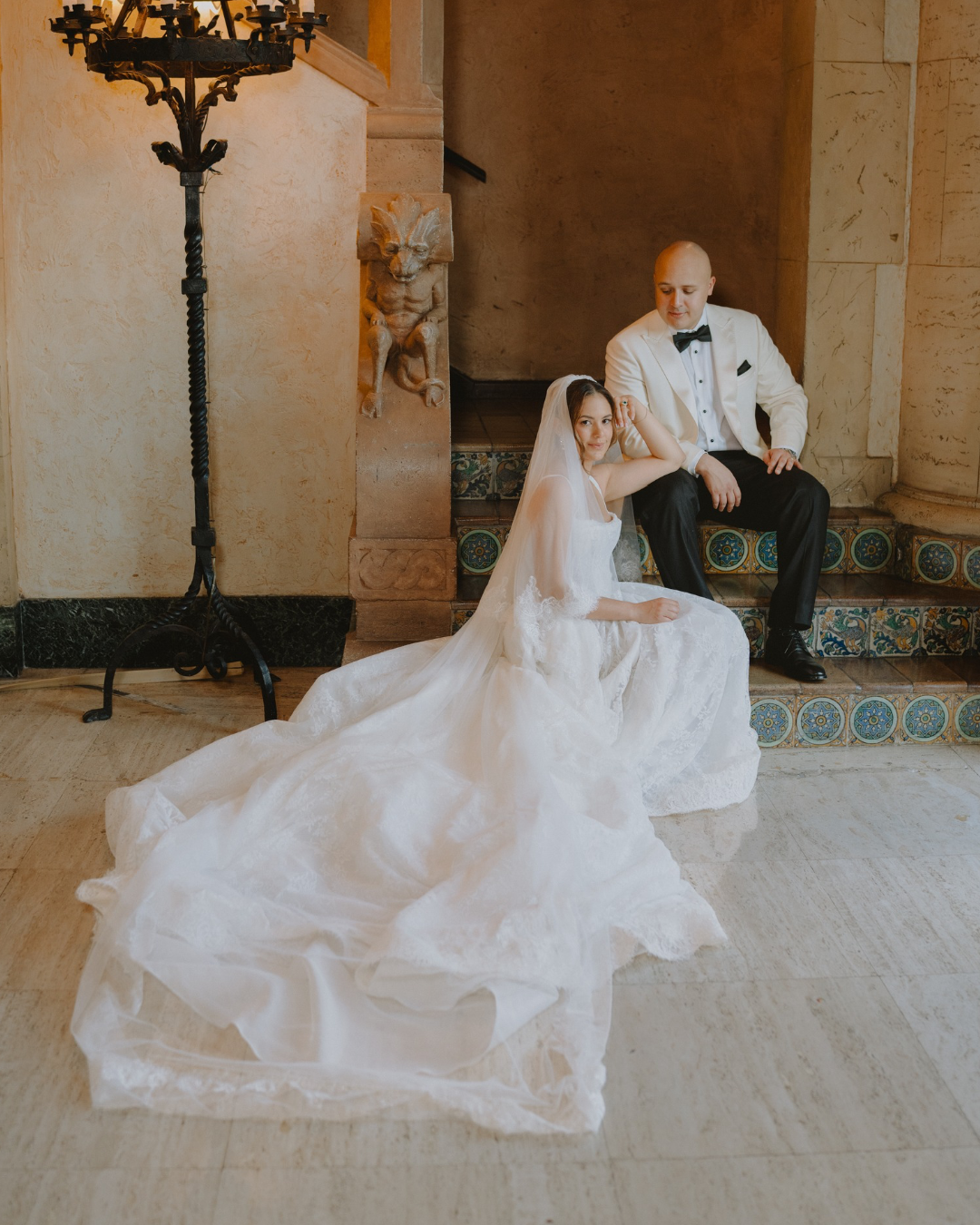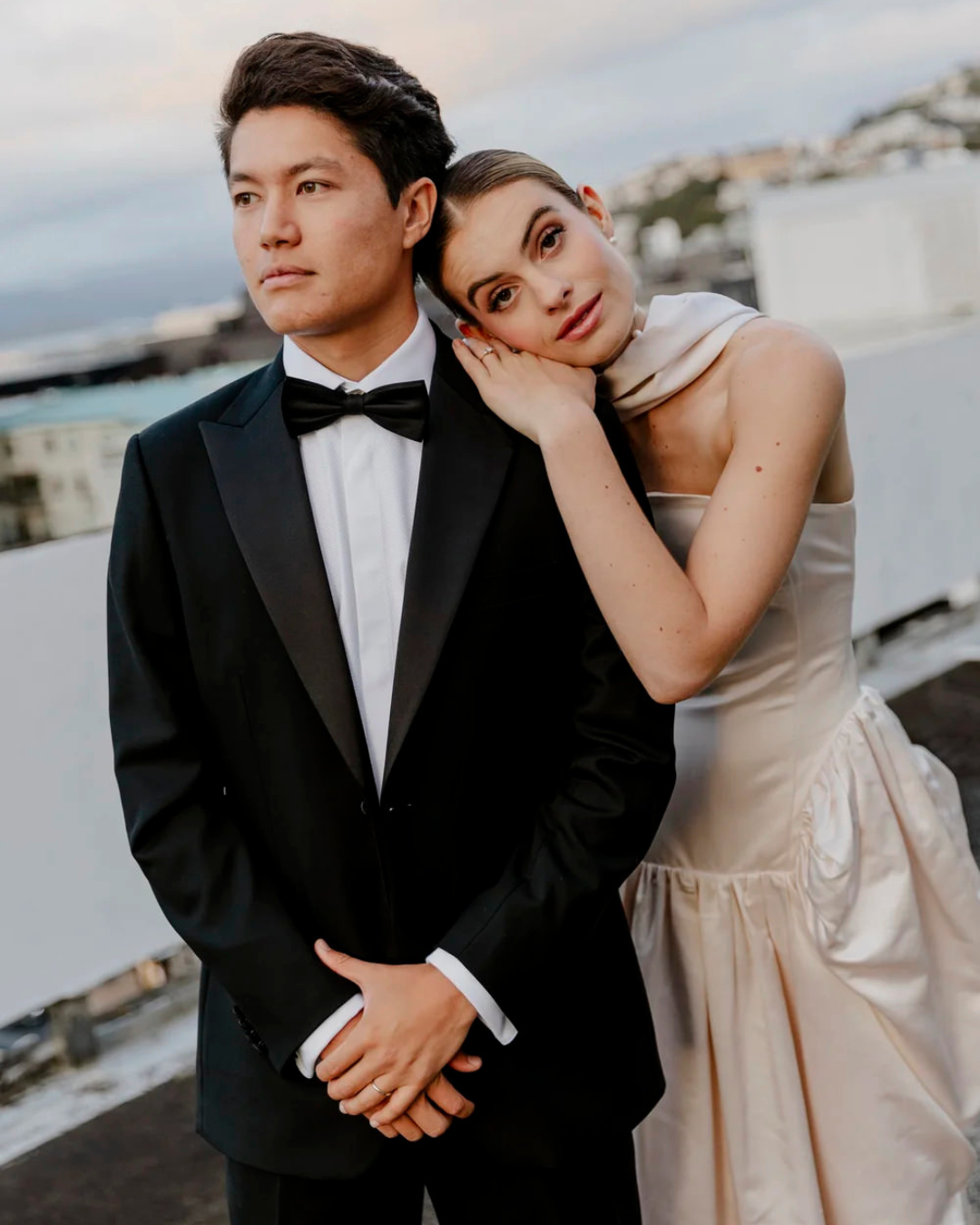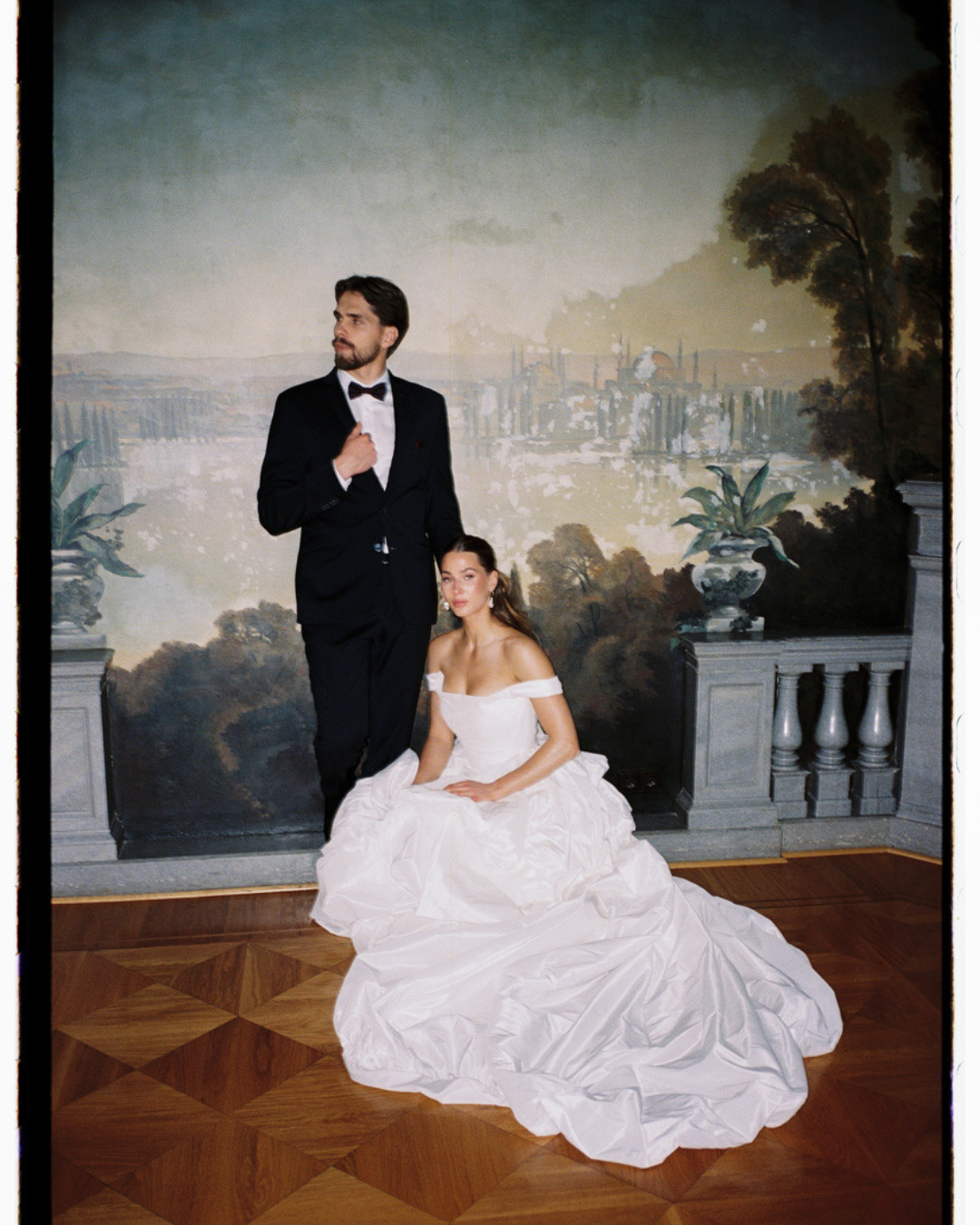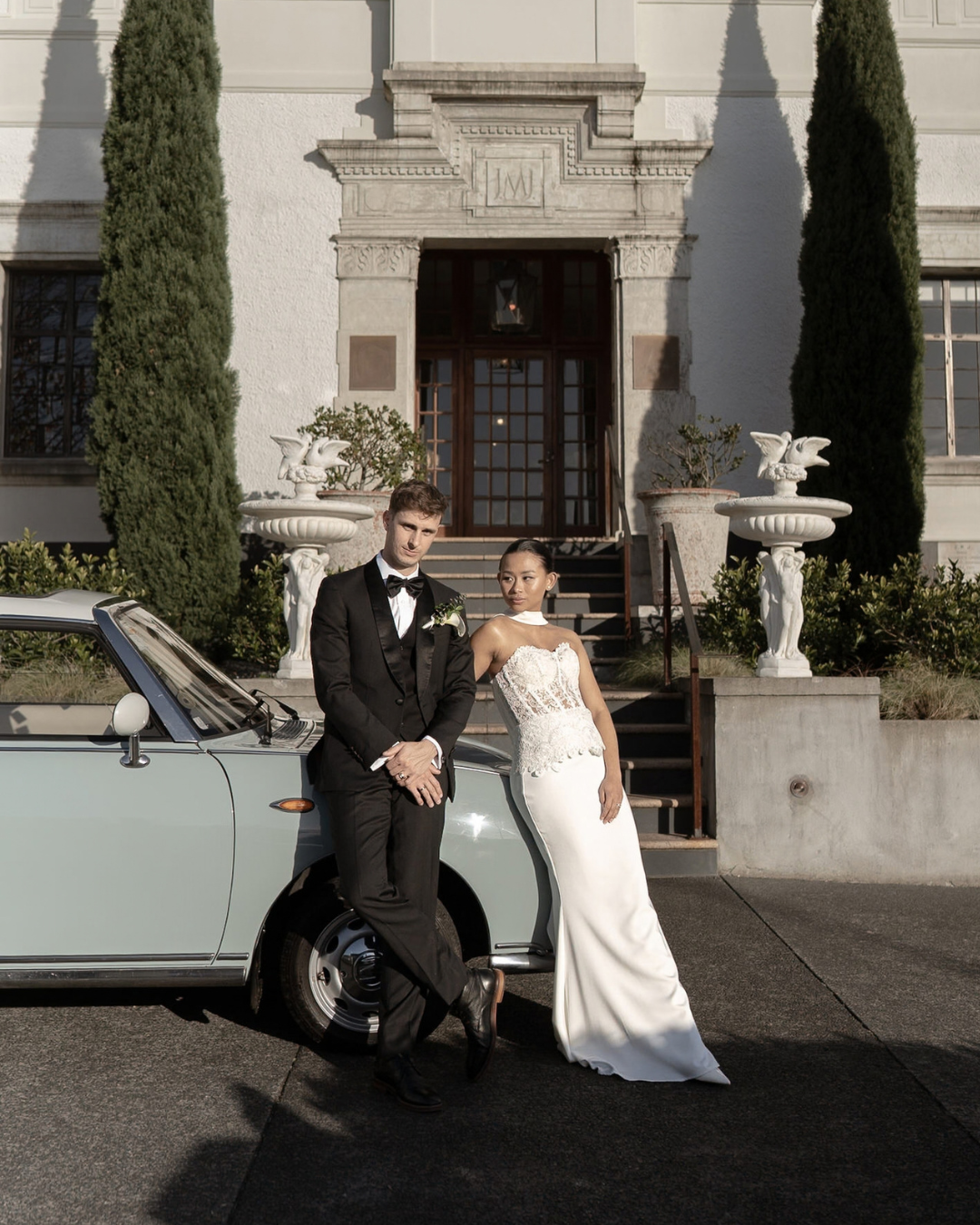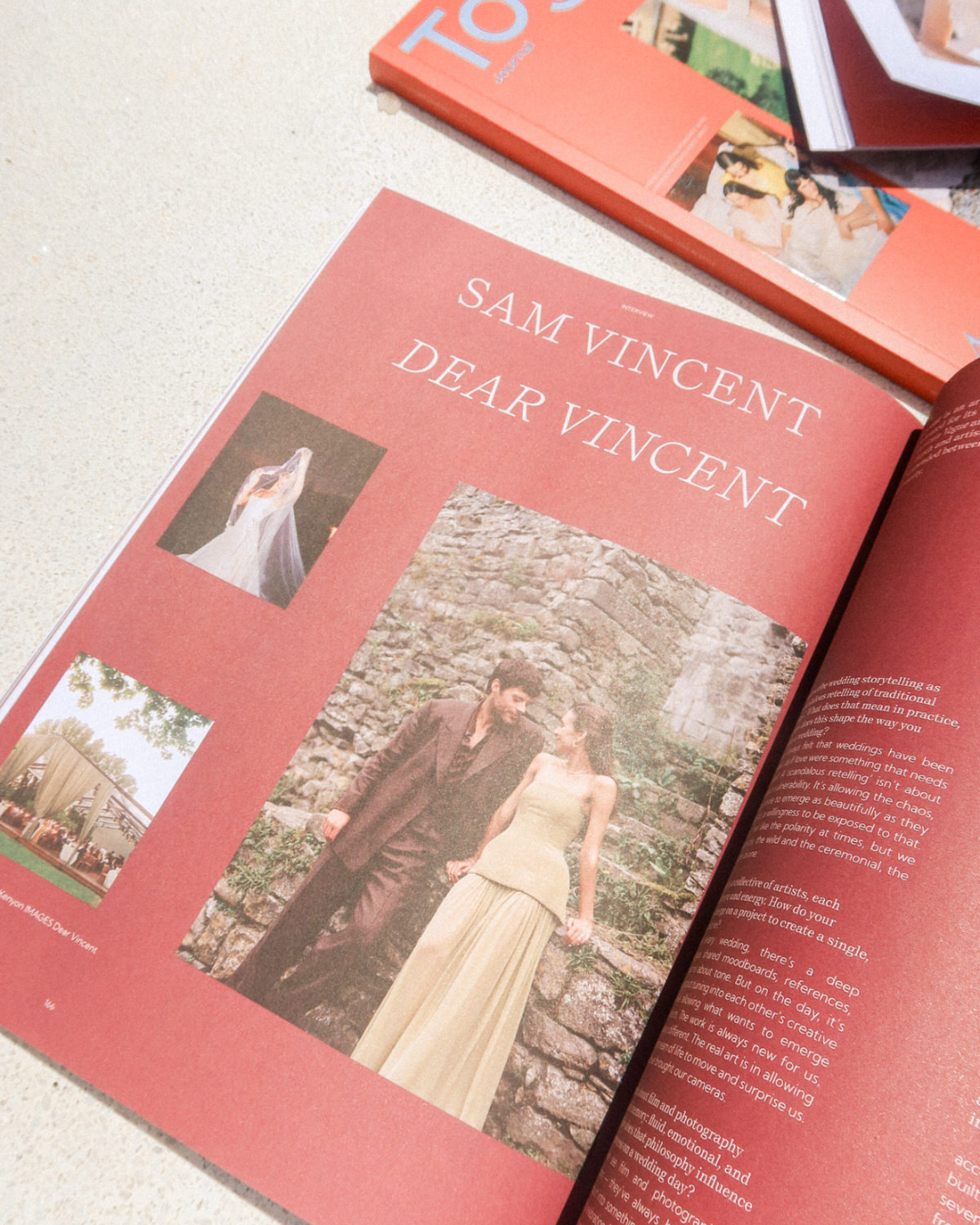
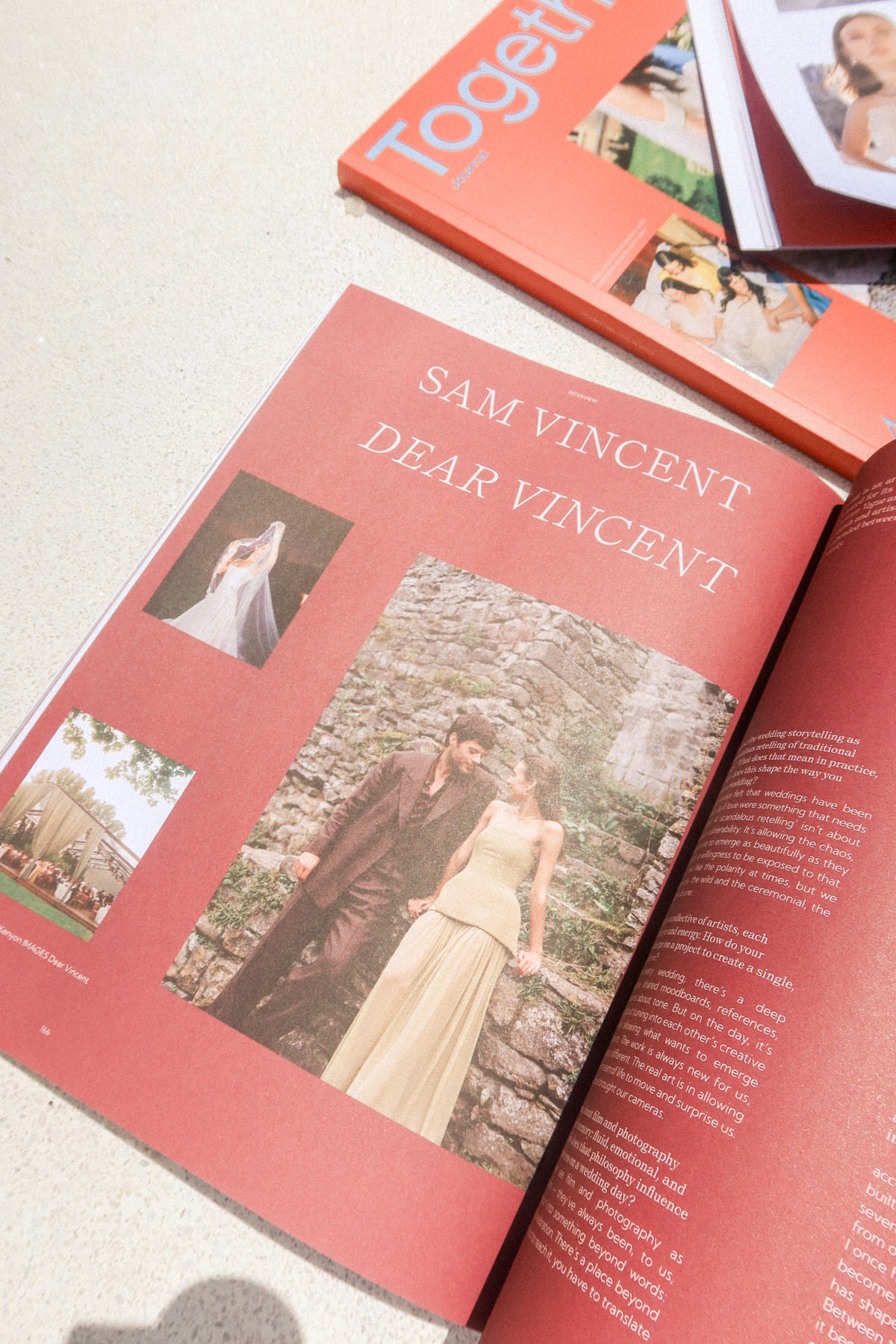
A look into Dear Vincent’s work and style with Sam Vincent.
Dear Vincent is an artists’ collective redefining modern wedding storytelling through film and photography. Their work, celebrated for its daring originality and poetic emotion, has appeared in publications including The New York Times, American Vogue and British Vogue. They collaborate globally, from Europe to Southeast Asia, capturing love with cinematic depth and artistic rebellion. Each project becomes a sensory world of texture, truth, and movement, a living memory suspended between stillness and motion. Dear Vincent’s films linger long after the final frame, an ode to love’s untamed beauty.
TJ — You describe wedding storytelling as a “scandalous retelling of traditional stories”. What does that mean in practice, and how does this shape the way you capture a wedding?
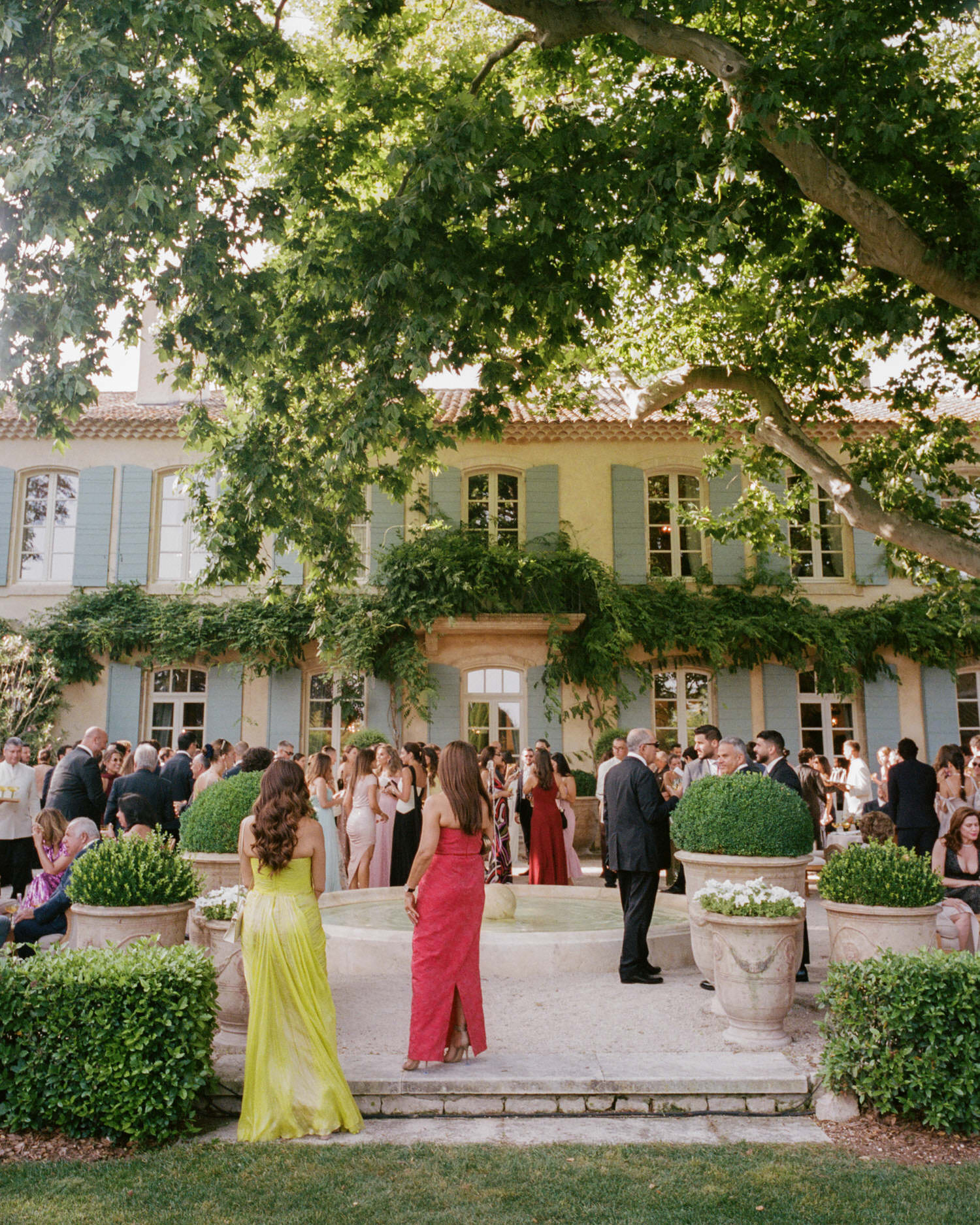
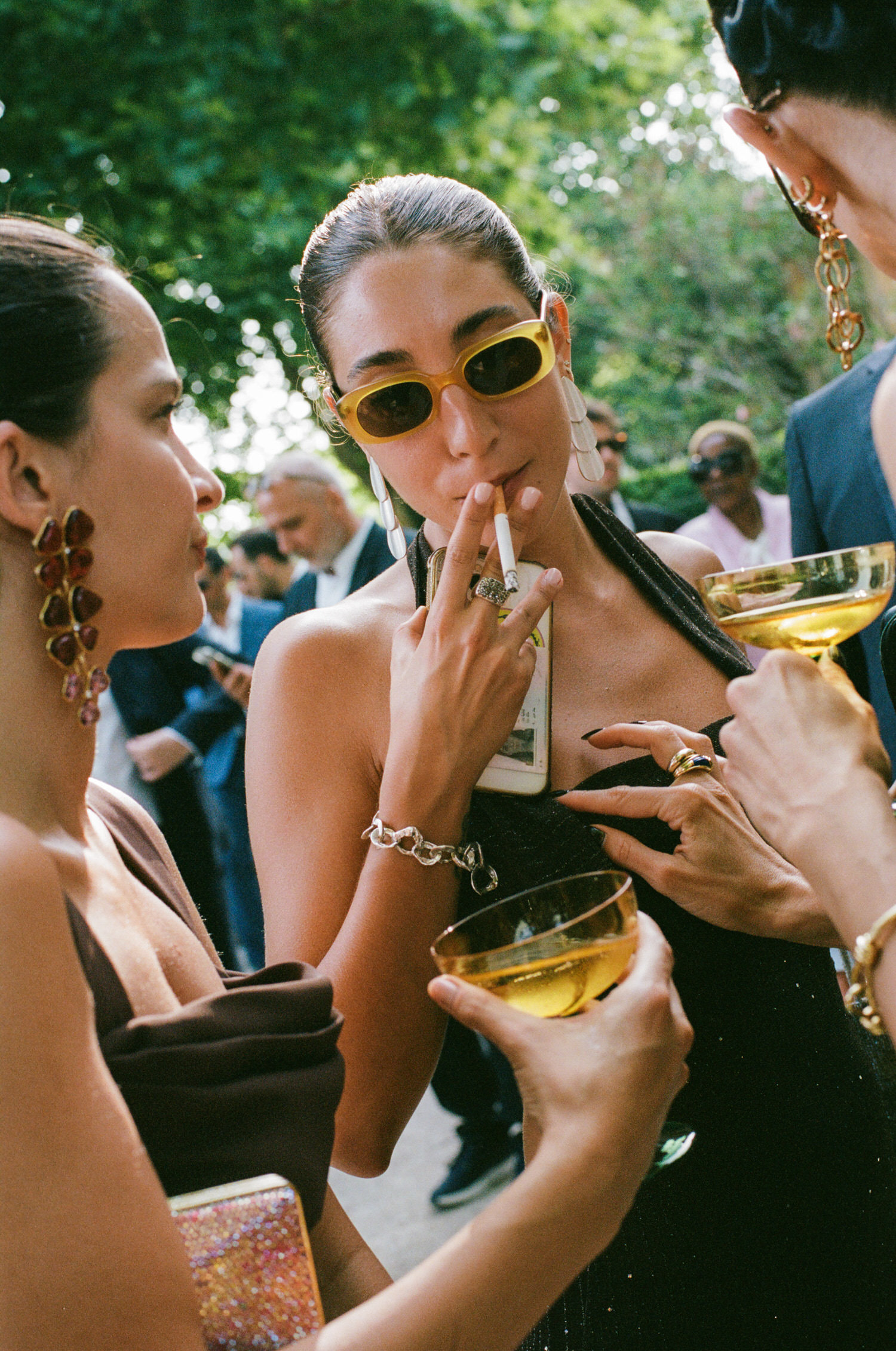
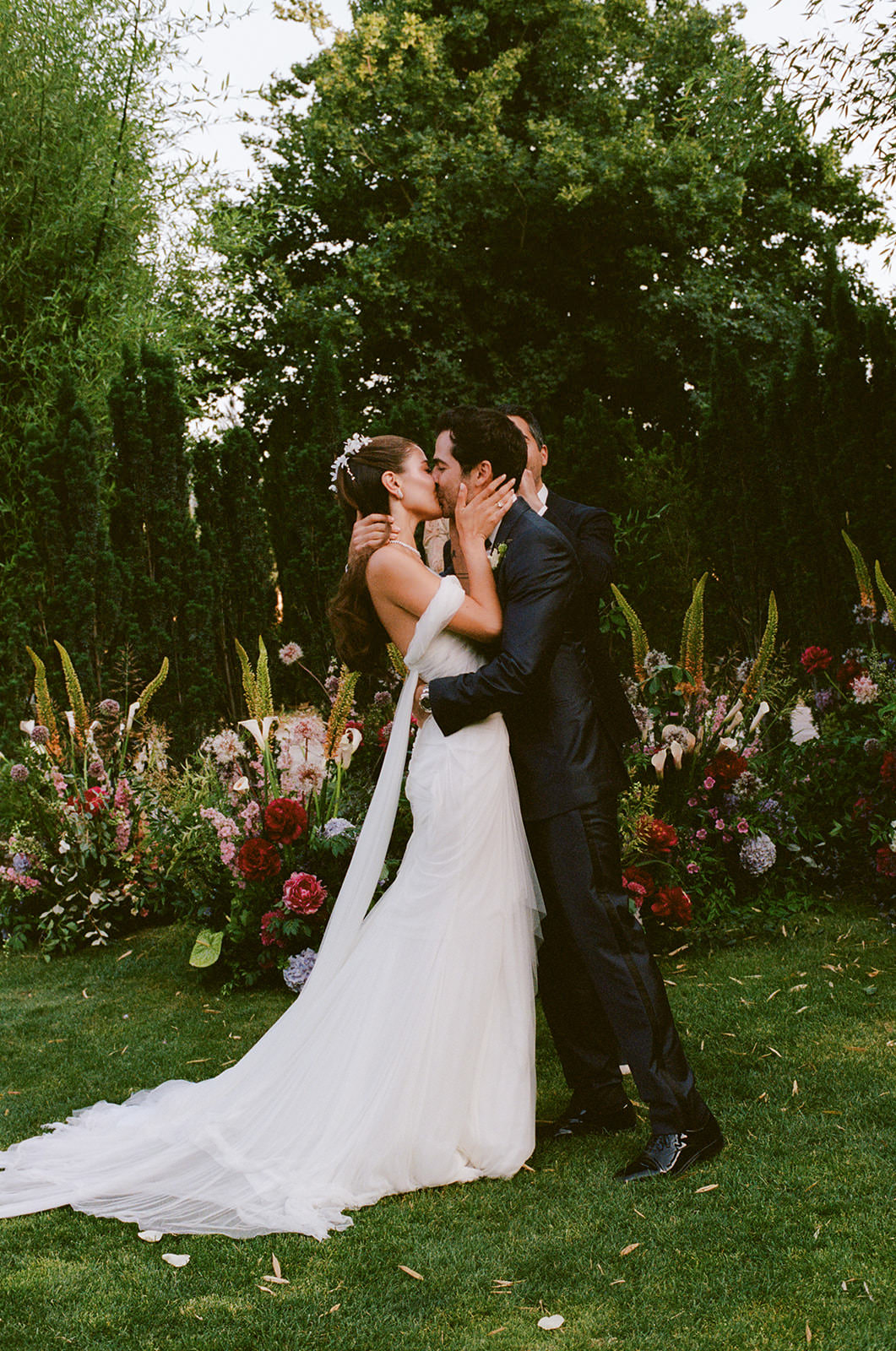
DV — We’ve always felt that weddings have been told too politely, as if love were something that needs to behave itself. A ‘scandalous retelling’ isn’t about shock; it’s about vulnerability. It’s allowing the chaos, humour, and desire to emerge as beautifully as they do in real life. It’s a willingness to be exposed to that. Tradition can feel like the polarity at times, but we hold both sacredly, the wild and the ceremonial, the undone and the divine.
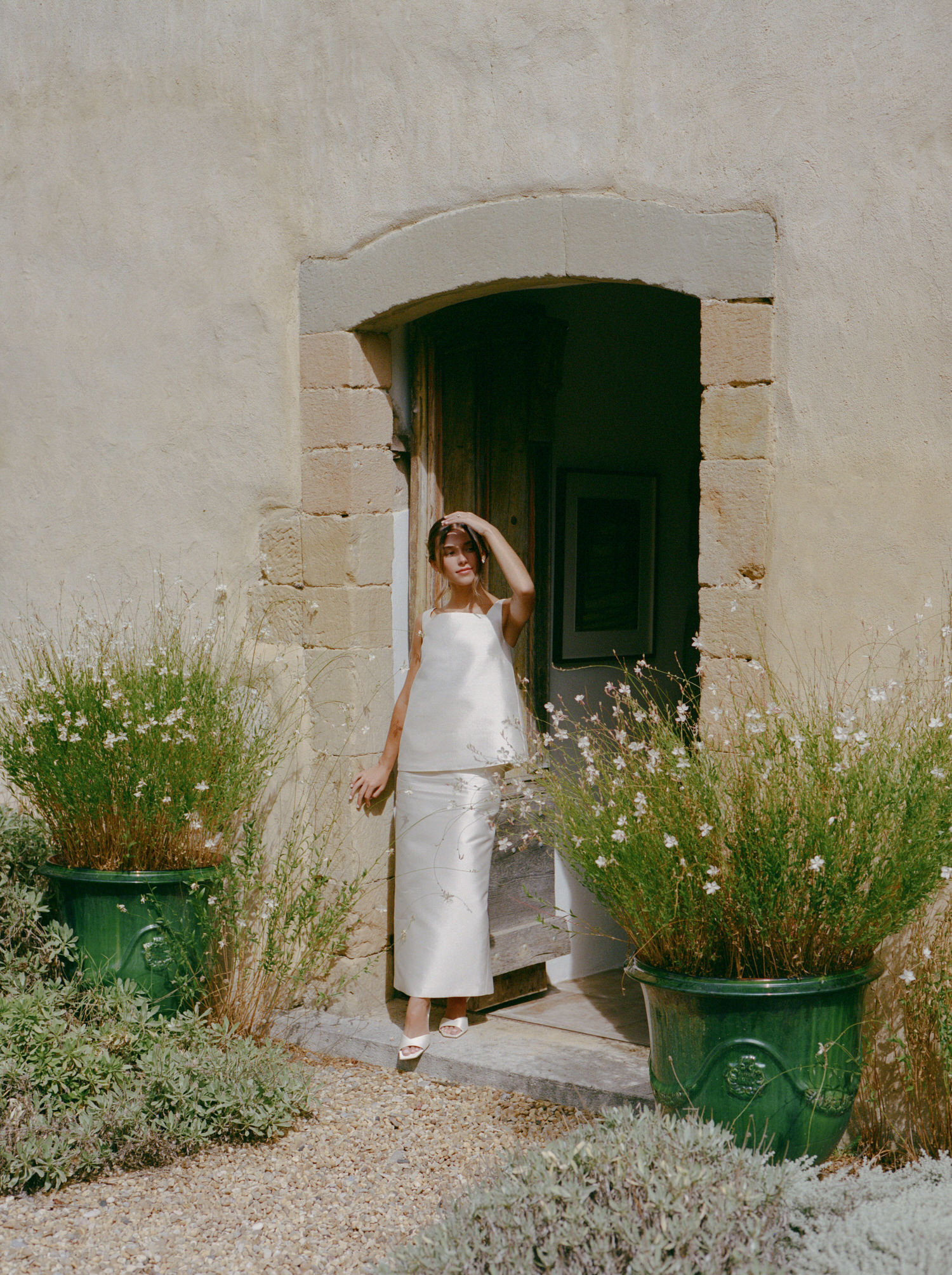
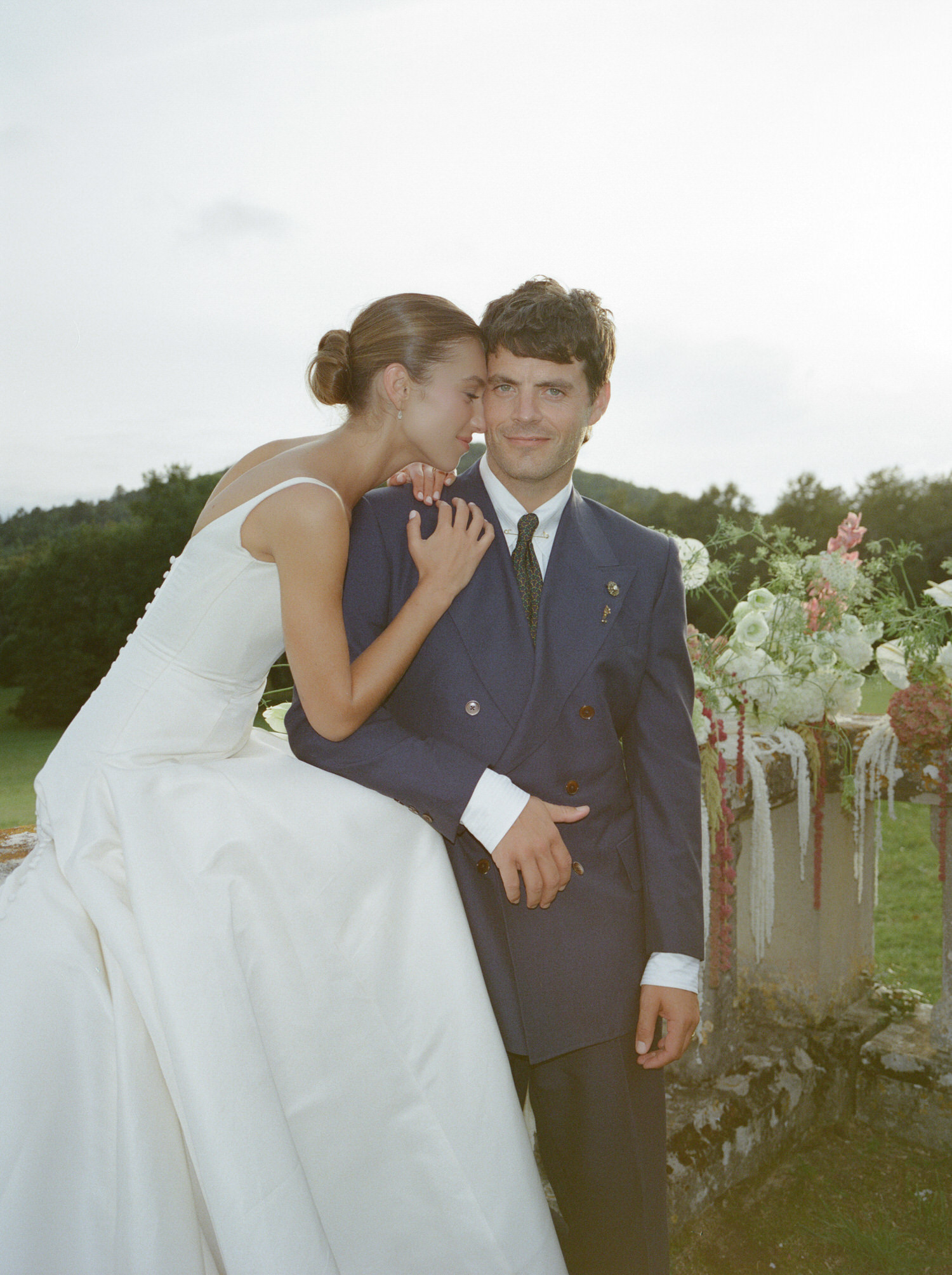
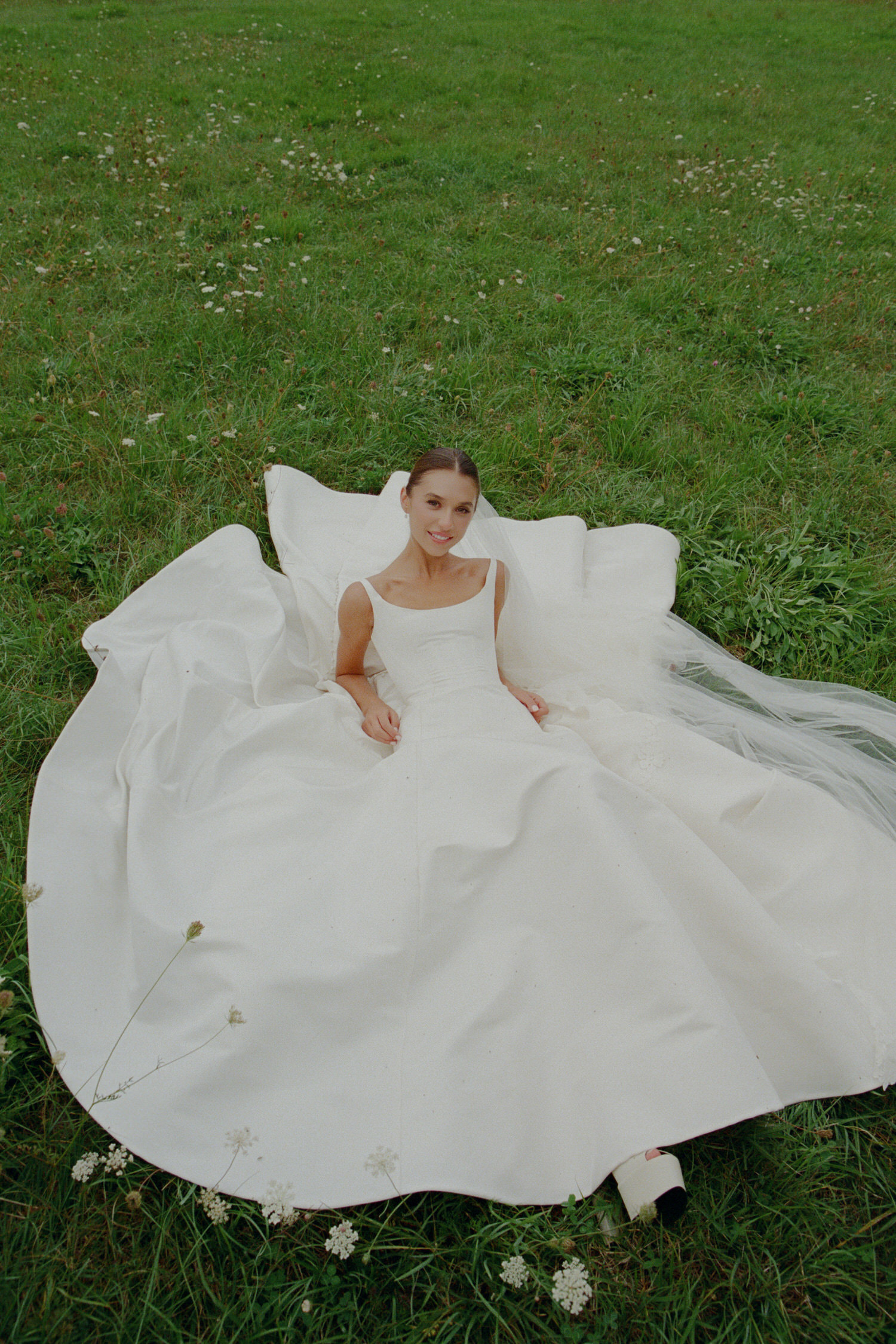
Dear Vincent is a collective of artists, each with their own eye and energy. How do your perspectives merge on a project to create a single, cohesive narrative?
Before every wedding, there’s a deep creative dialogue, shared moodboards, references, long conversations about tone. But on the day, it’s instinctive. It’s about tuning into each other’s creative frequency, while allowing what wants to emerge
through our clients. The work is always new for us, because it’s always different. The real art is in allowing that ever-fresh stream of life to move and surprise us. And thank God we brought our cameras.
You often speak about film and photography as extensions of memory: fluid, emotional, and inseparable. How does that philosophy influence your creative process on a wedding day?
We never see film and photography as separate mediums — they’ve always been, to us, modes of transport into something beyond words: the memory of a celebration. There’s a place beyond what happened, and to reach it, you have to translate how it felt.
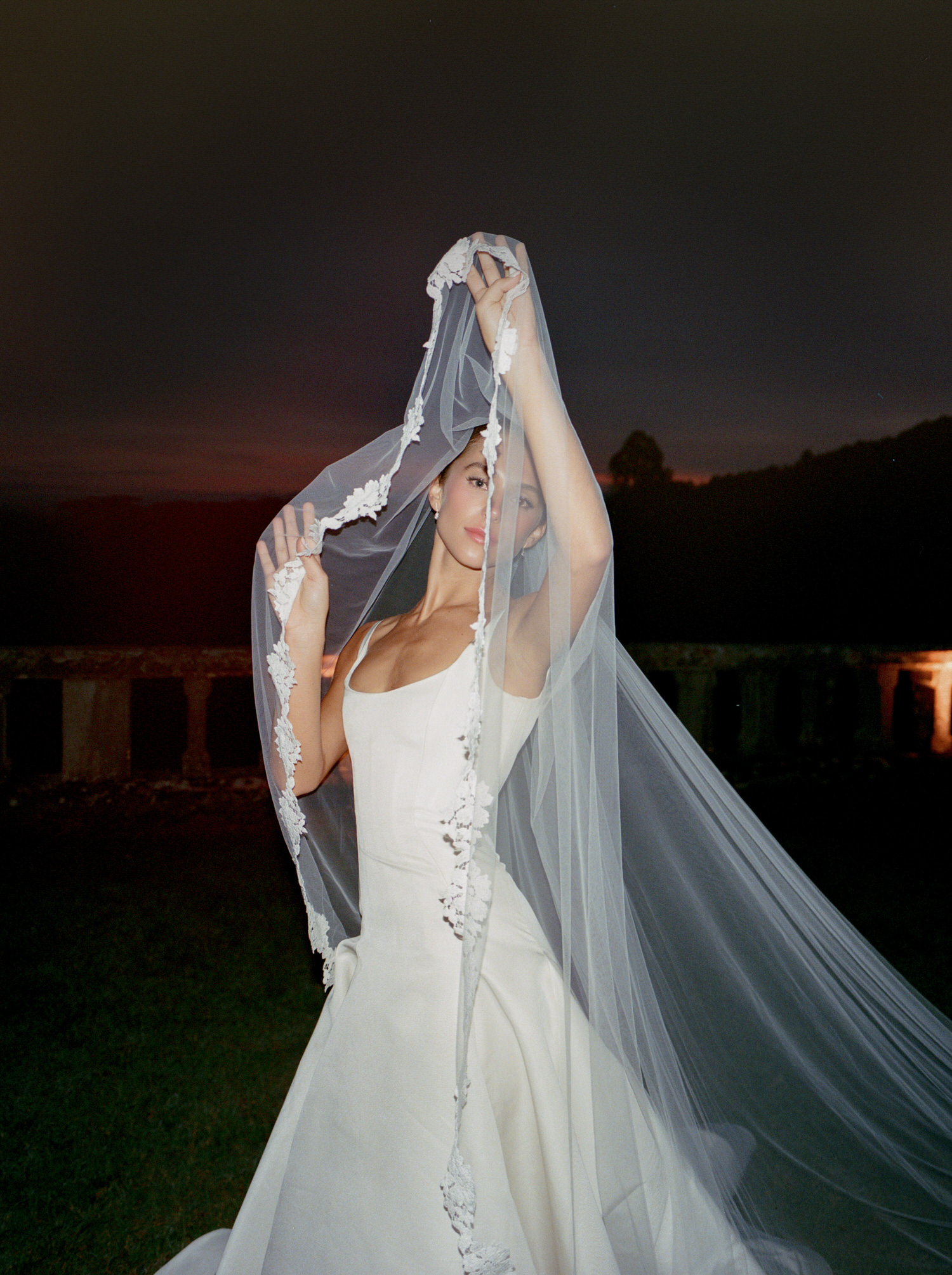
Memory is fragmented, impressionistic. When you revisit those memories years later, we want you to feel that strange sense of déjà vu, that aura. The sense of being right back inside the moment, heart first.
Your work has been described as unconventional, avant-garde, even a little mischievous. What defines the “Dear Vincent” aesthetic, and how do you balance innovation with timelessness?
Luxury and materialism will always drown itself in time. Our work is devoted instead to that humanistic misbehaviour. If our work were a garden, it would be wild, still structured in its own way, but vast enough to allow space and feeling.
We’re obsessed with tension: rebellion and restraint, chaos and control, modernity and nostalgia, raw emotion and refined composition. That’s where timelessness lives, not in the stuff, but in the soul.
Beyond weddings, what influences your artistic approach — be it cinema, literature, visual art, or a particular moment in culture that continues to inspire your storytelling?
There’s a hidden library within our brand, only accessible to us. Inside are films that ache, playlists built around the weather, and images from the seventies. Honestly, much of our inspiration comes from our own journeys through love and heartbreak. I once heard a film director say that the best way to become one is simply to go out and live, and that
has shaped us more than any textbook ever could. Between that and witnessing hundreds of weddings, it becomes easy to recognise the subtle nuances that each couple breathes into their day.
As industry leaders, what shifts or innovations are you observing in the wedding film and photography sectors, and where do you see the craft heading in the next few years?
The only constant is change, and that’s true of every industry. As technology continues to evolve, the invitation to photographers and filmmakers isn’t to create better, it’s to create deeper. We’ll see more and more stylistic diversity, as well as more voices and visions. It’s such an exciting time to be getting married.
You have captured some extraordinary weddings, from celebrity celebrations to far-flung destinations. Is there a particular project that stands out as a creative turning point or personal favourite?
Shooting Brooke and Charlie Puth’s wedding was a real turning point for us. There was such a creative pressure surrounding it, in the best way. We often work with film directors and artists, and that brings a different kind of challenge. You know you can’t hide behind anything; they see through your work like a window.
But that’s what makes it exhilarating. You must question everything you’ve ever created to reach for something truer. Those are the projects that grow you the most, the ones that leave you both exhausted and alive.
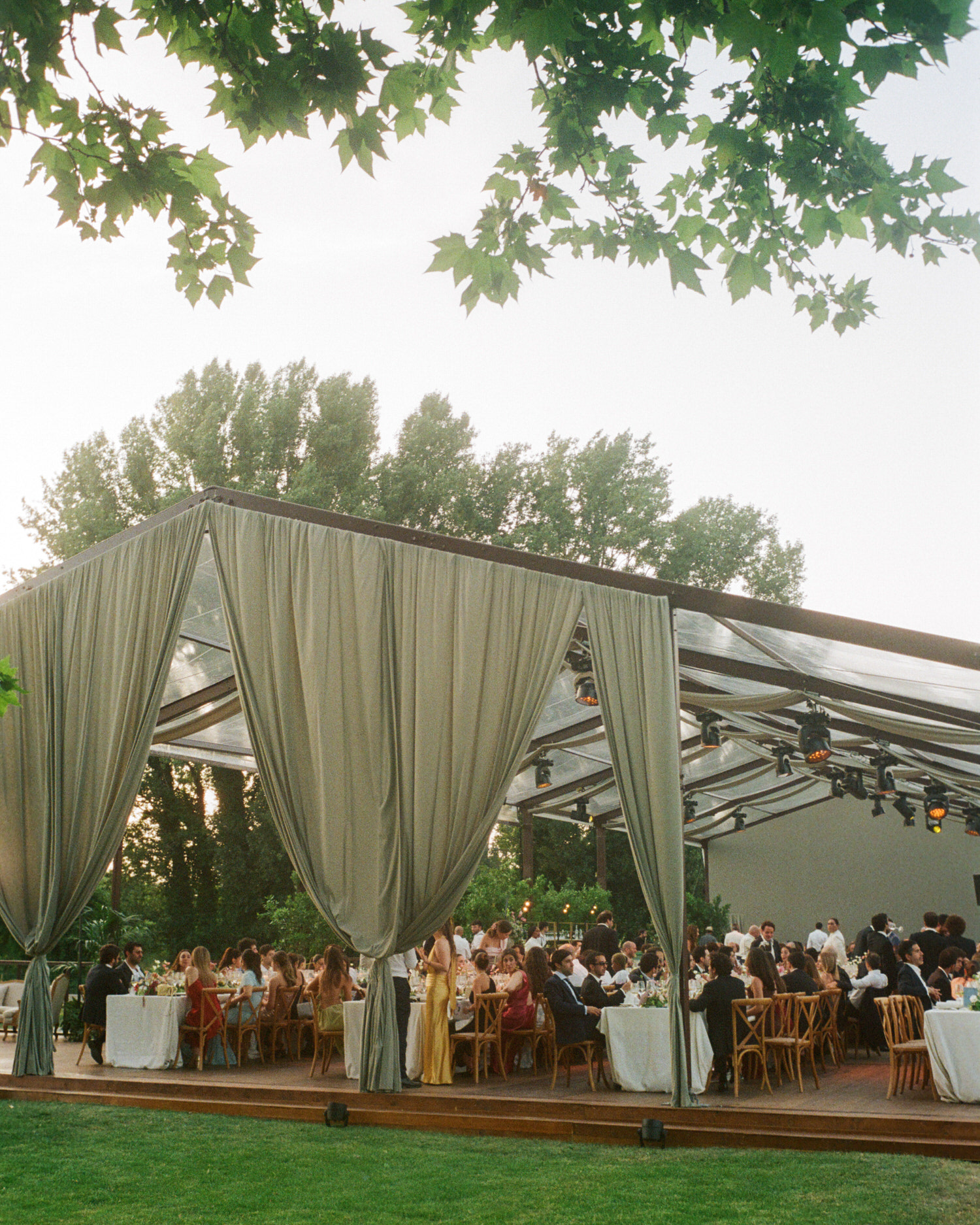
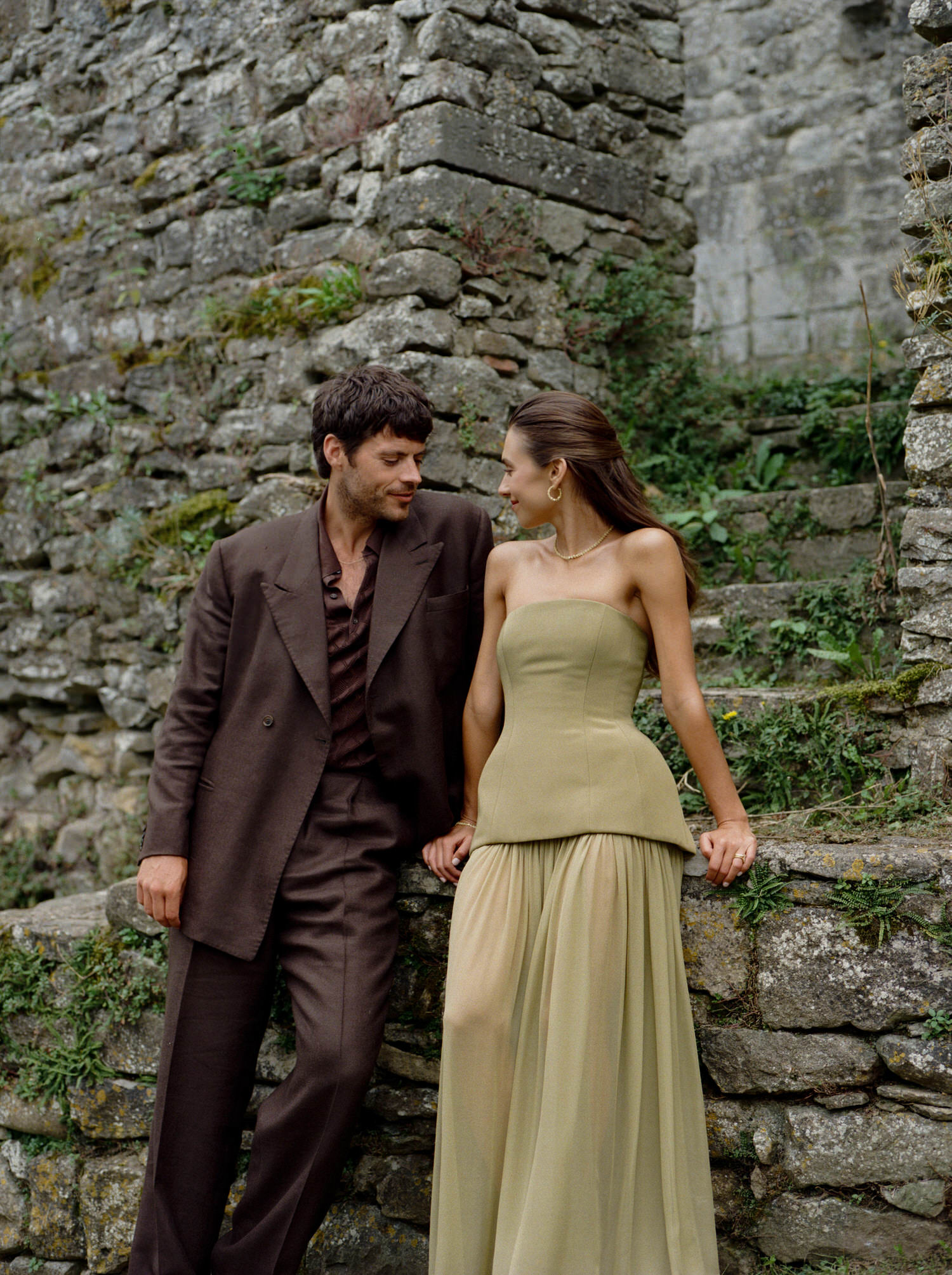
Your portfolio spans continents, from Saudi Arabia to Europe and beyond. Are there any dream locations or cultural settings you’re longing to explore through your lens in the coming years?
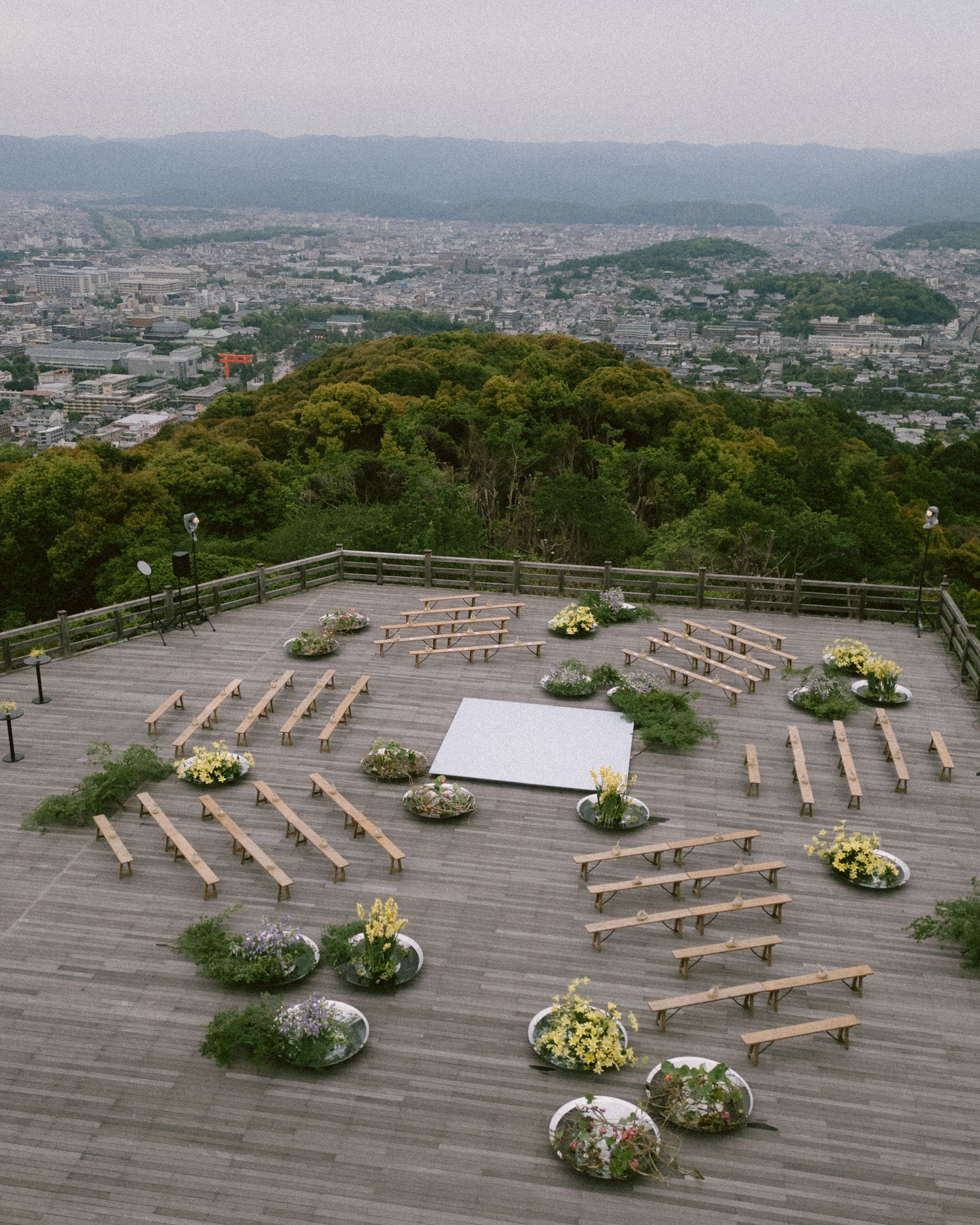
I’ve been photographing destination weddings for almost thirteen years now, and the places that move me most these days are ones with deep cultural resonance, like Japan. There’s something about being there that feels almost outside of time. The craftsmanship, the discipline, the quiet poetry in everything, from architecture to cuisine, all feel like creativity lived as a way of life. Every time I shoot there, I’m reminded that art isn’t about grand gestures; it’s about presence.
What advice would you offer couples searching for the right photographer or filmmaker — what should they look for beyond the portfolio when choosing the person who will tell their story?
The portfolio will show you what a photographer can do; conversation will show you who they are. The right storyteller should feel like someone you trust with your truth, not just your image.
Look for connection, curiosity, and chemistry. You want someone who asks questions, who listens deeply, who sees you as people, not subjects. The best work doesn’t come from direction; it comes from comfort. When you feel seen, you forget the camera, and that’s when the real story begins.
As a collective, constantly evolving, what can we expect from Dear Vincent in the near future? Are there new projects, collaborations, or creative directions you’re excited to share?
Next year feels like a new chapter, a big vision coming to life. We’ve built an incredible, tight-knit team of artists who are truly sensational at what they do. 2026 will be our biggest year yet for both imagery and film.
Joey Willis will be leading photography for the brand, and as for video… well, let’s just say we’re about to revolutionise the whole bloody thing.
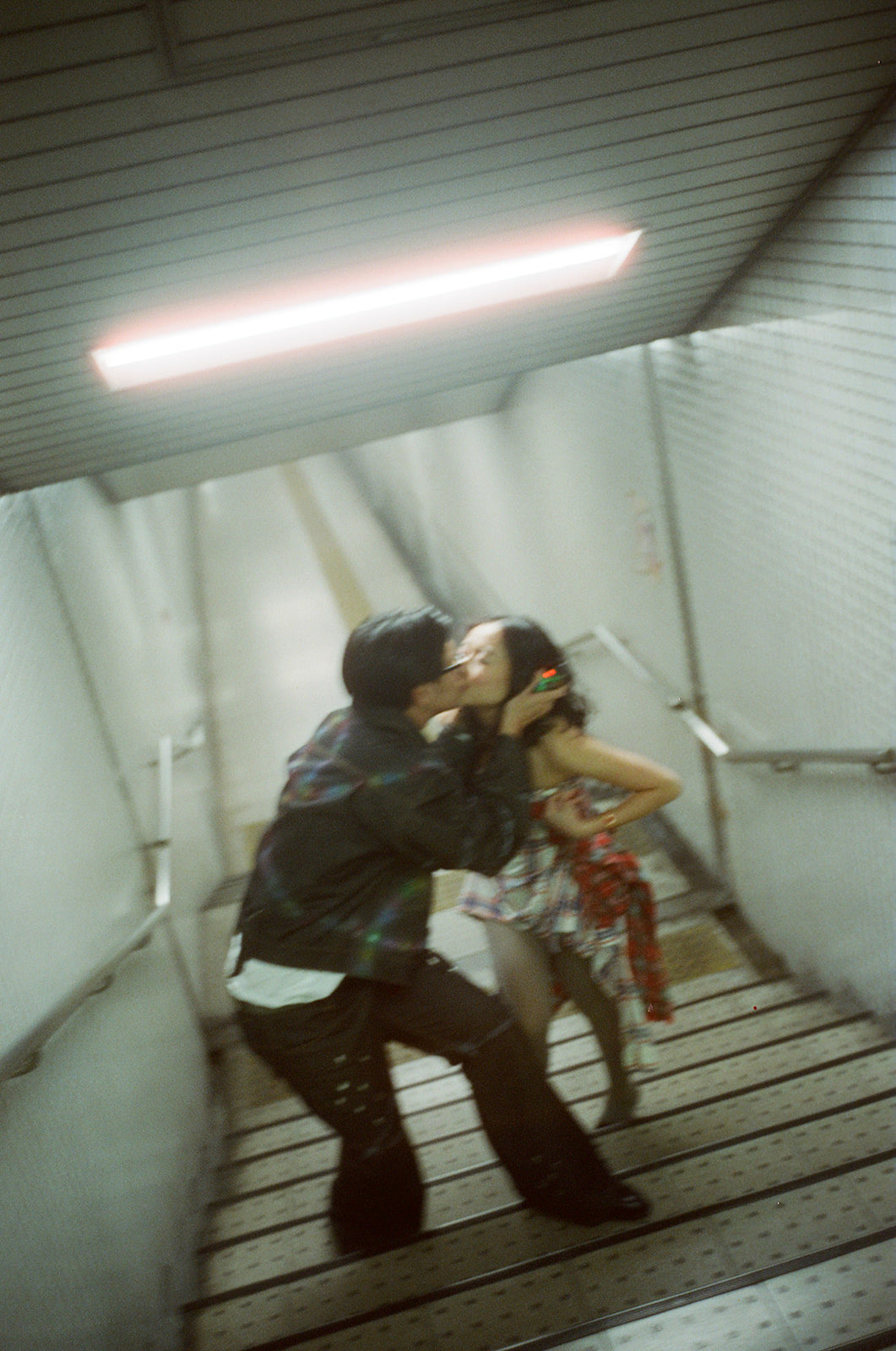
Discover more by exploring dearvincent.co and @dear.vincent.