Elemental, directional, unmistakably Zambesi.
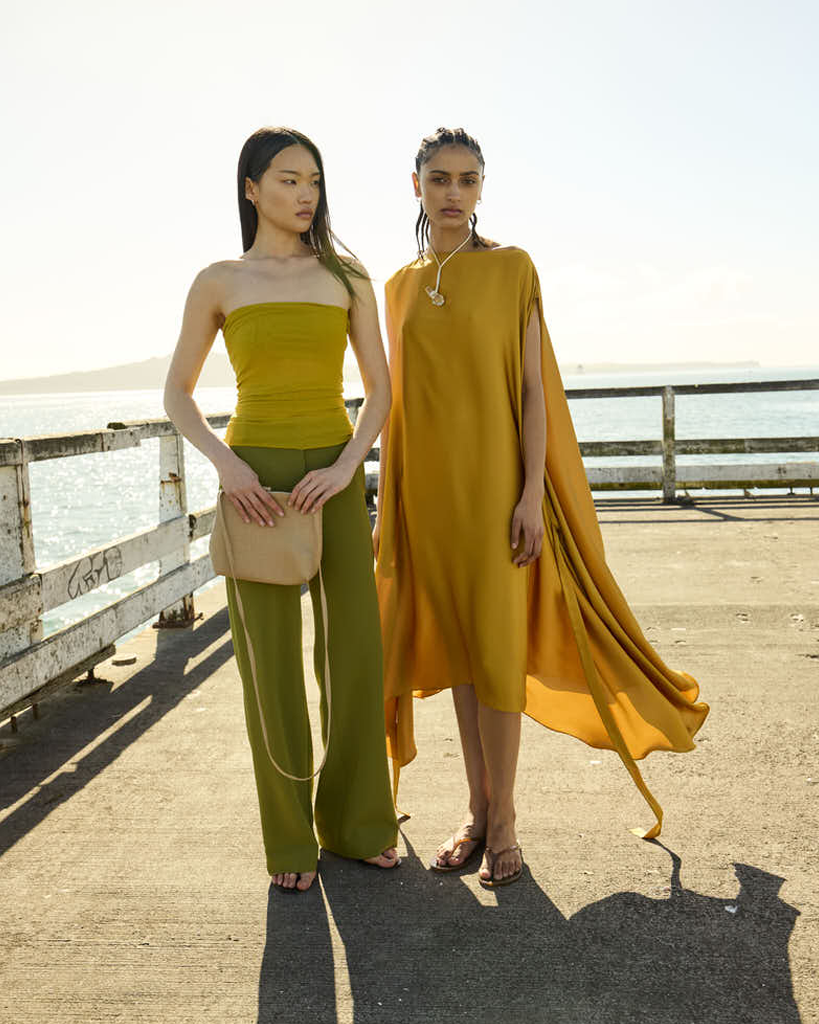
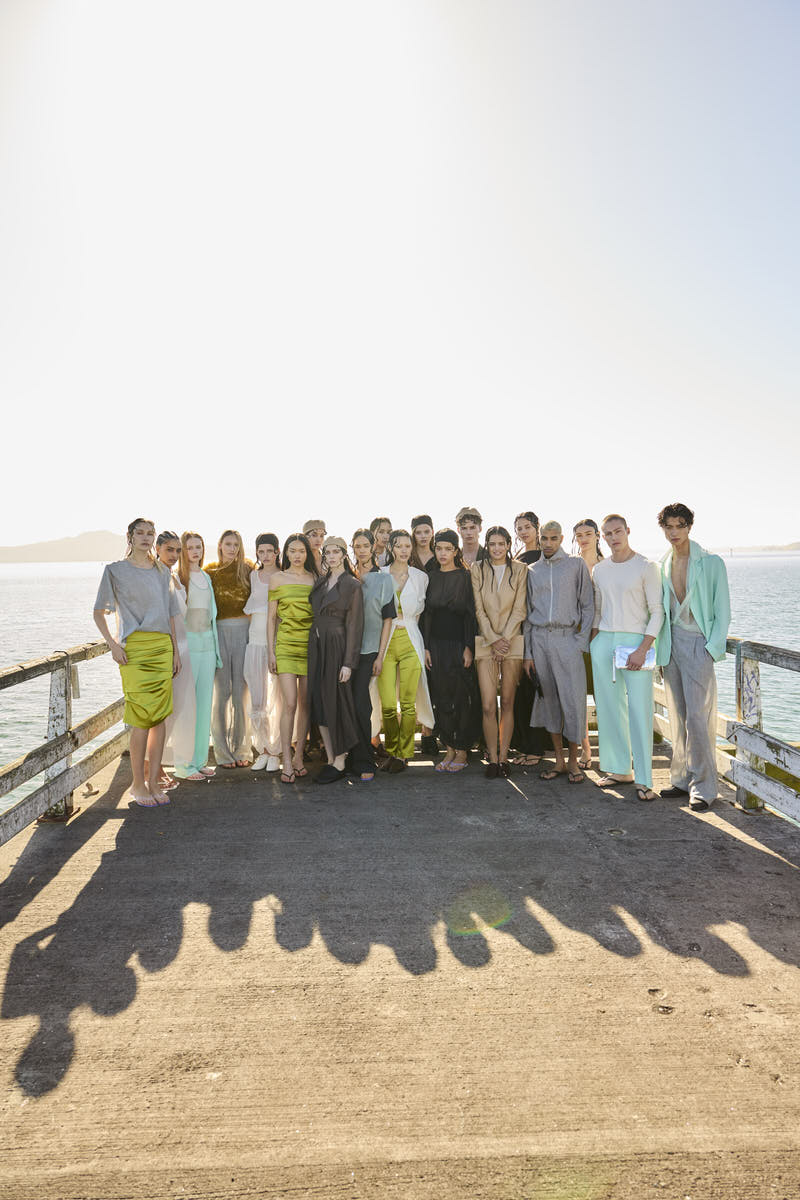
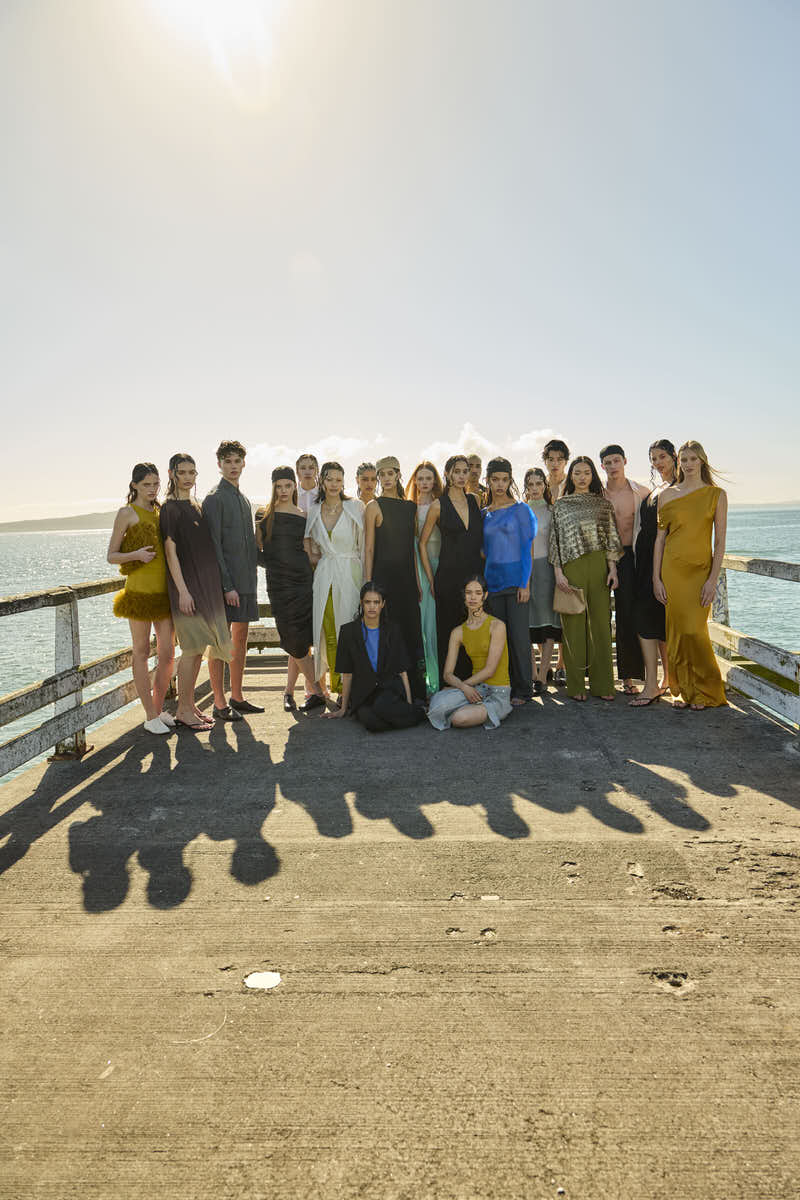
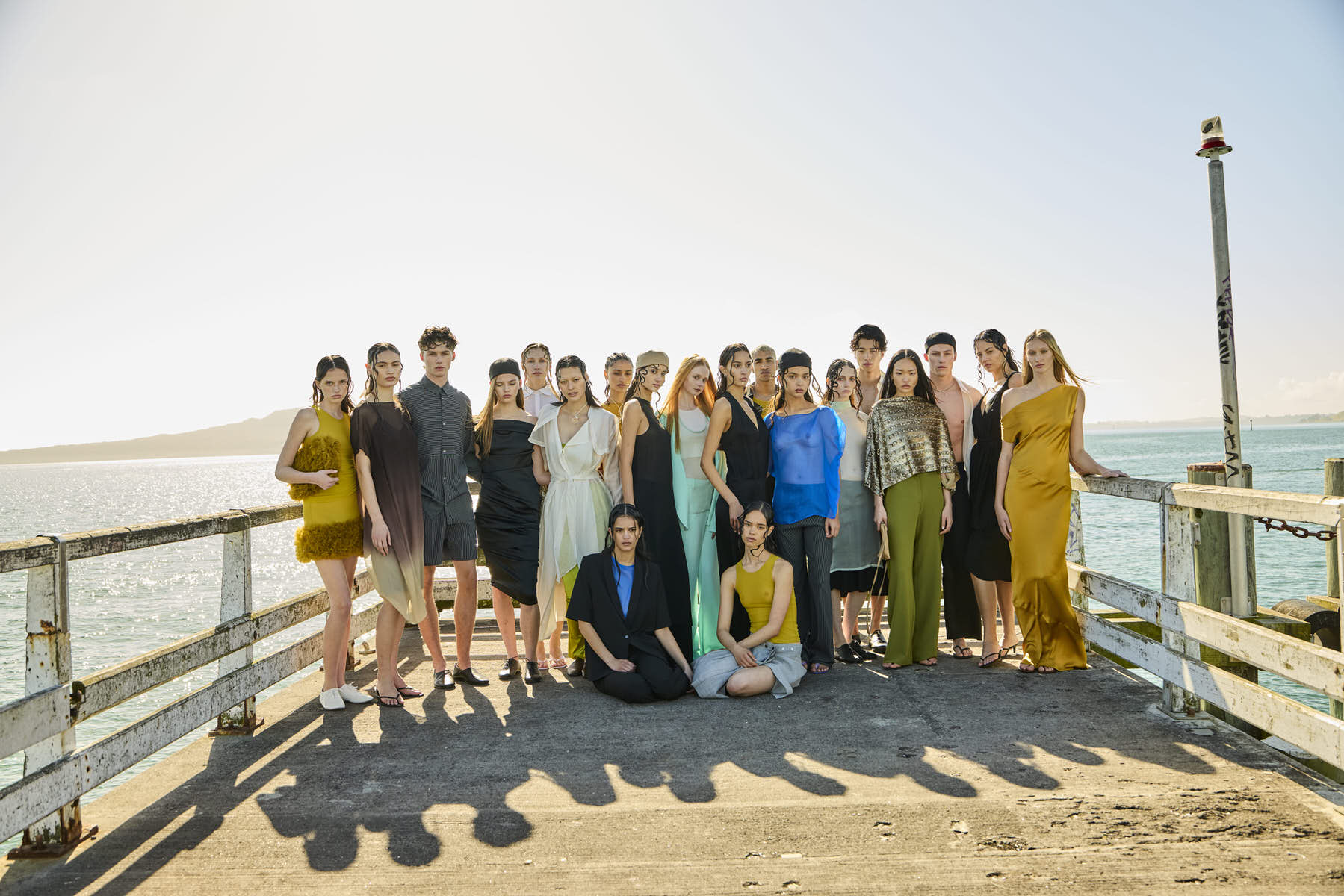
At Ōkahu Bay, with the Waitematā stretching out beyond the pier, Zambesi staged one of the most atmospheric moments of New Zealand Fashion Week 2026. Song to the Siren, the house’s Spring/Summer 2026-27 collection, began at the water’s edge and unfolded as a journey from sea to shore, drawing sailors, sirens, tangled kelp and the mysterious world beneath the surface into the unmistakably dark, directional language of Zambesi.
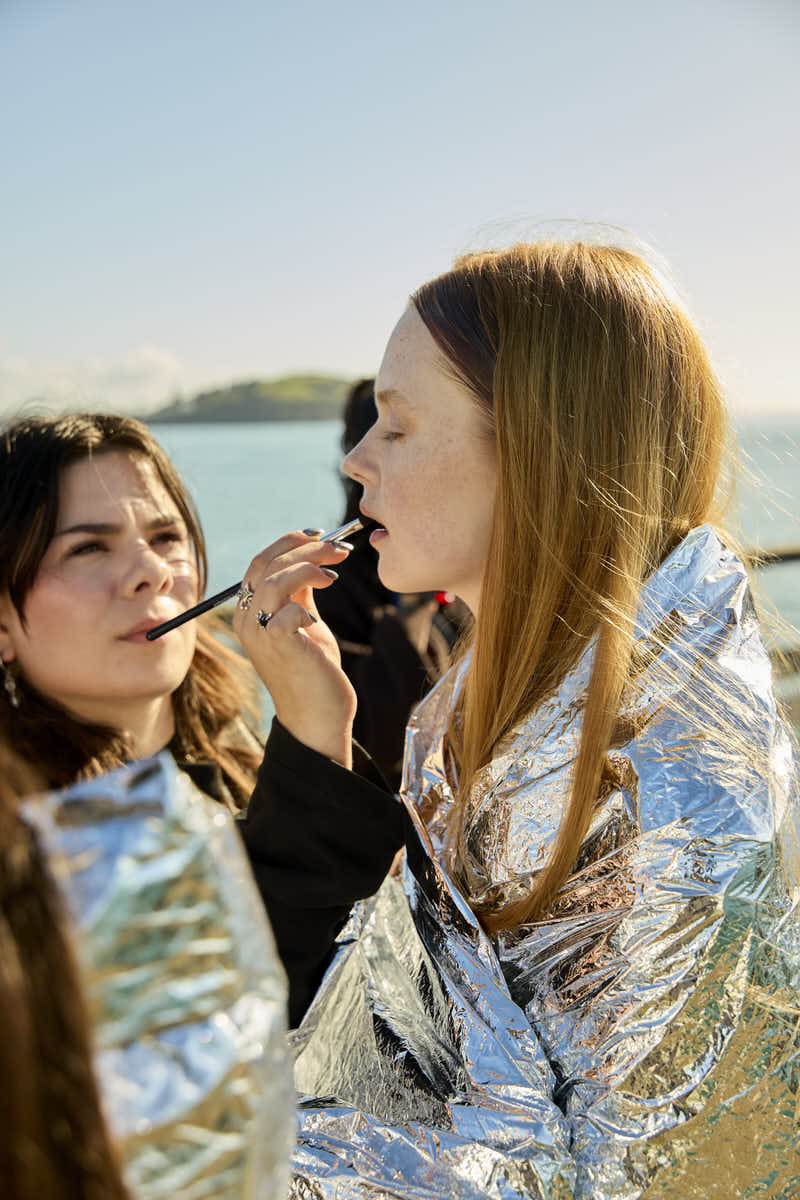
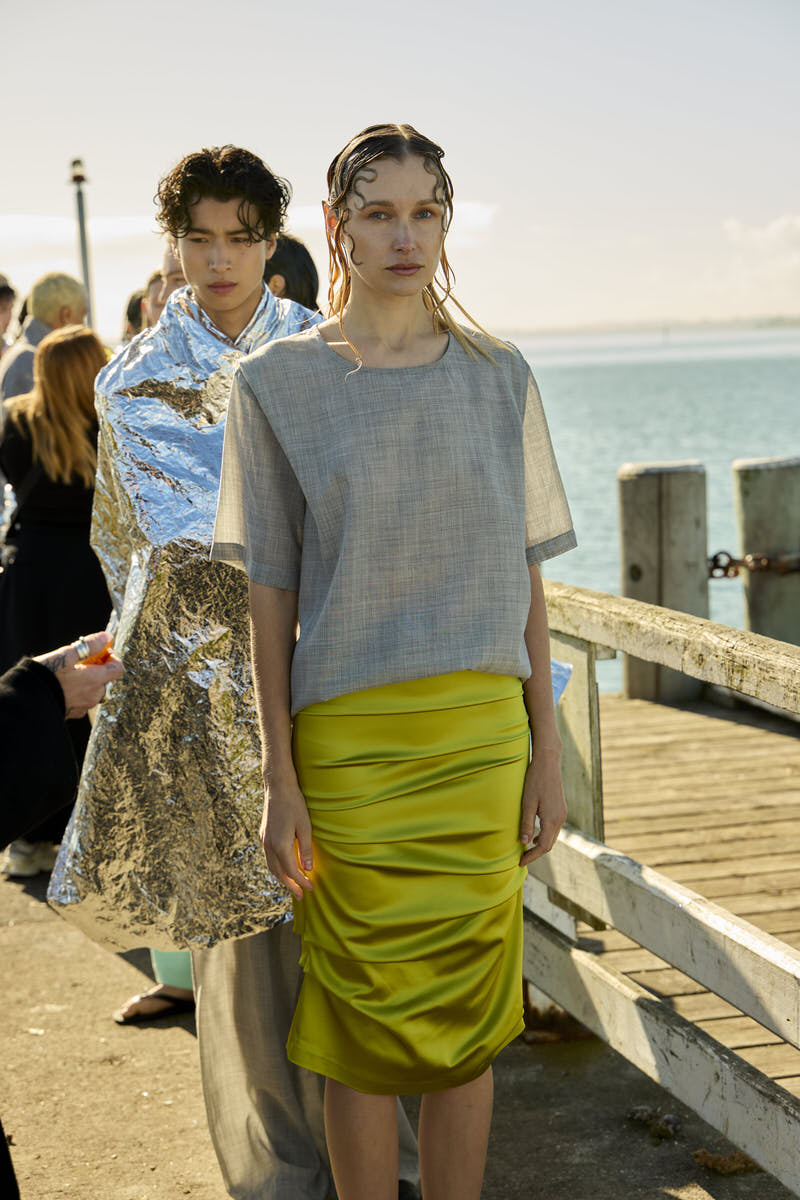
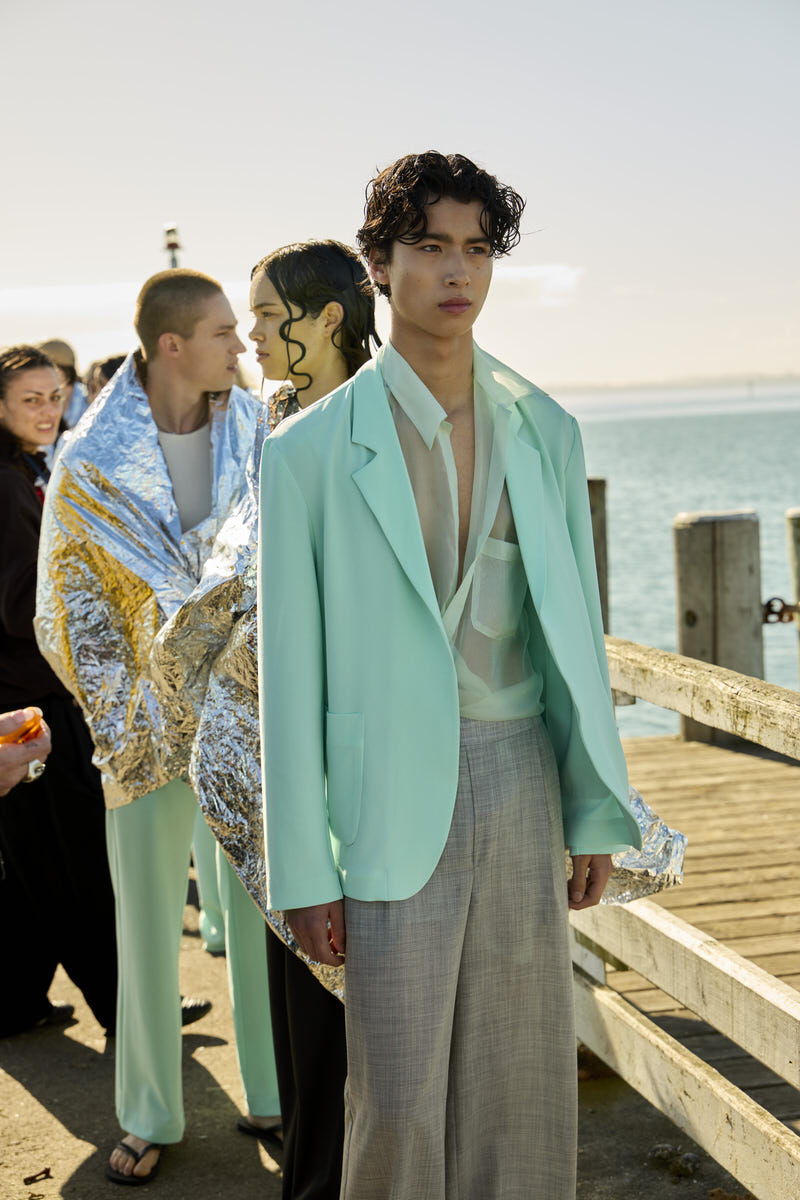
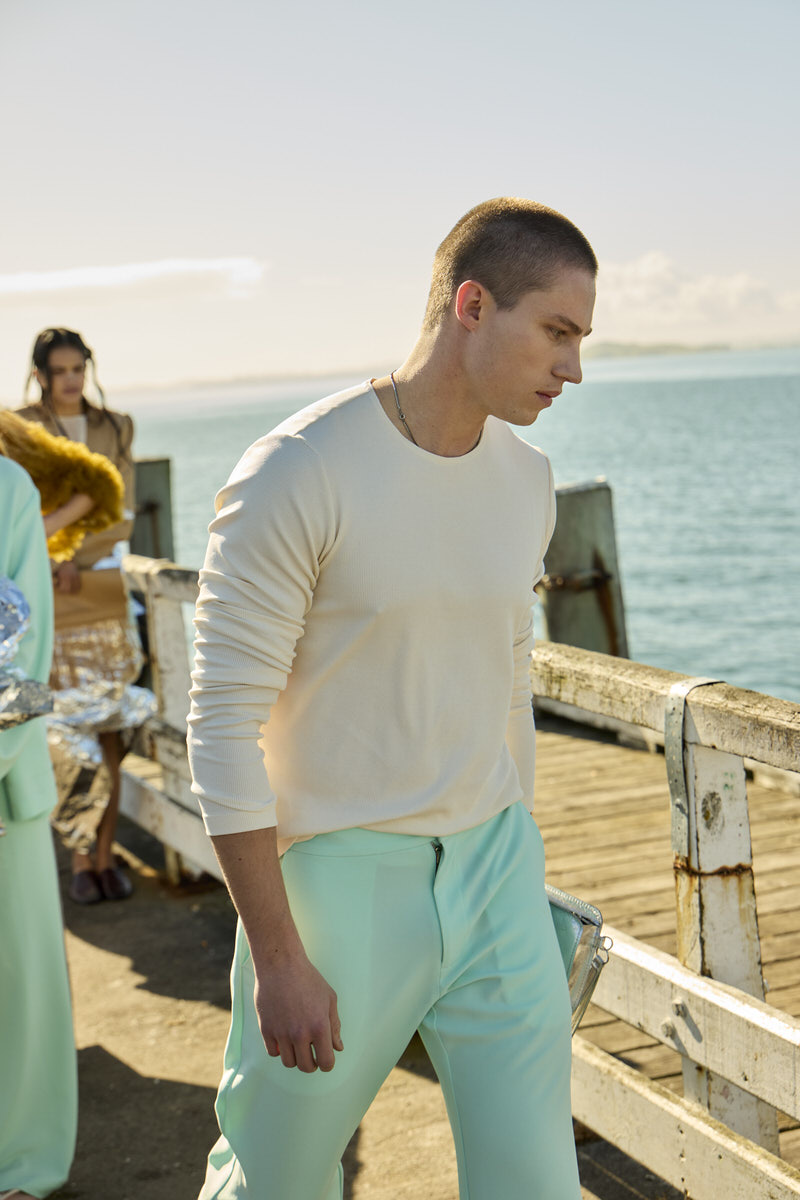
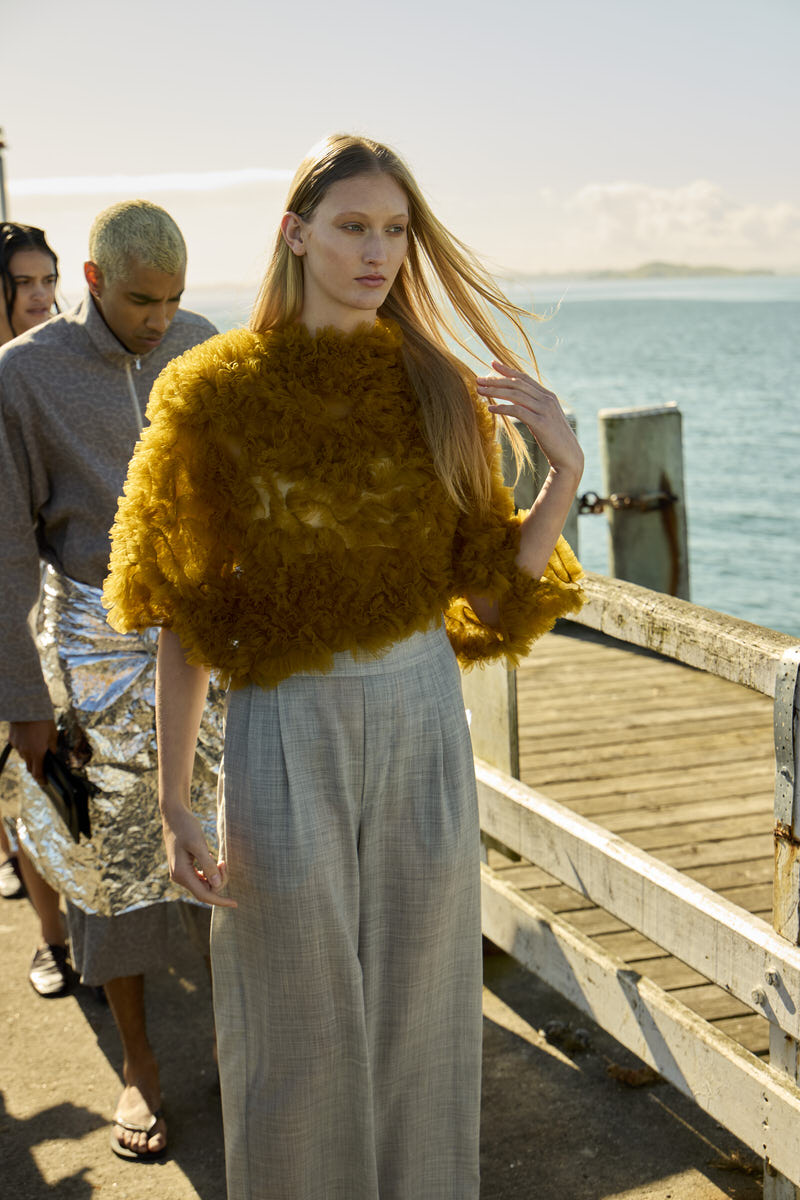
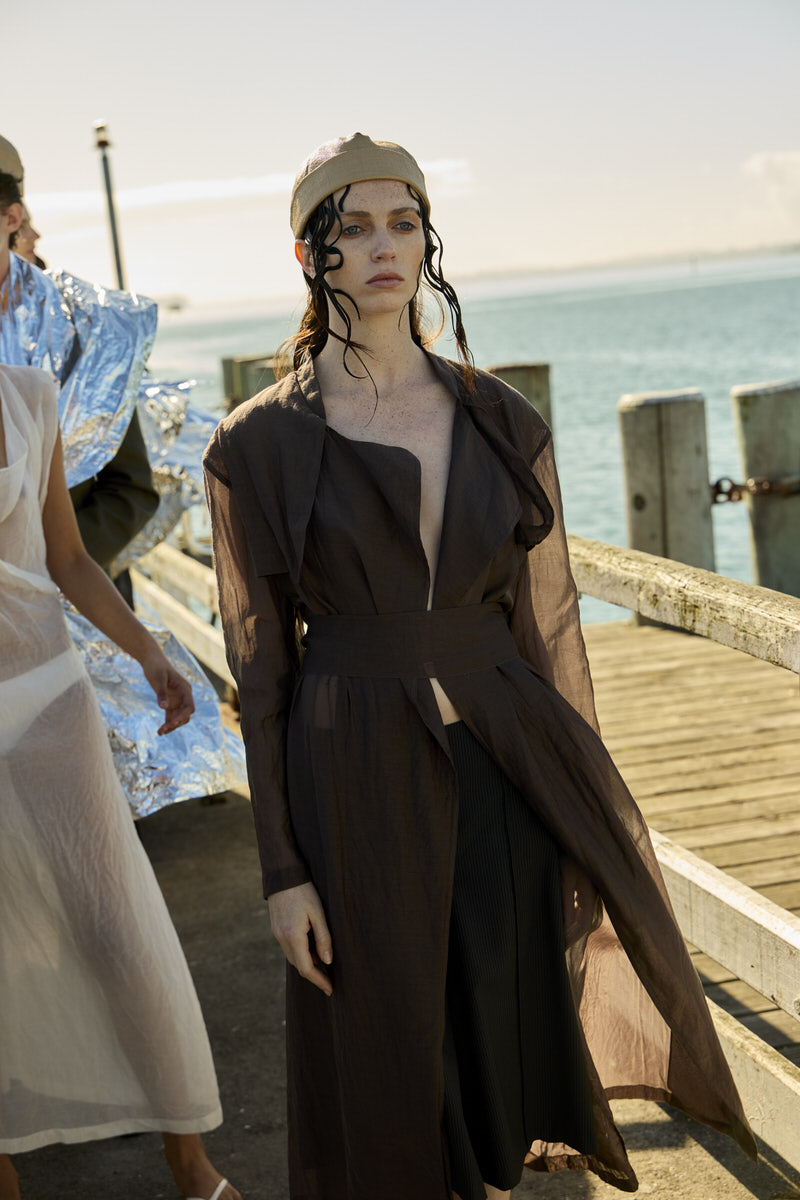
Under the creative direction of Marissa Findlay, the setting was integral to the story. Models emerged along the pier as though coming in from the ocean, carrying its energy onto land before circling the exterior of OKAHU as guests watched from within. There was something cinematic about the procession, but also something raw and elemental, with the landscape, weather, water and clothes all contributing to the mood.
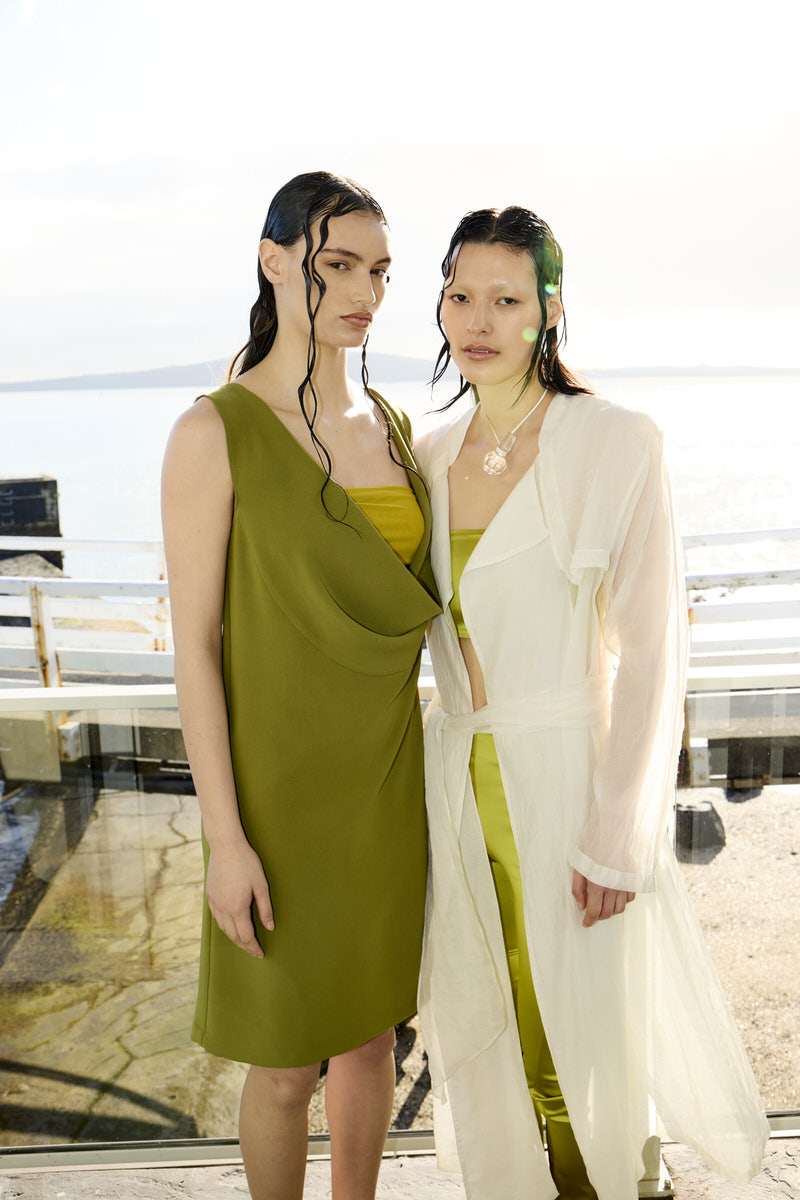
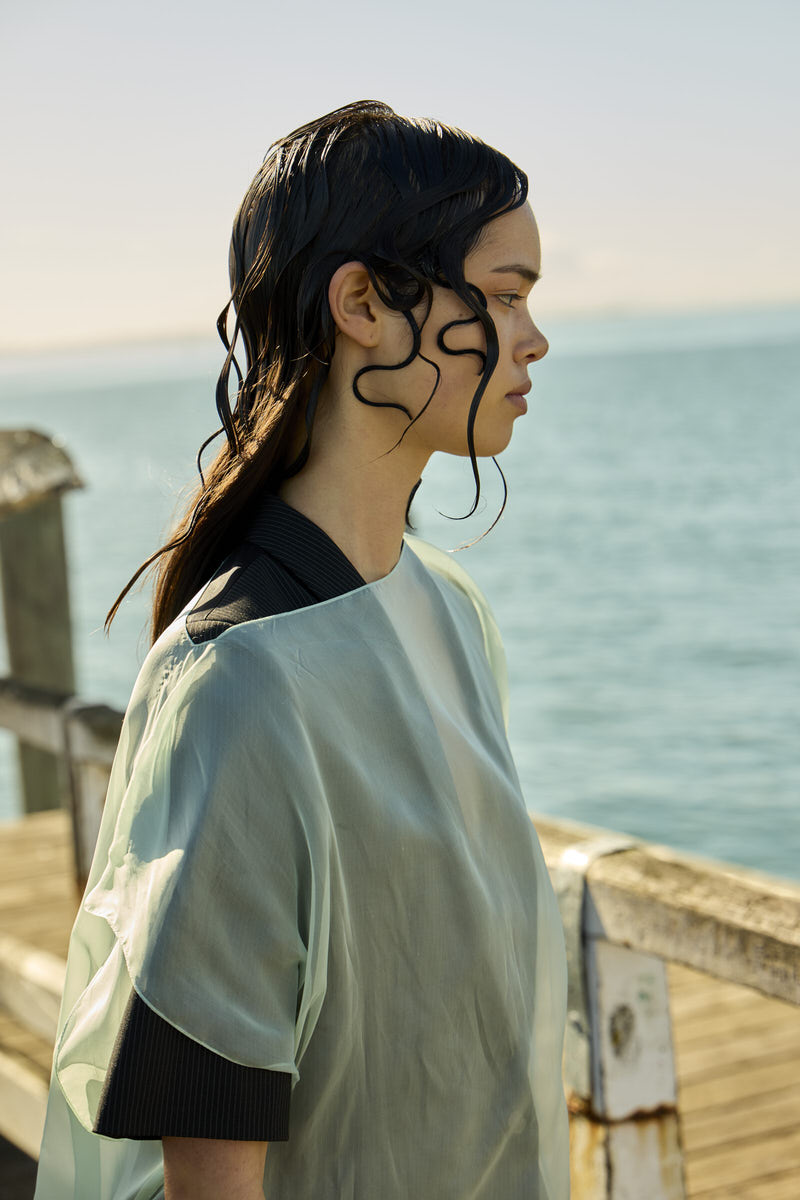
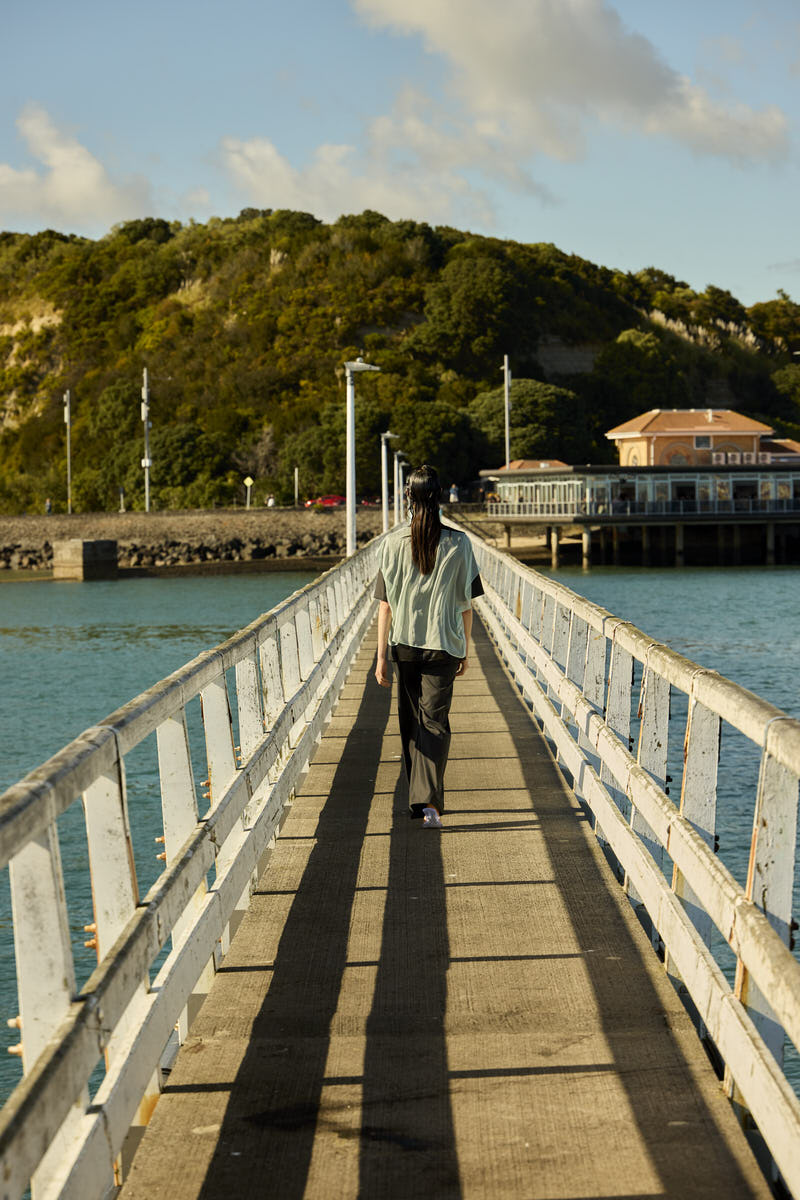
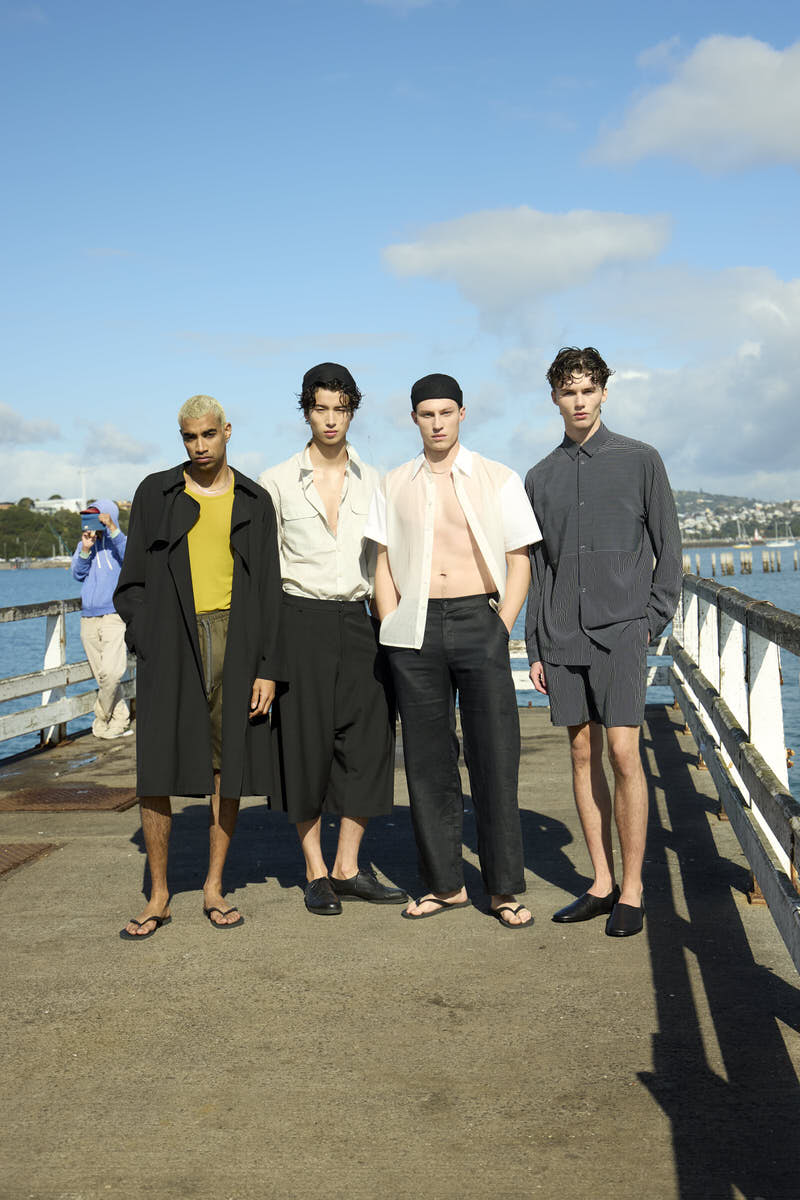
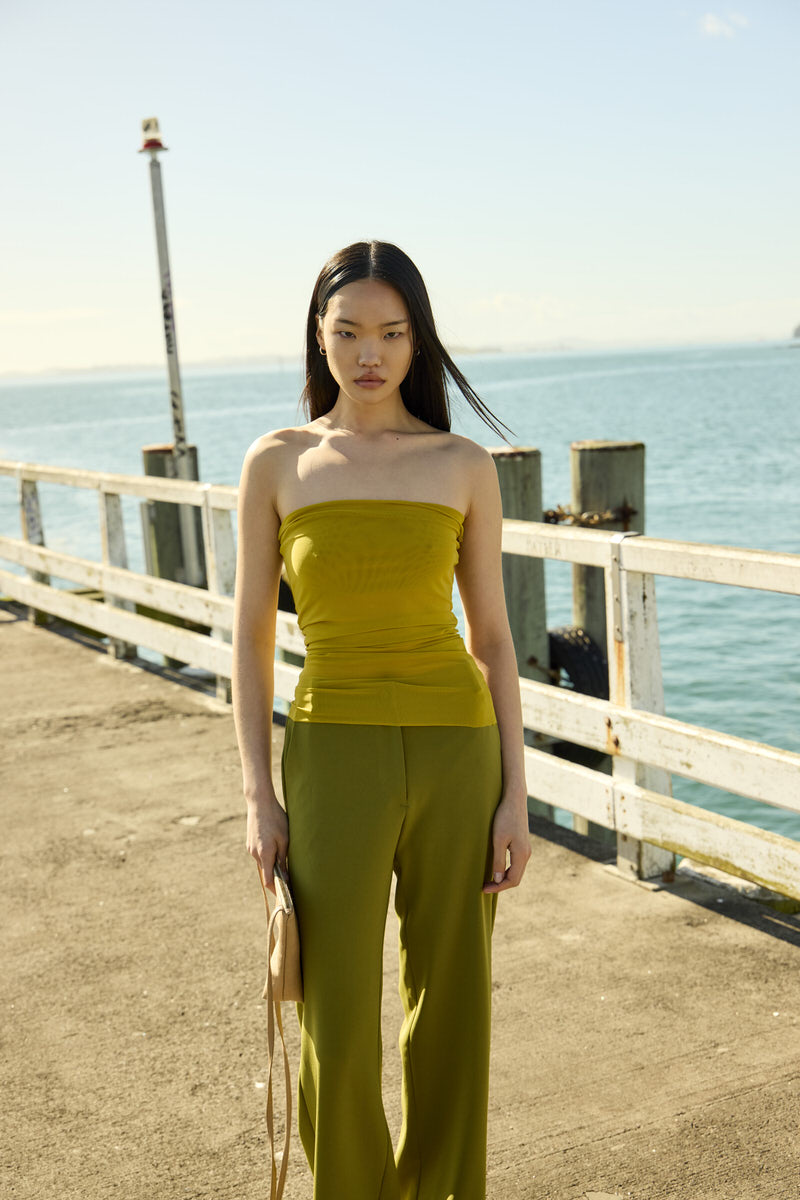
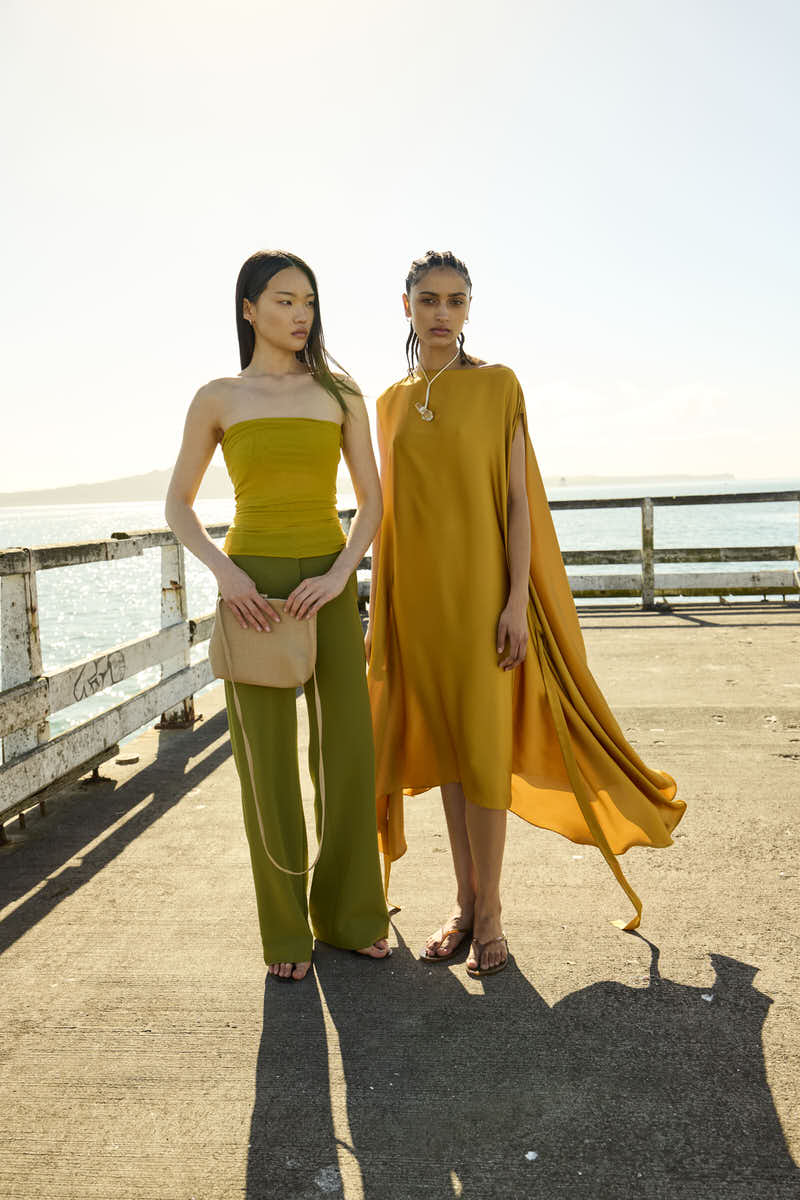
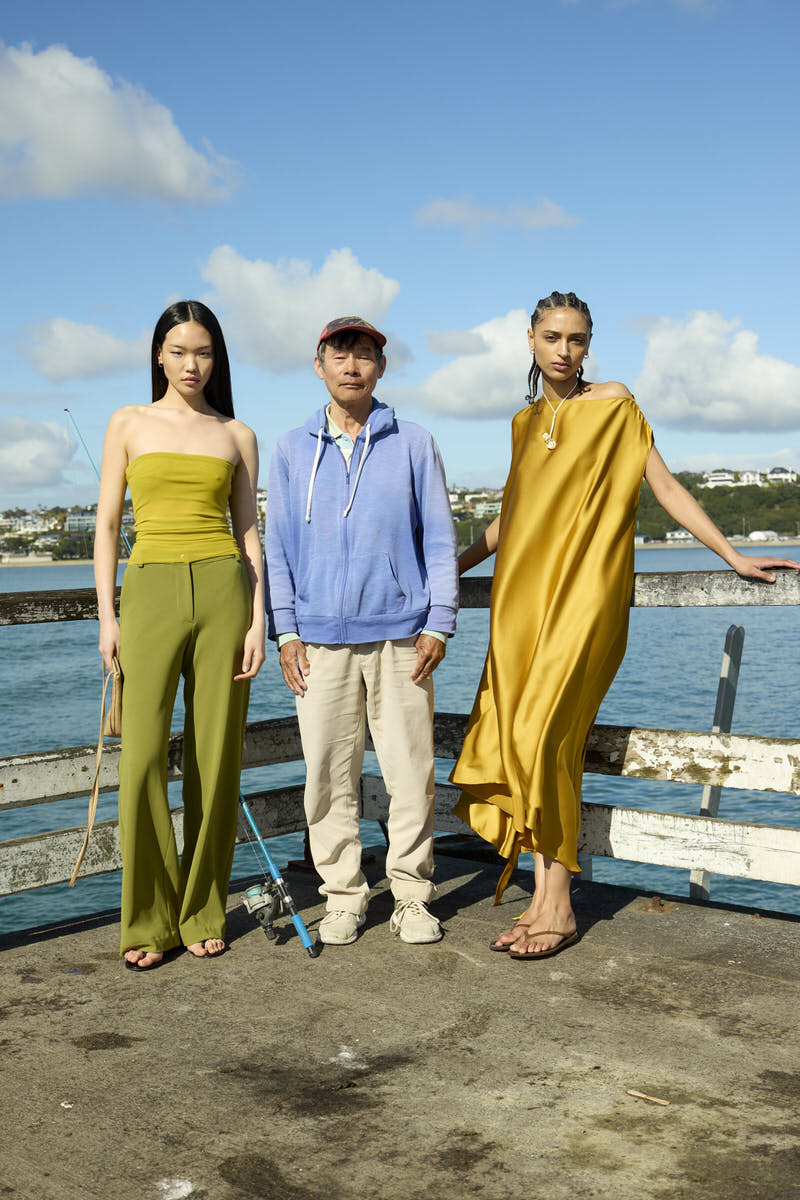
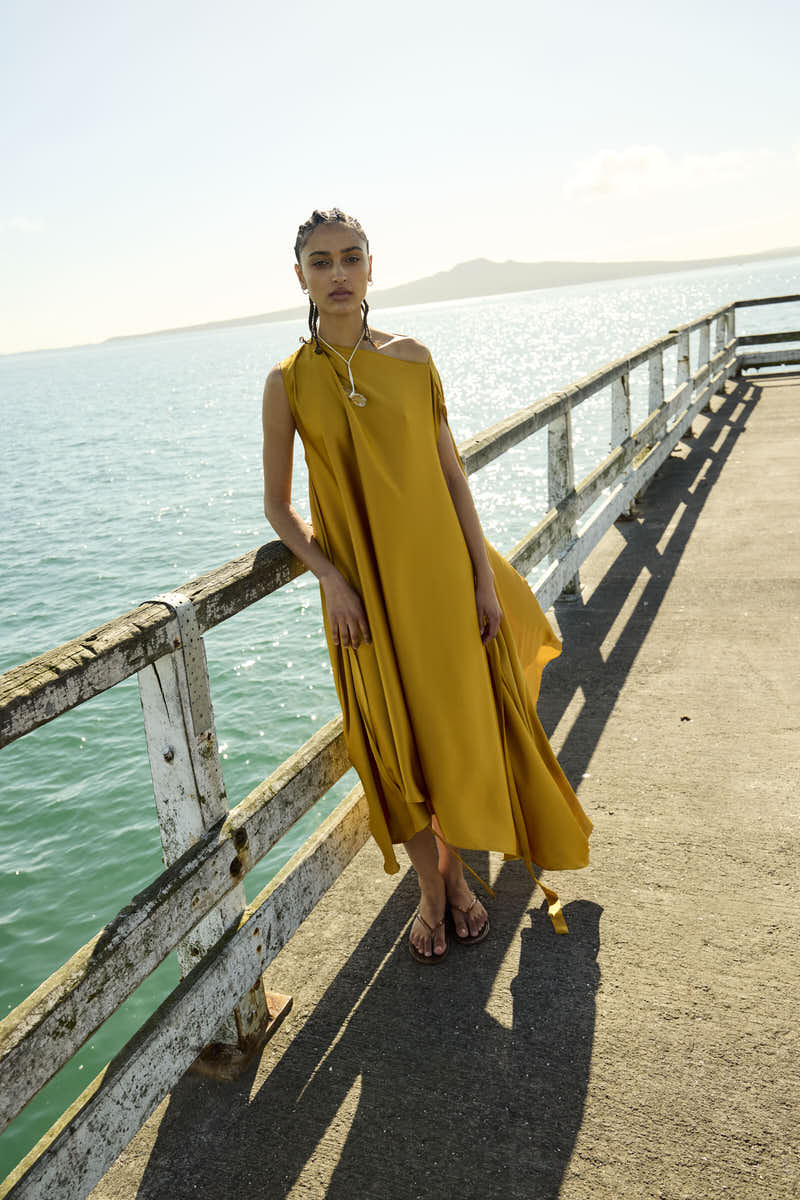
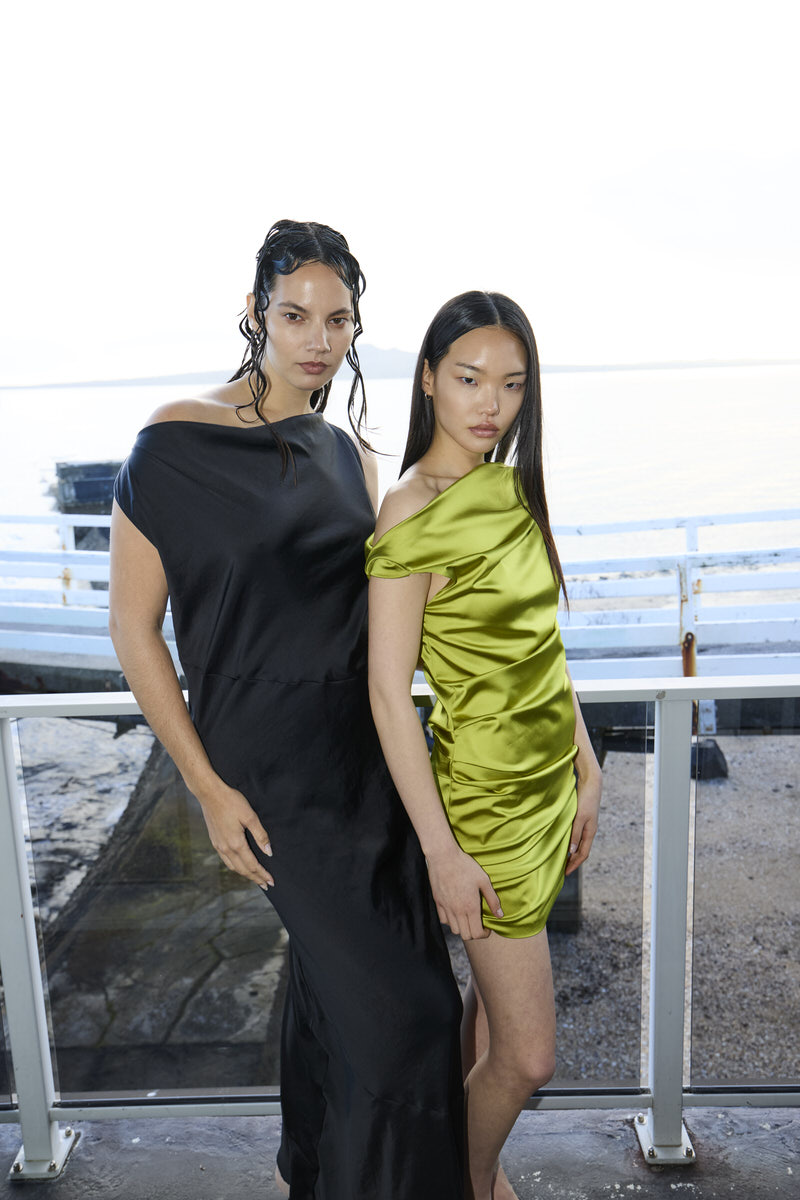
The opening set the tone. Muru Maipi sounded Karanga-a-Hape, a pūtātara held in the Auckland Museum collection and previously sounded during the America’s Cup. Calling to the seven realms, its sound travelled from the water towards the land, grounding the presentation in Aotearoa, whenua and the natural world. Then came the first look: Sophie Song in the Amp dress in Acid, an electric opening to a collection that would continually shift between softness and strength.
Marissa describes Song to the Siren as “a love letter to the ocean”, and that relationship was woven throughout the collection rather than interpreted too literally. This was Zambesi’s version of summer, expressed through natural fibres and the contrasts that have long been fundamental to the house: softness against structure, lightness against depth, the organic alongside the constructed.
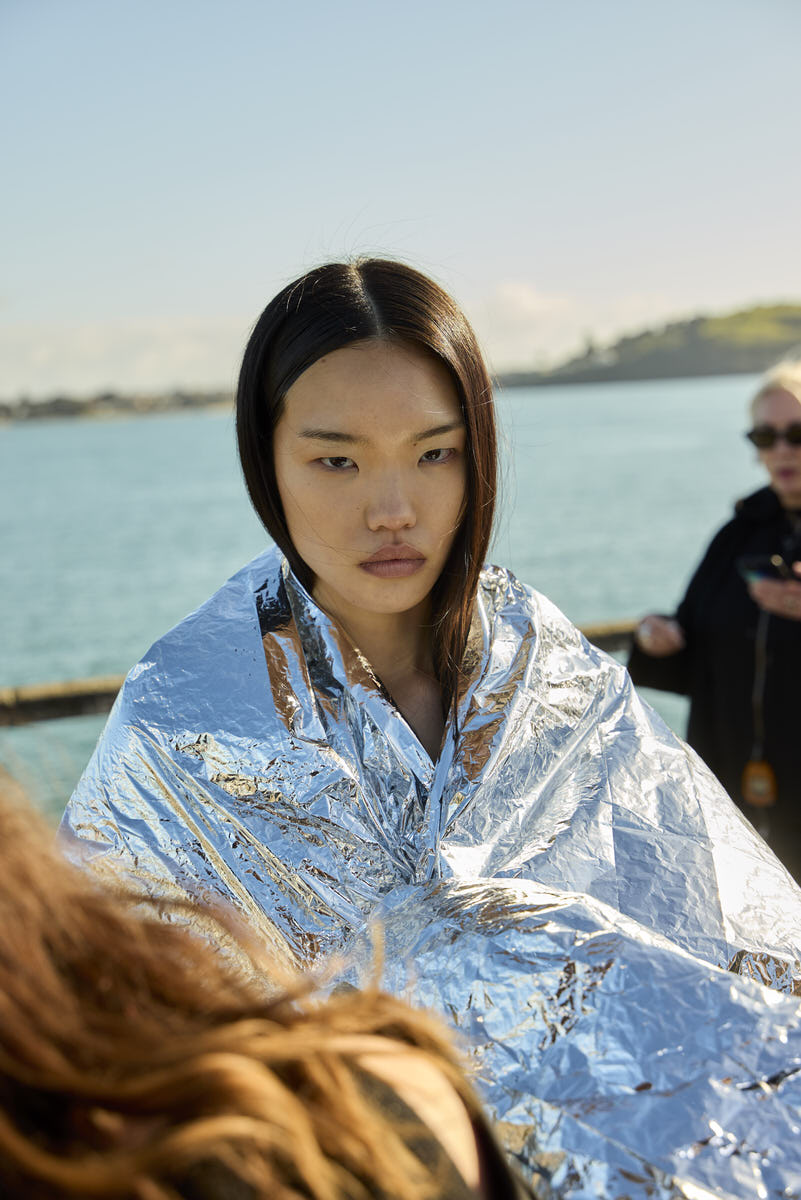
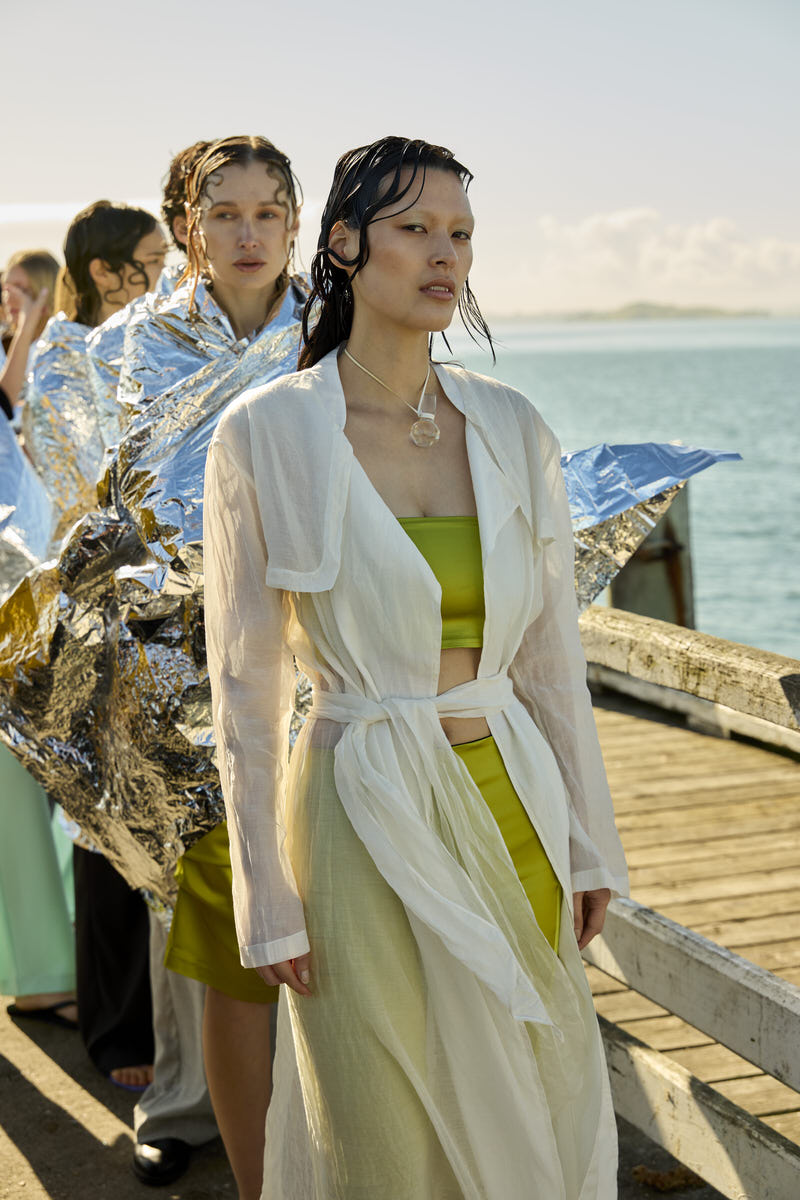
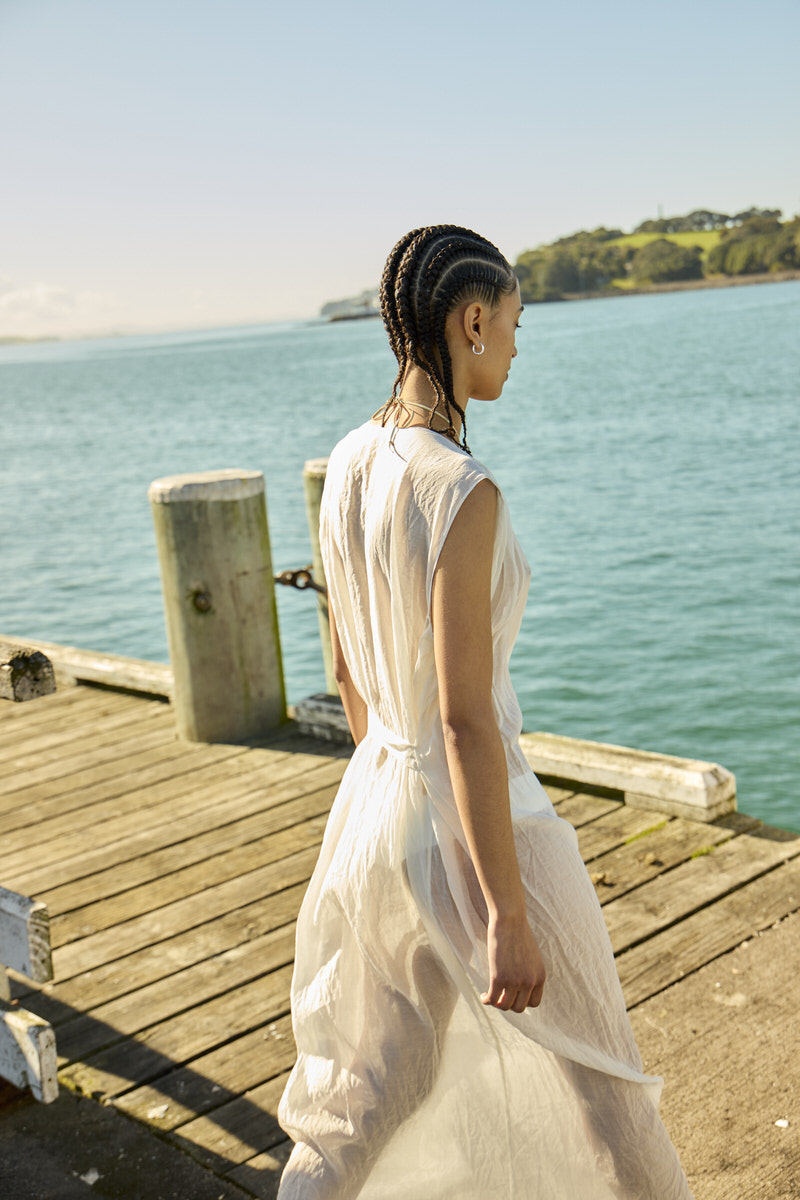
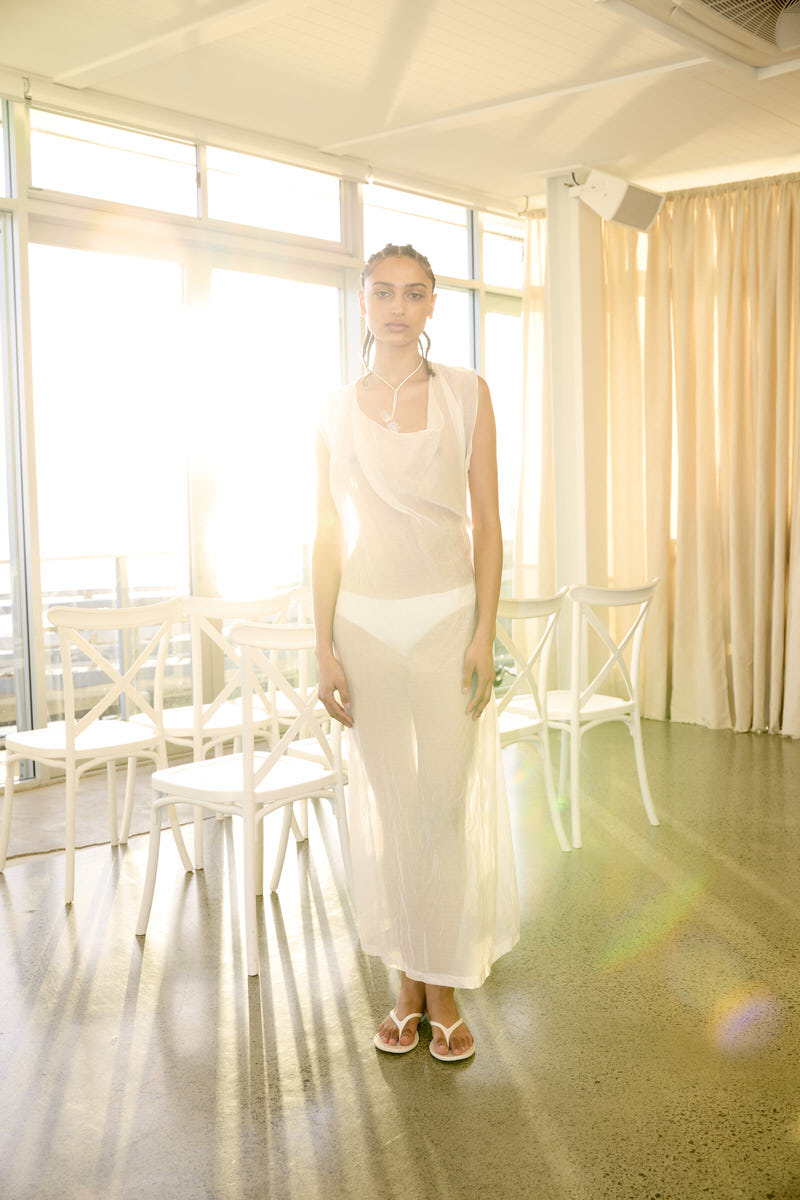
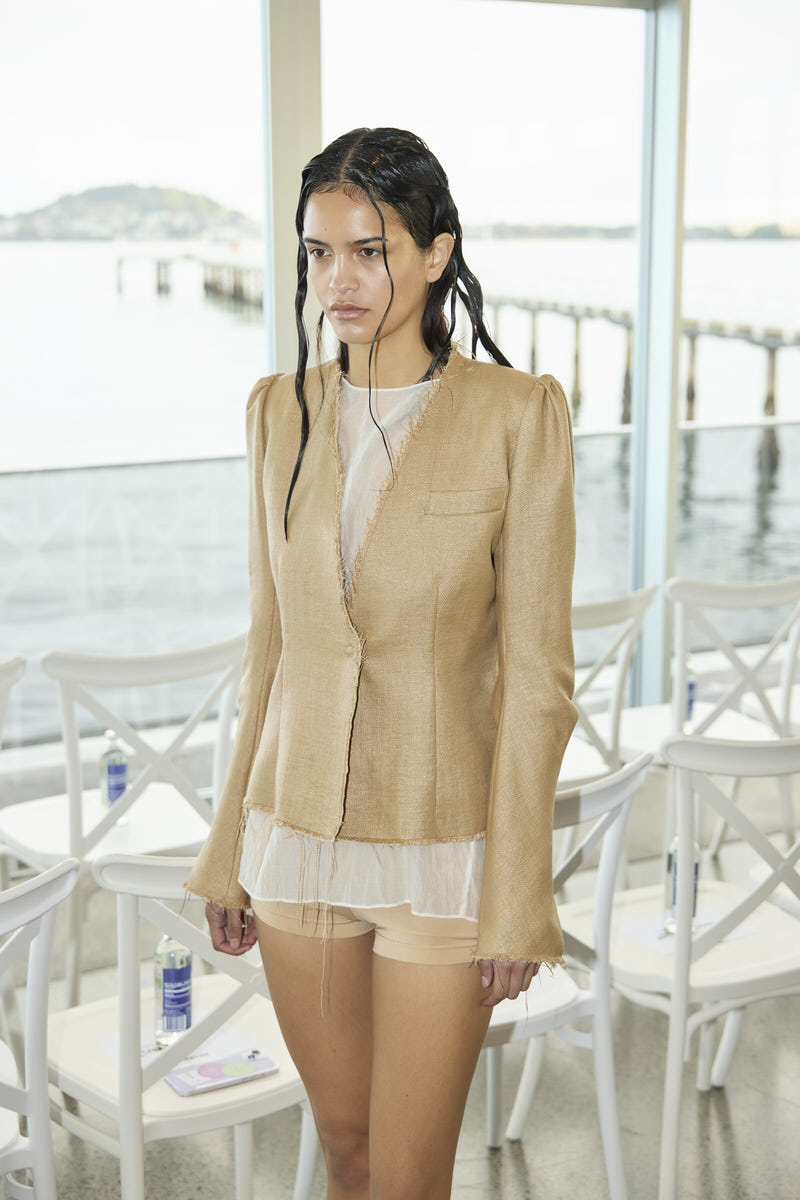
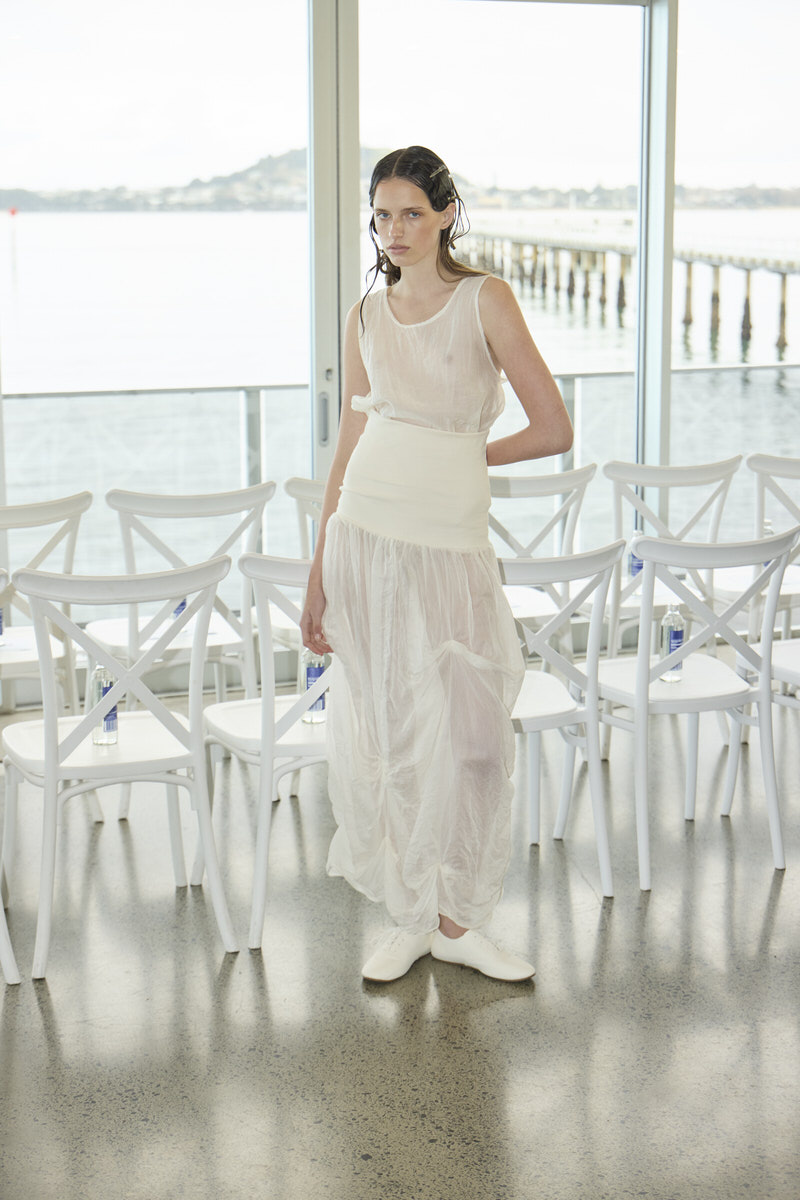


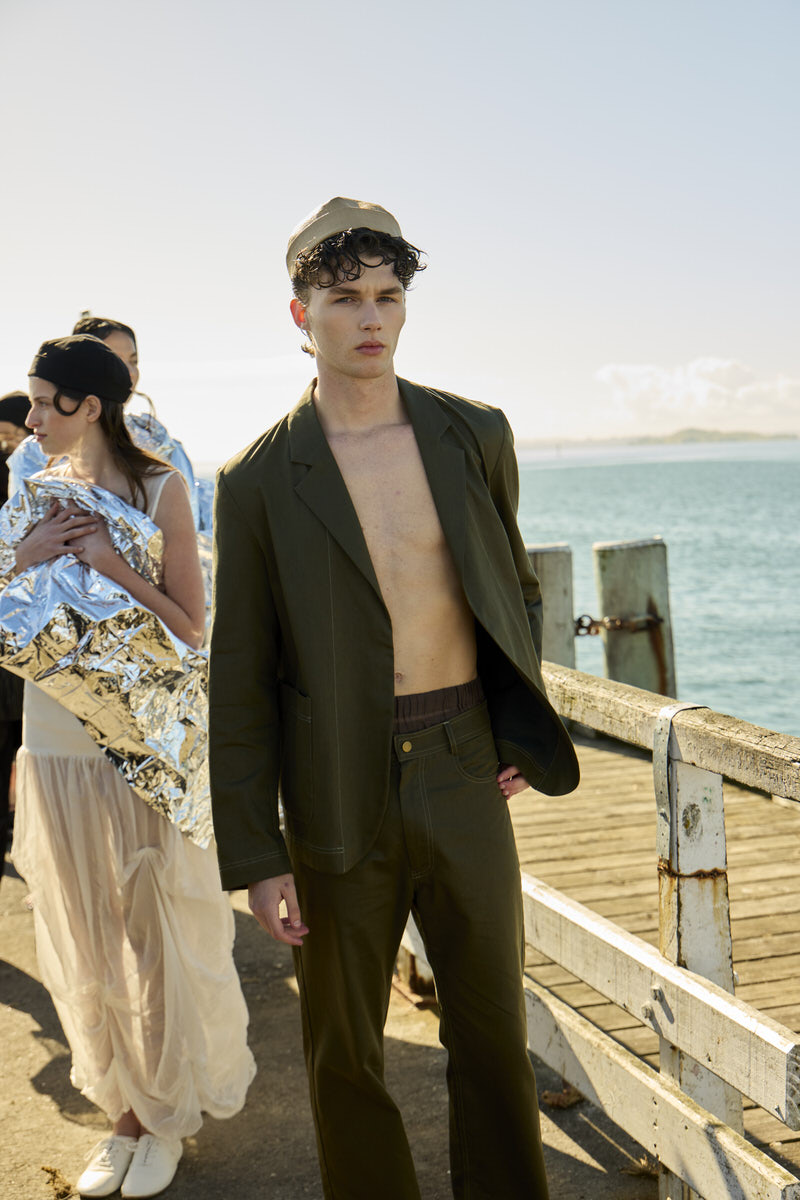
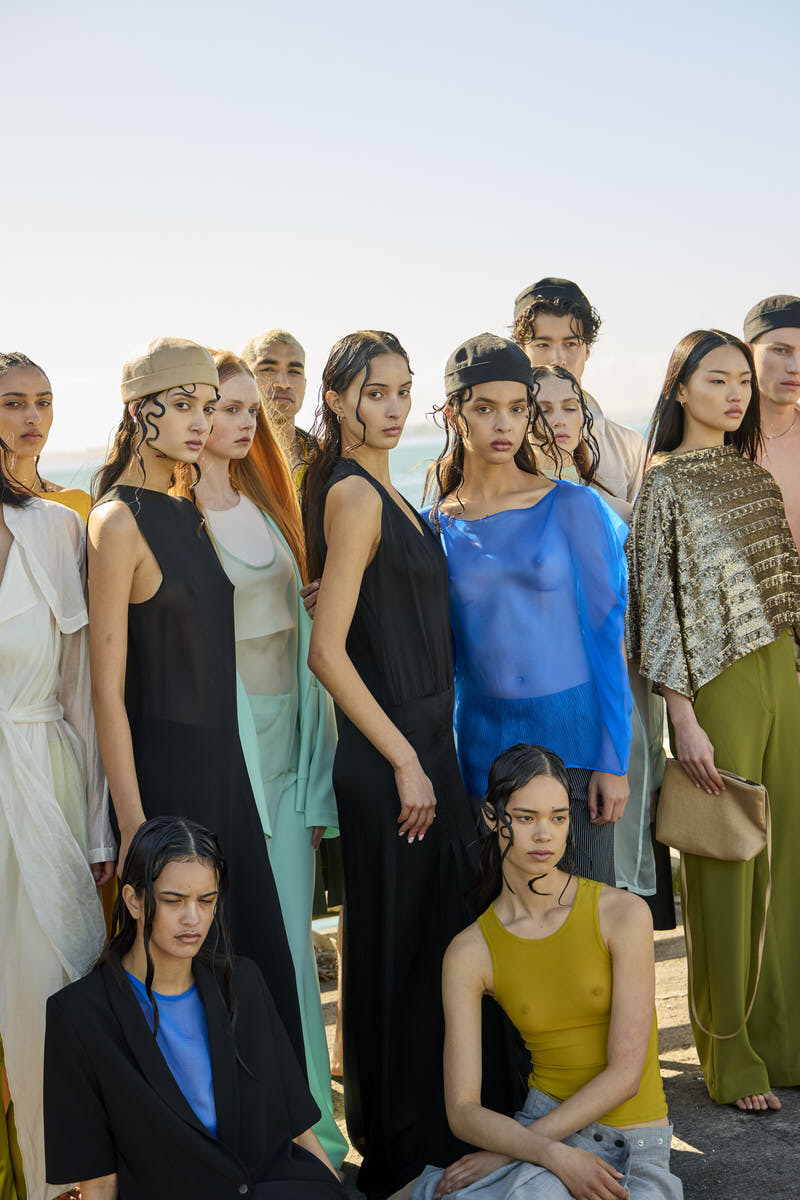
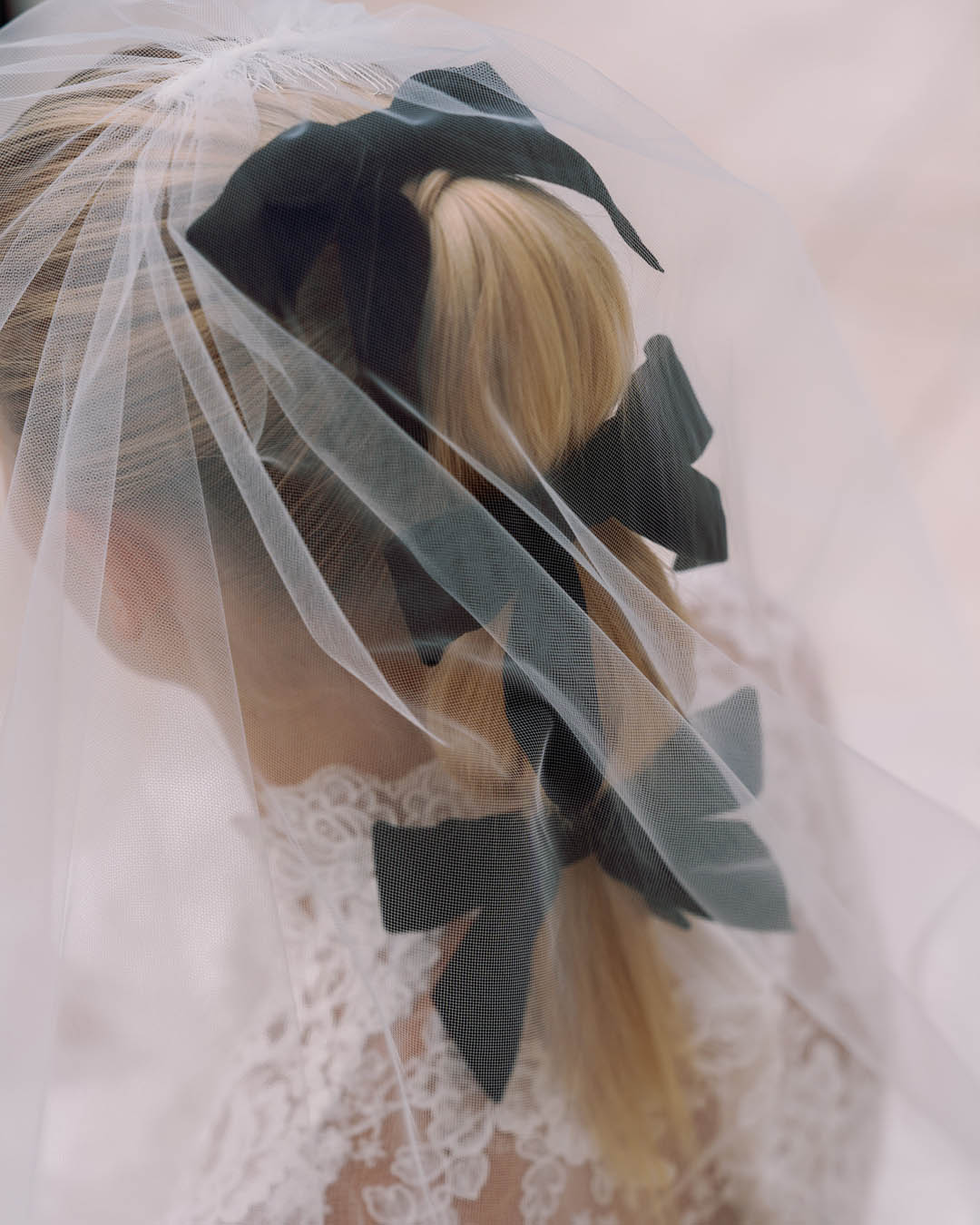
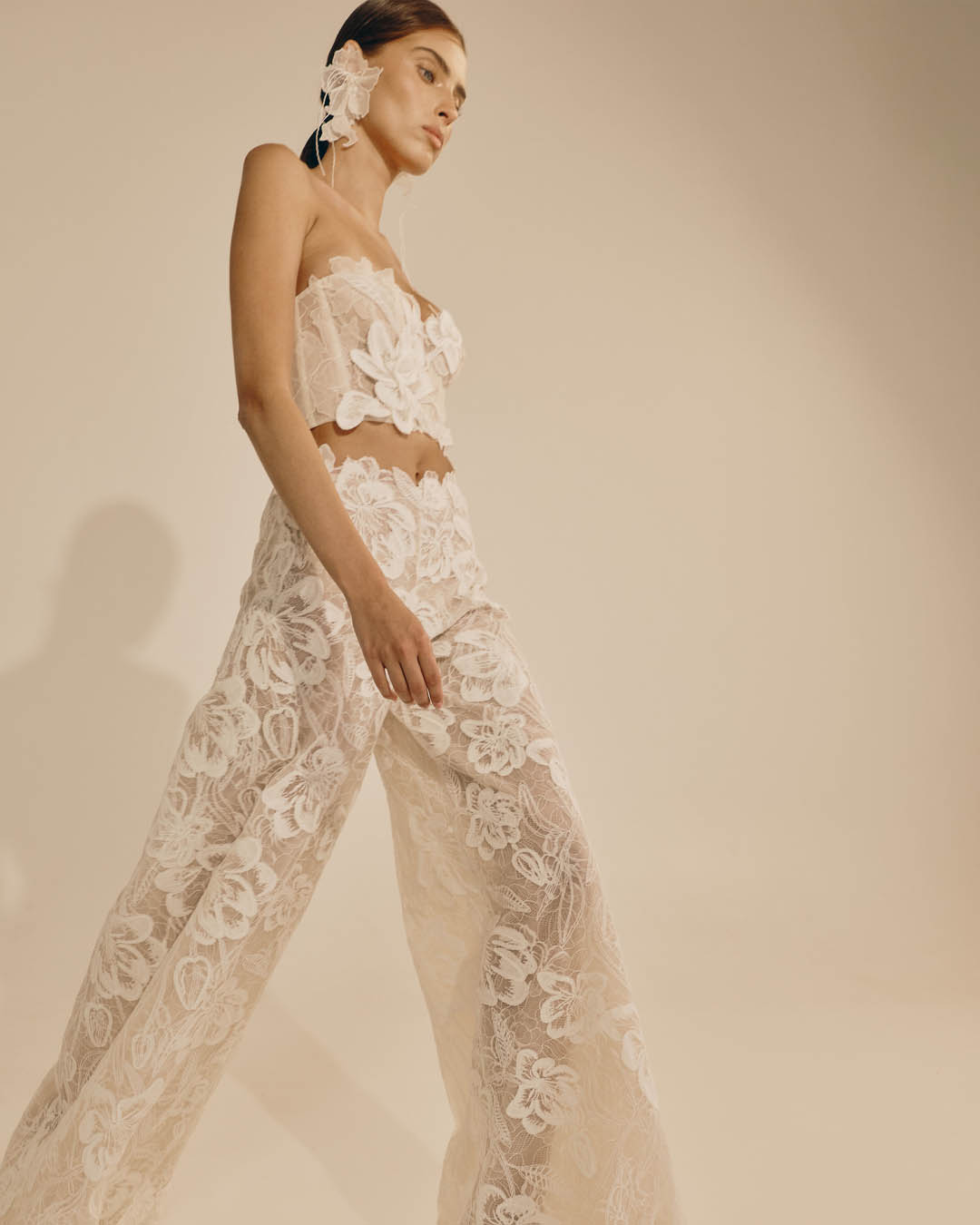
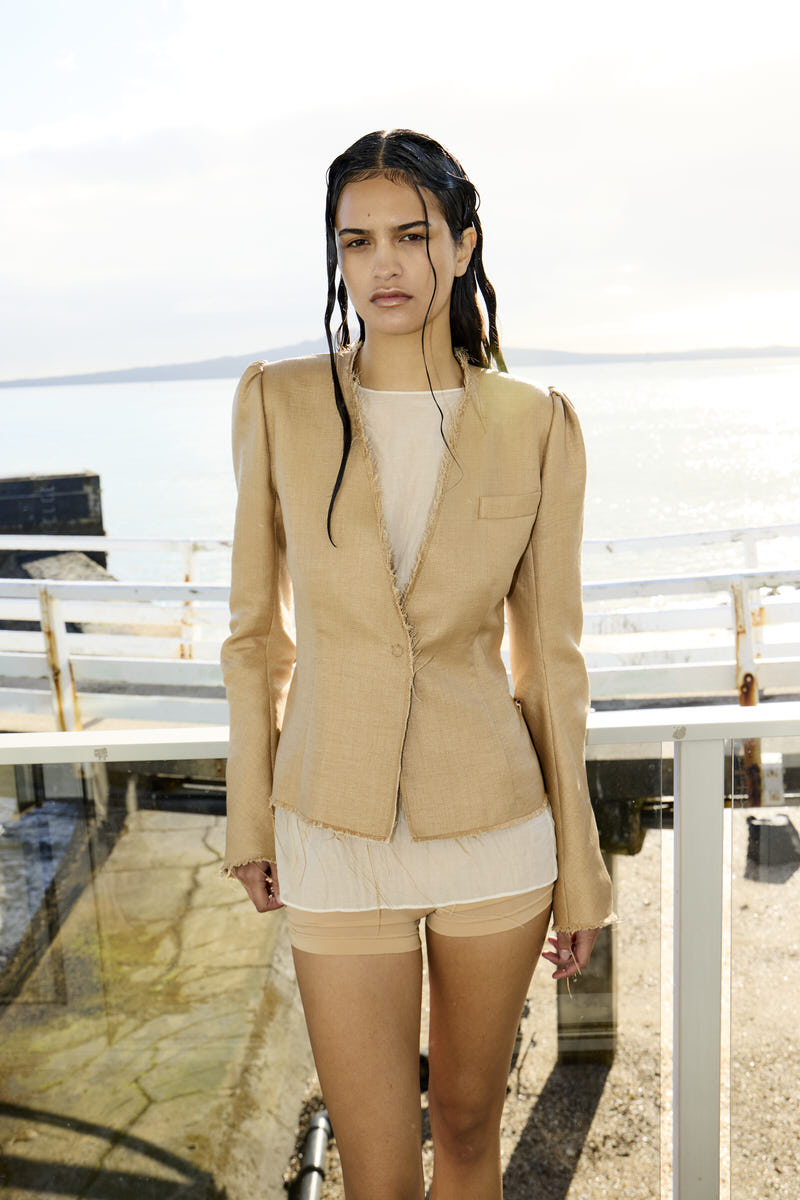
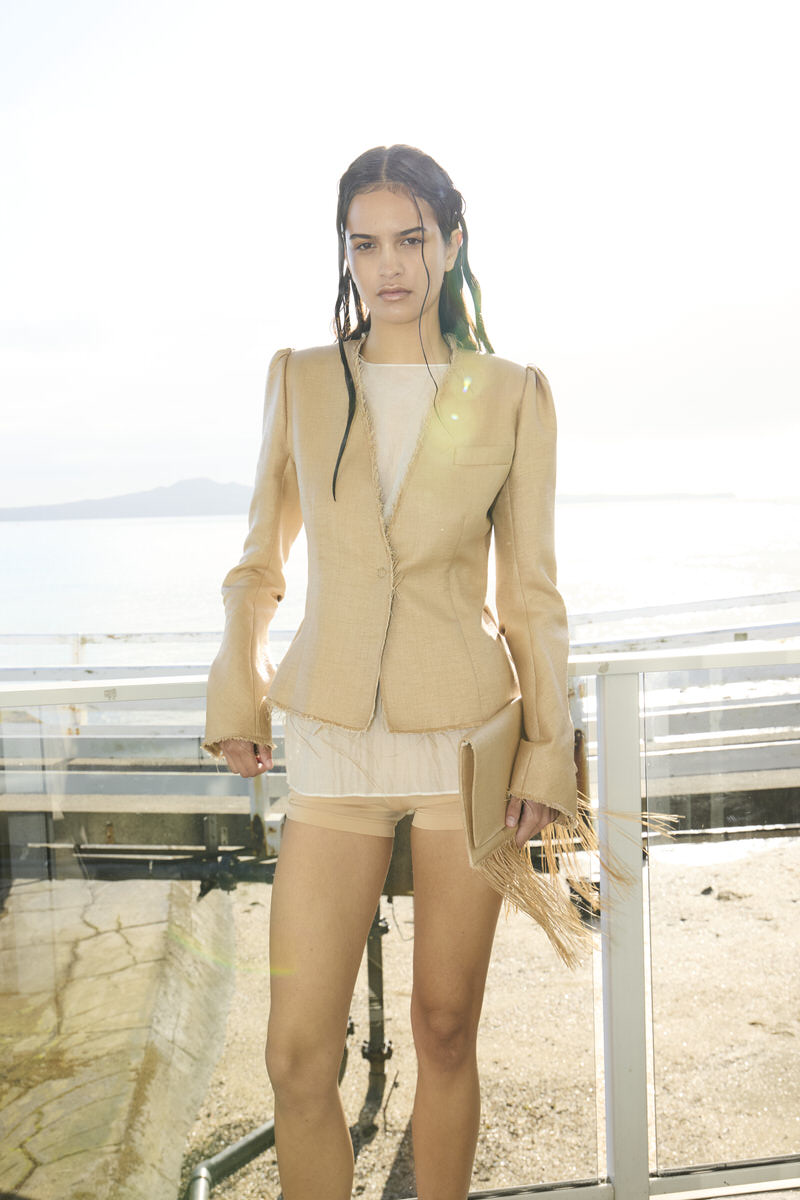
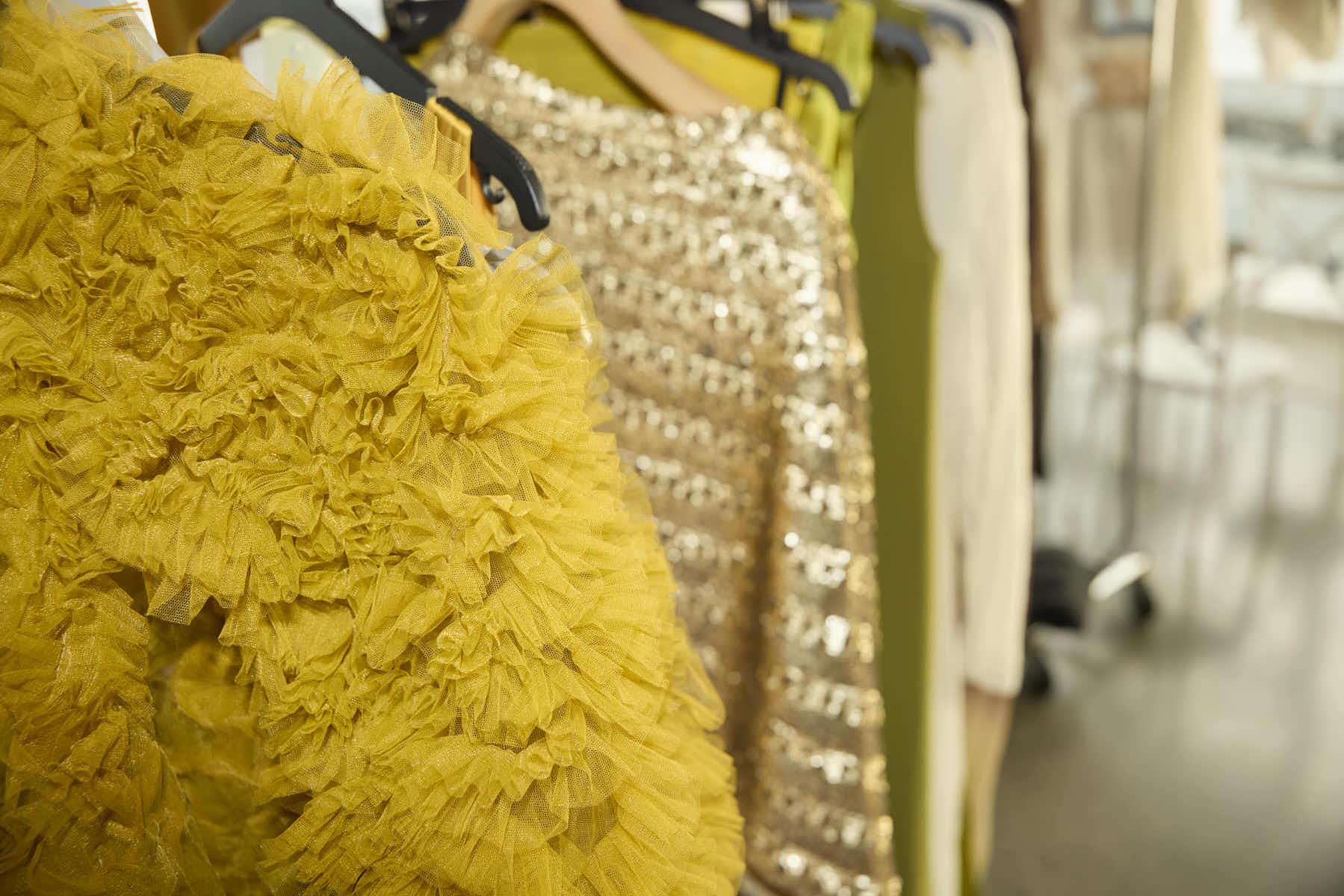
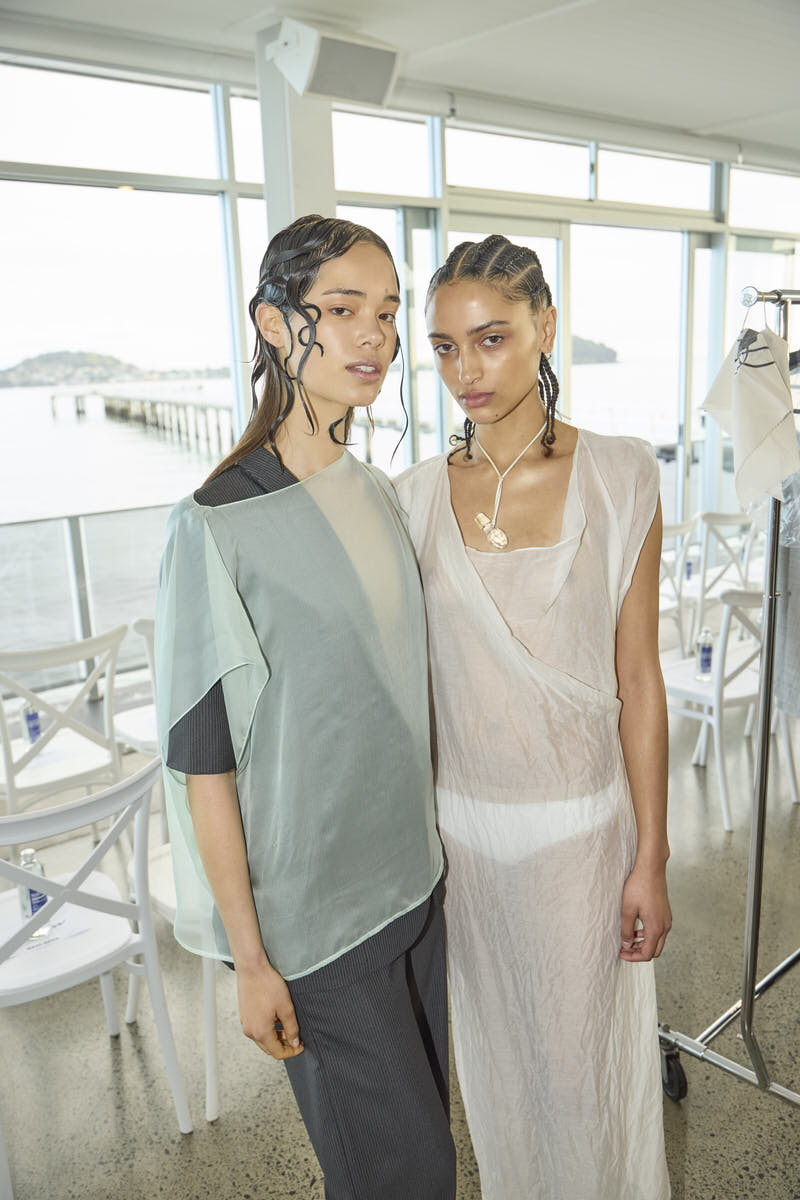
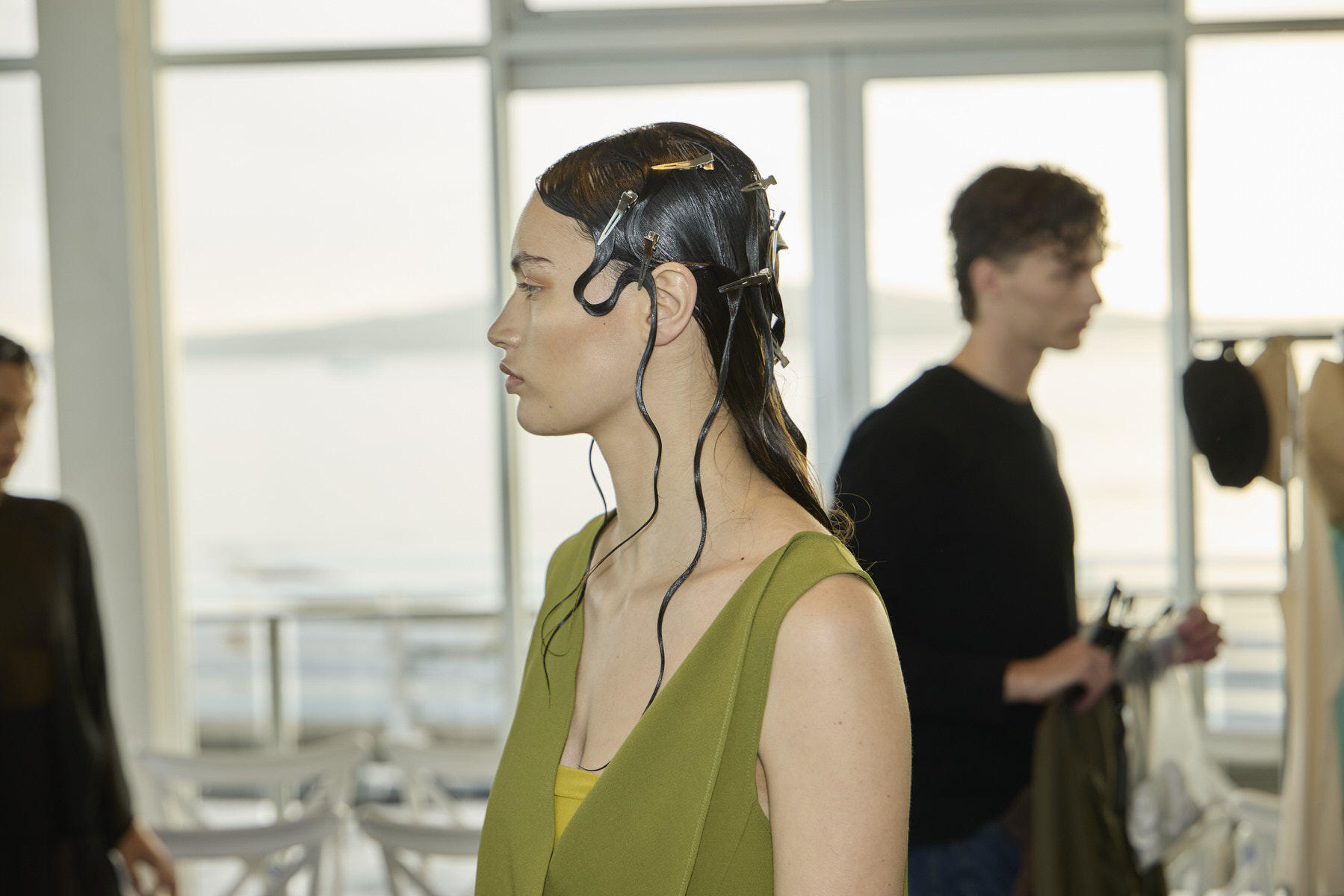
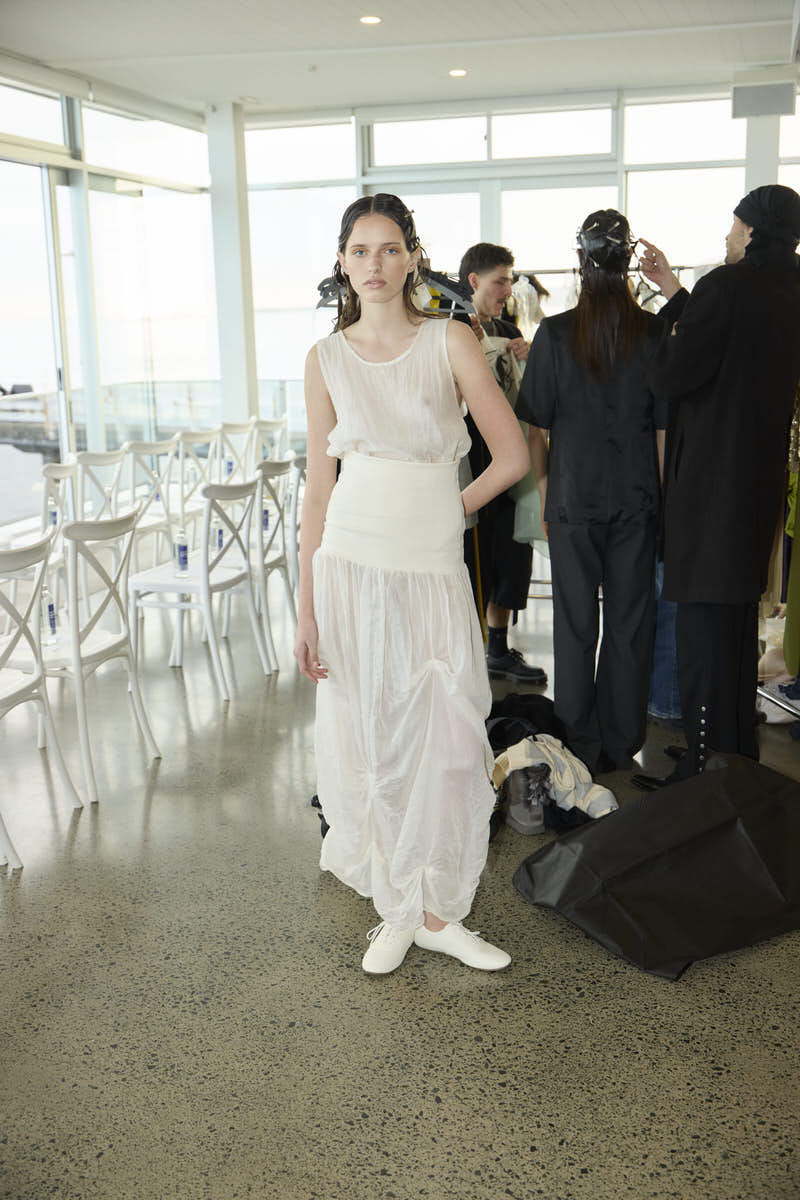
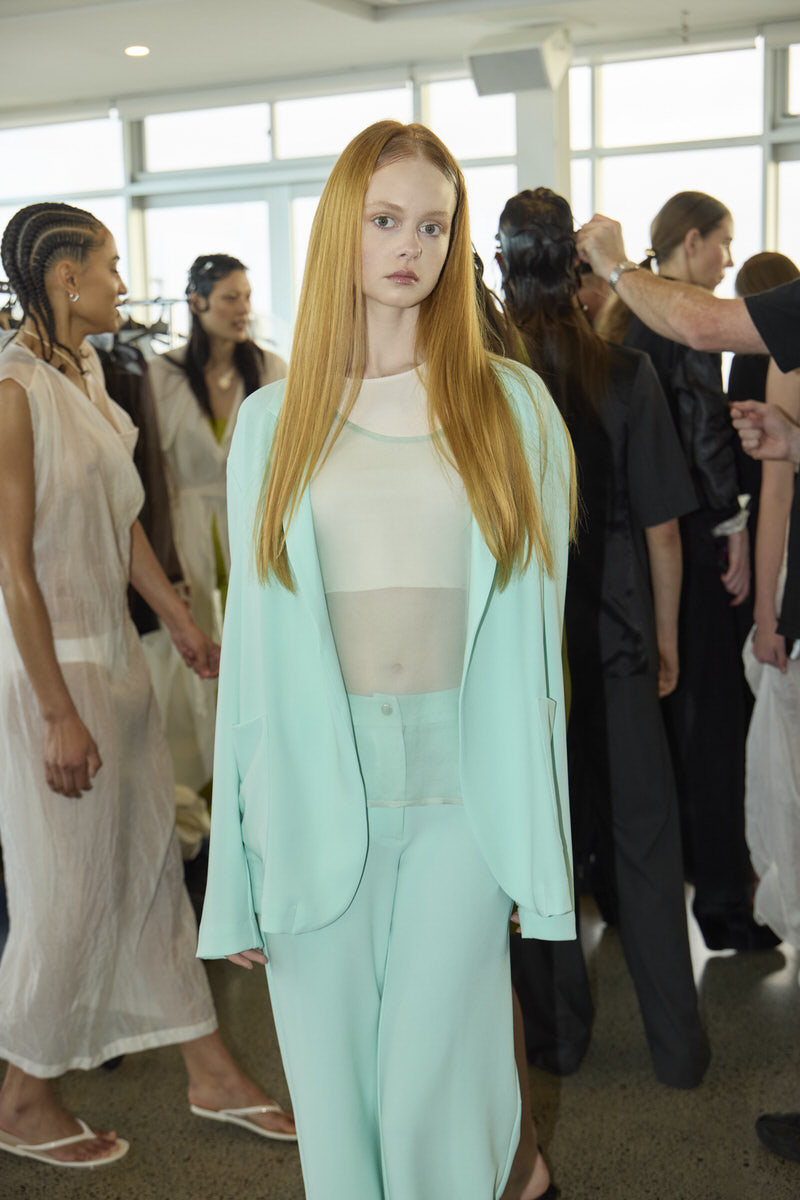
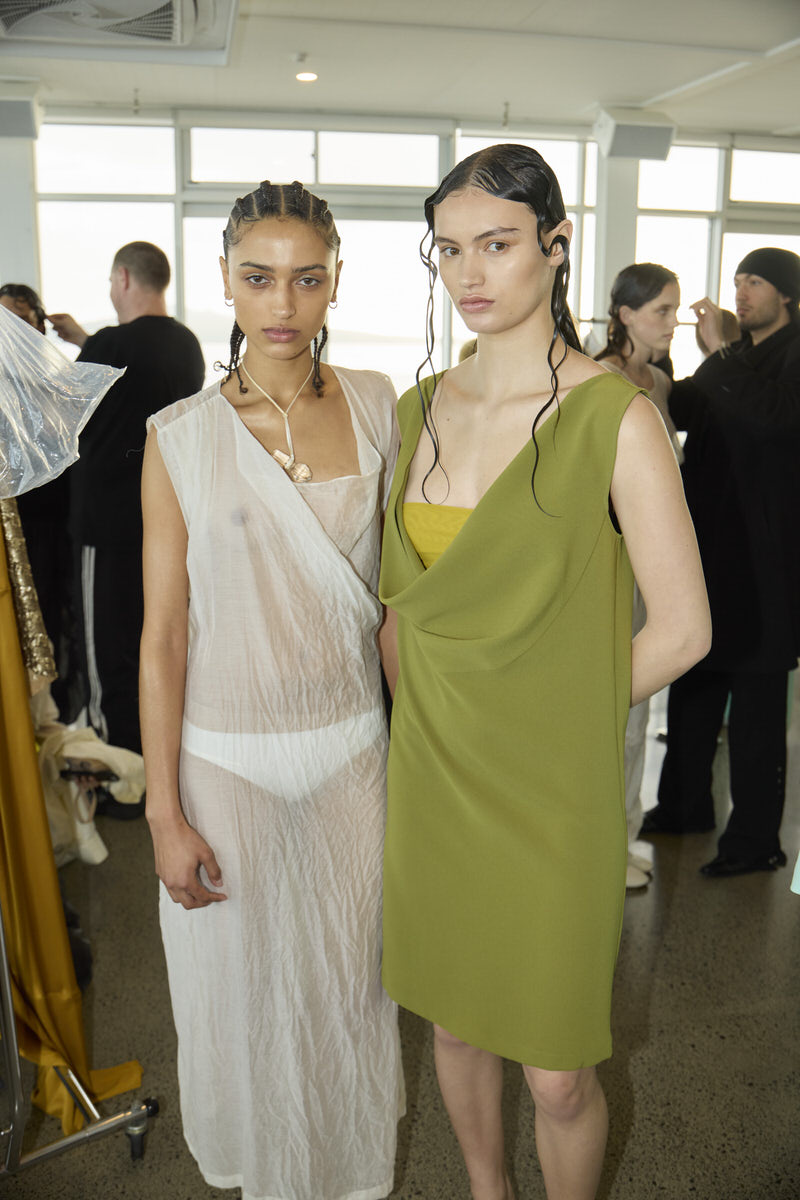
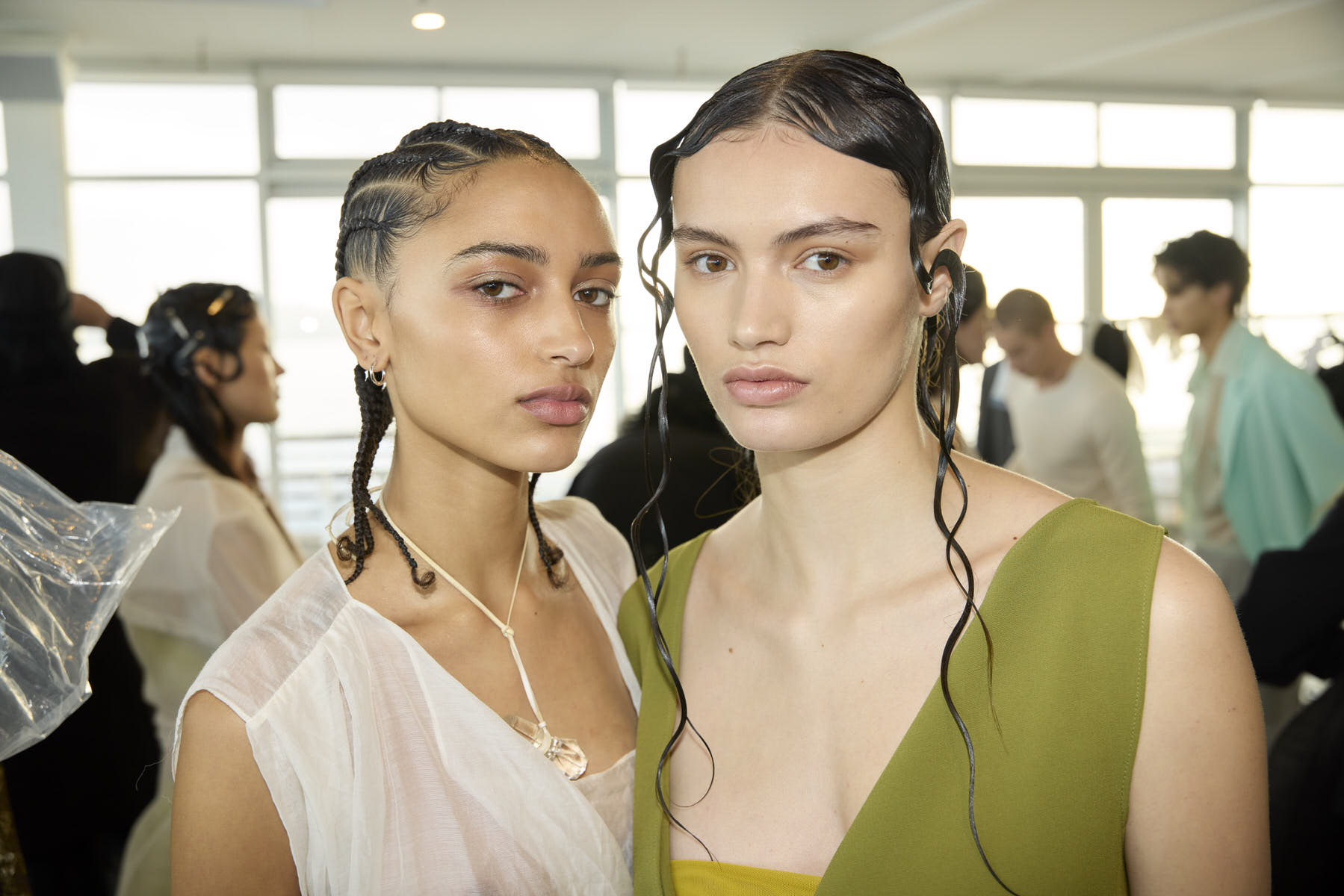
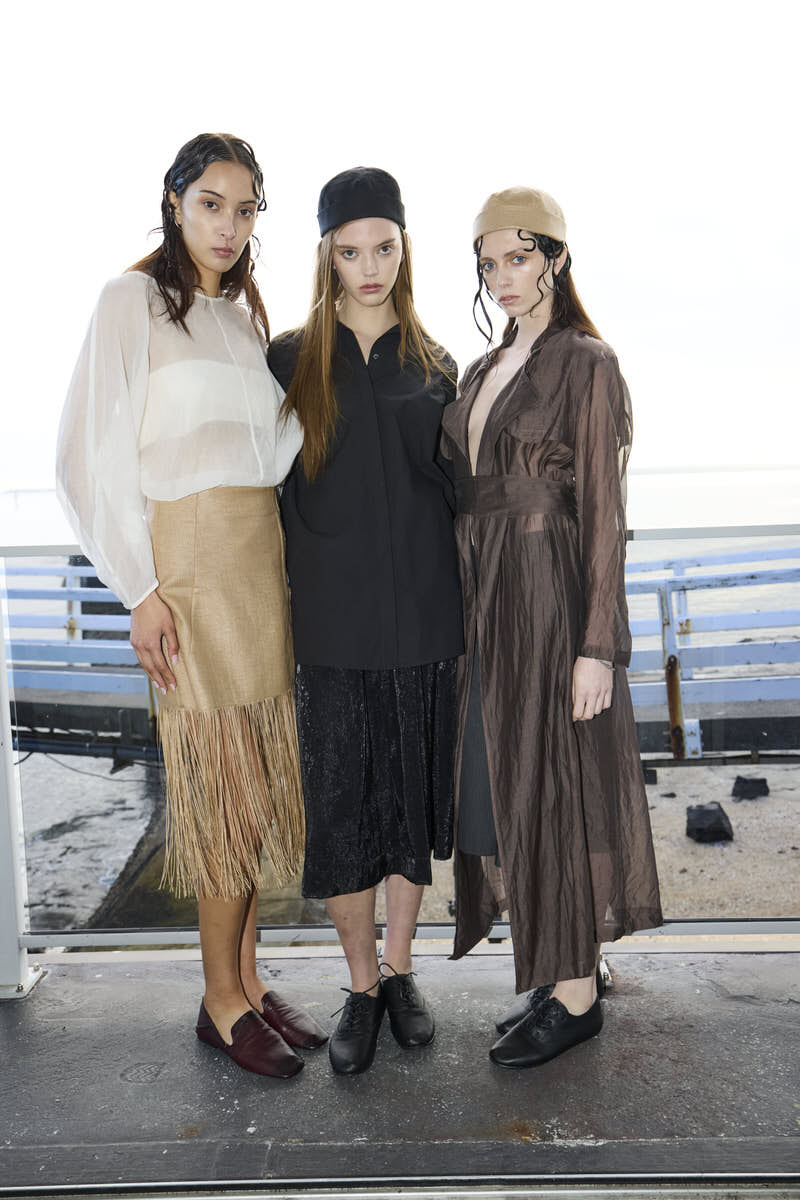
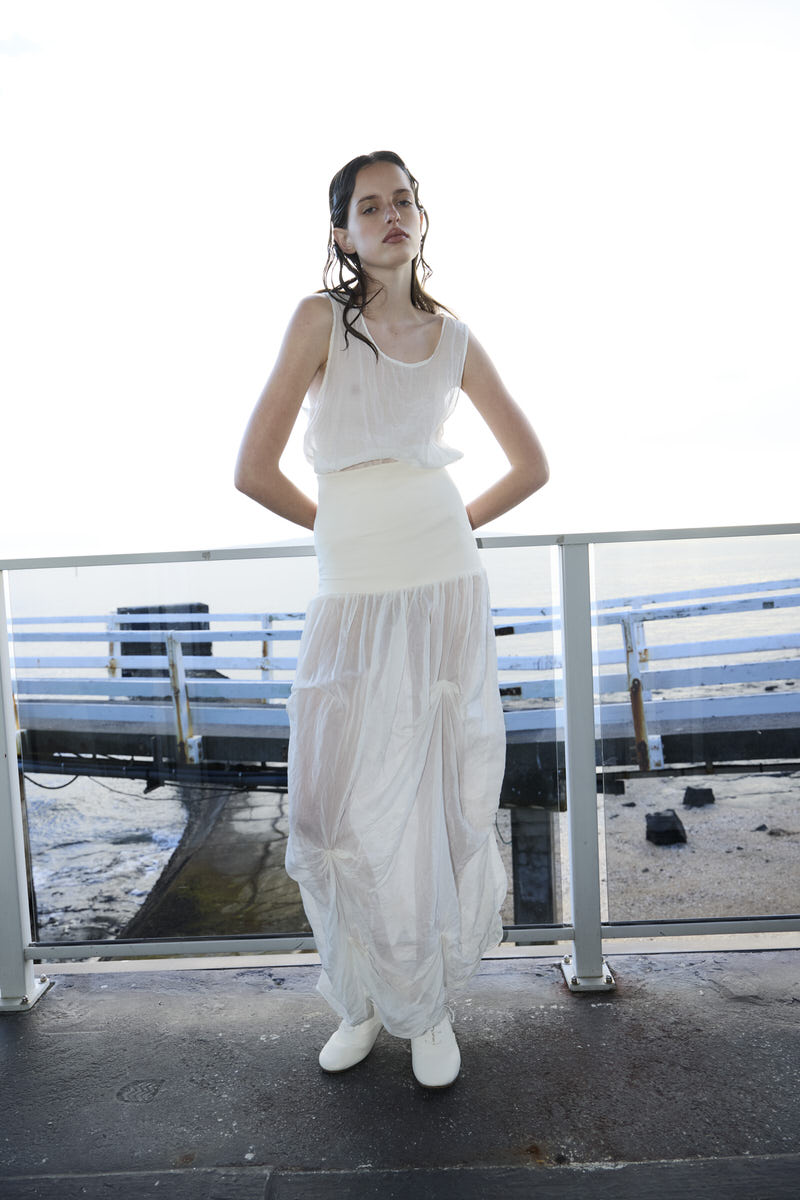
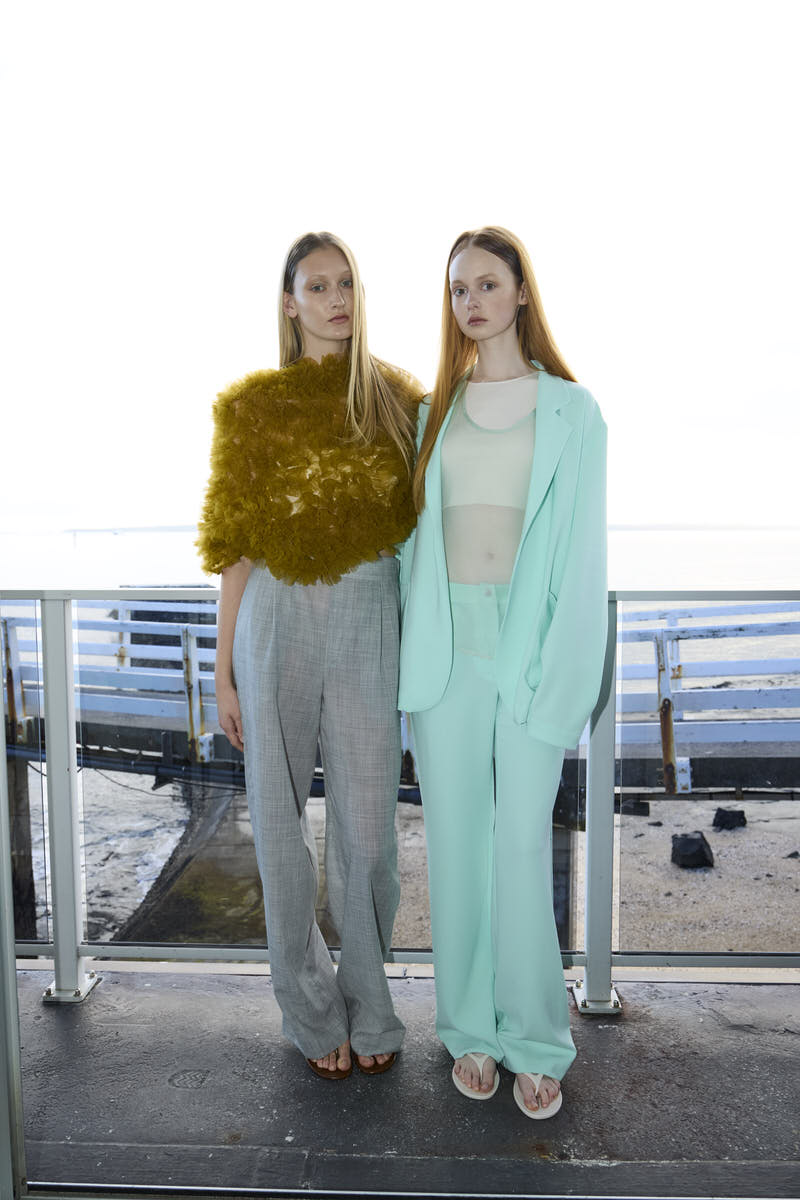
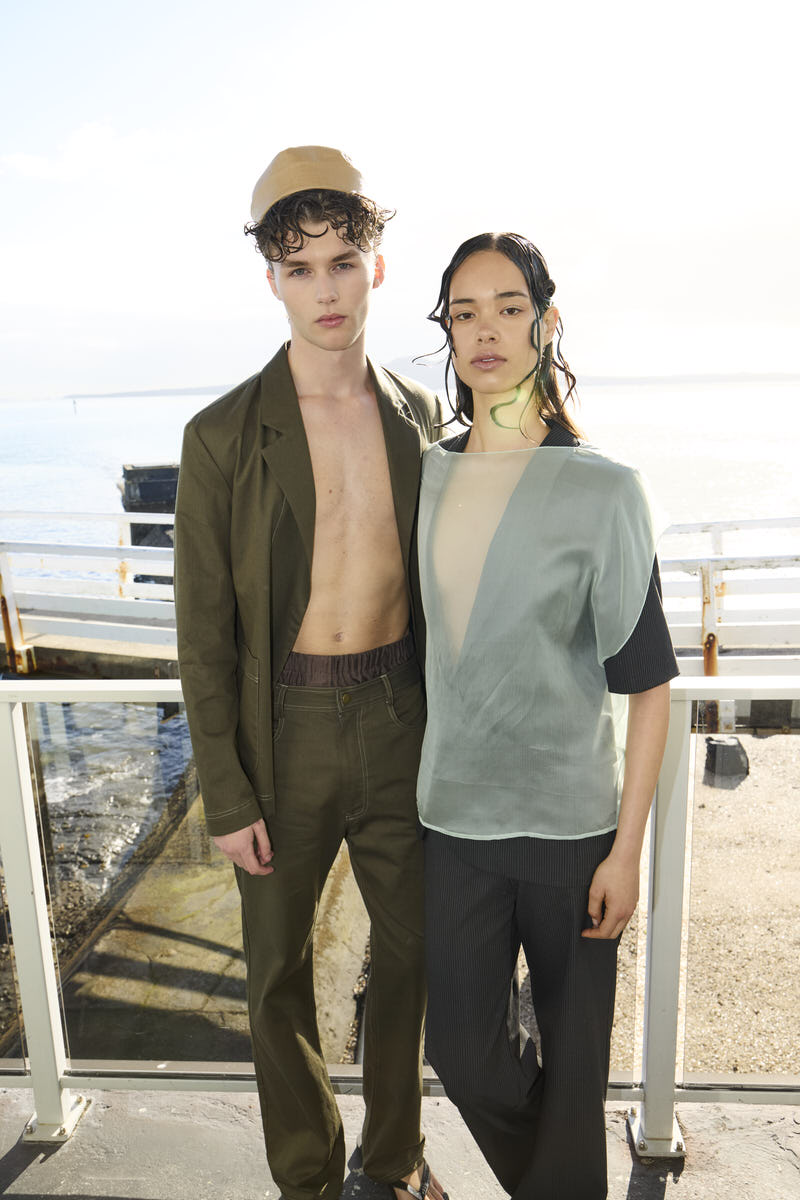
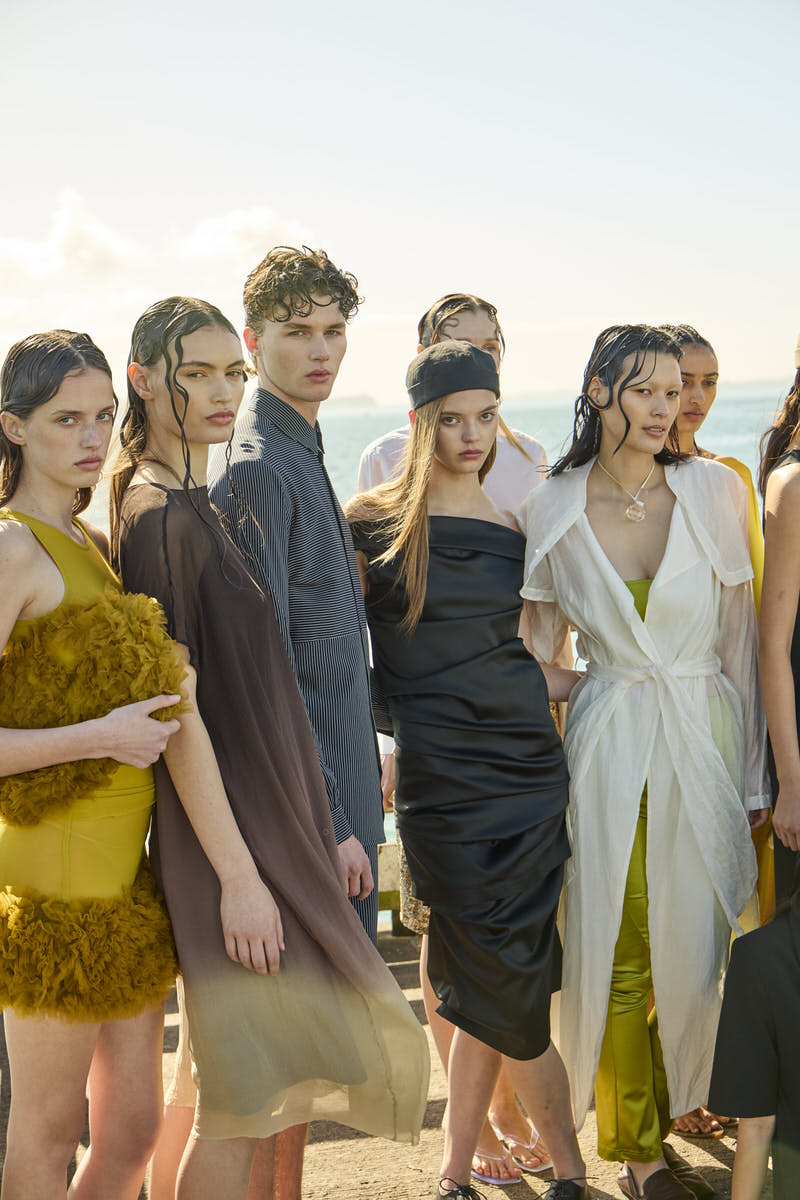
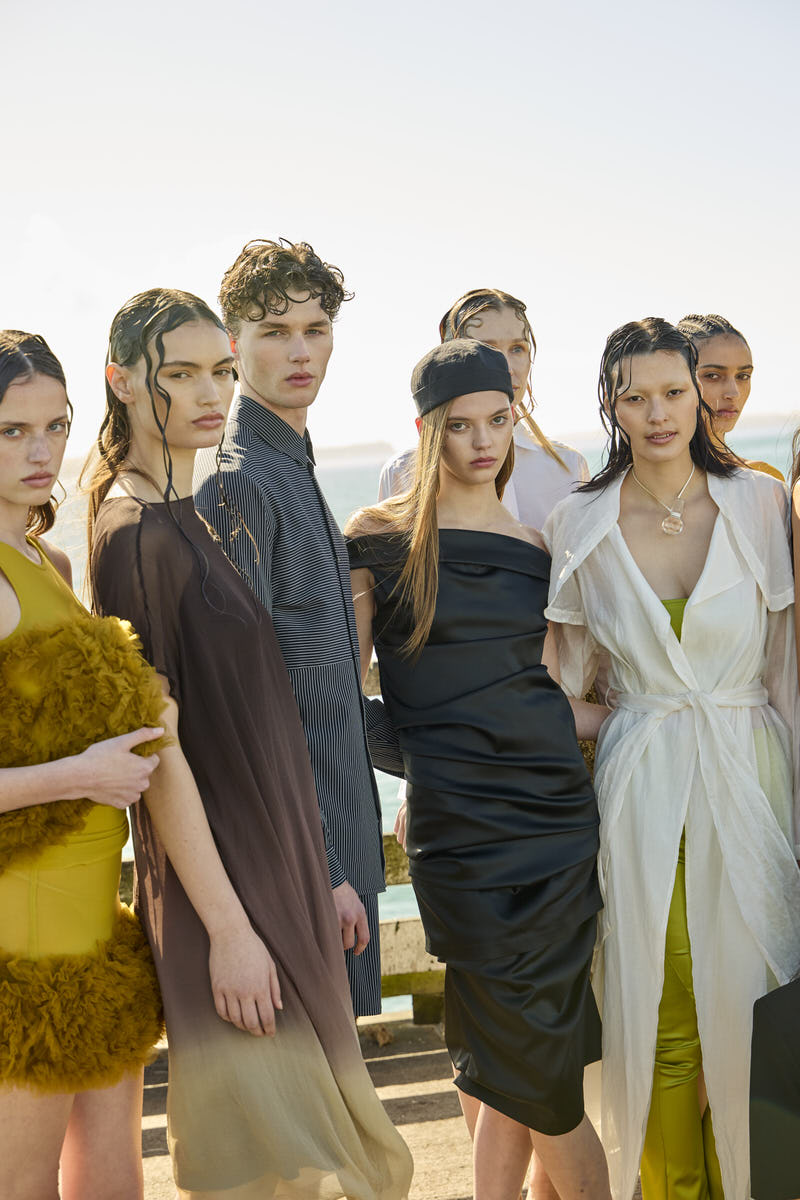
Fabric and texture did much of the talking. Silk appeared in Snake, bringing fluidity and movement, while raffia was transformed through artisanal craftsmanship into jackets and sculptural hats, as well as a fringed skirt and statement bag. Tulle and mesh brought transparency and lightness, while Goldrush sequins flashed as the models moved, catching the changing light coming off the water.
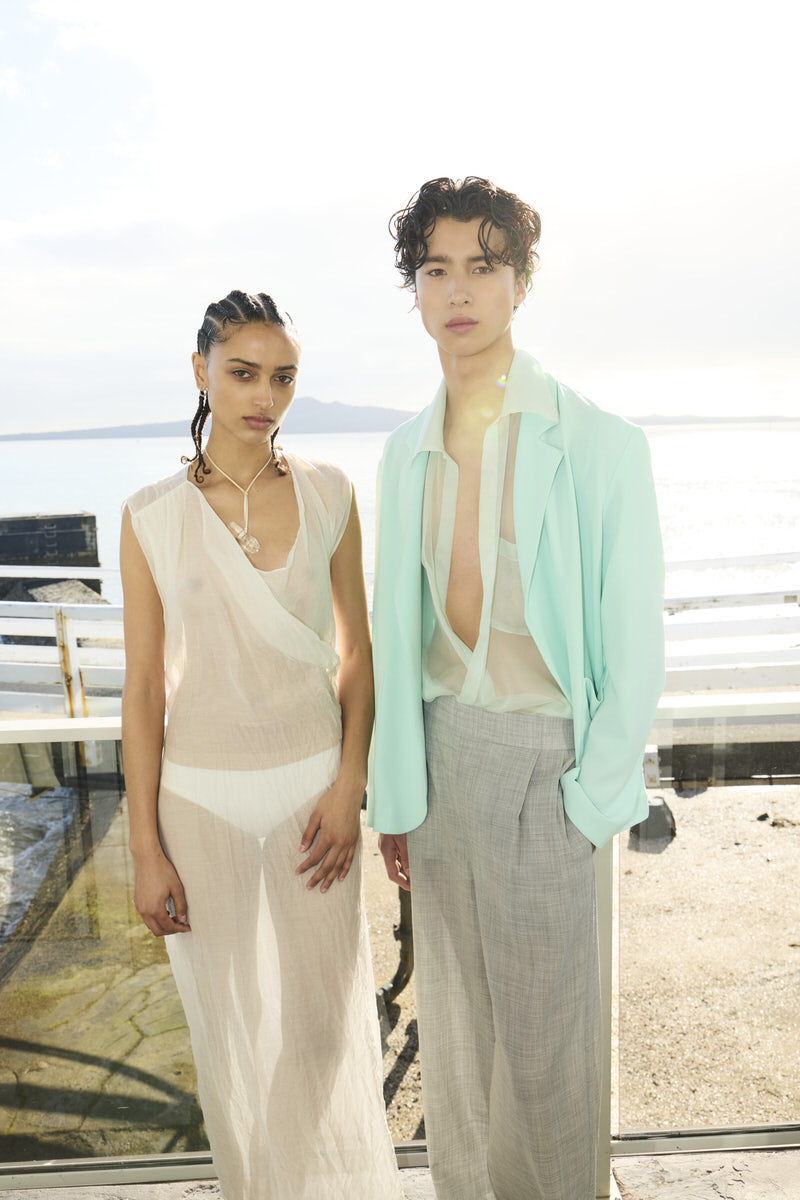
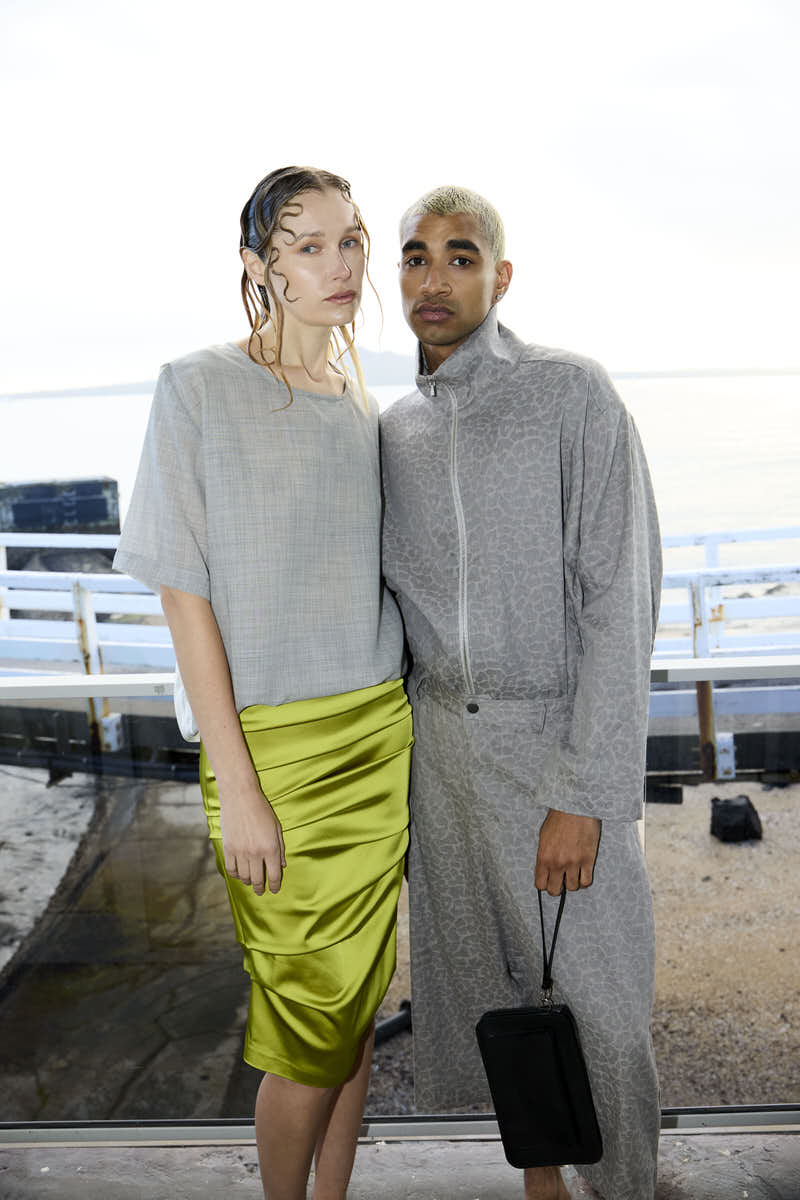
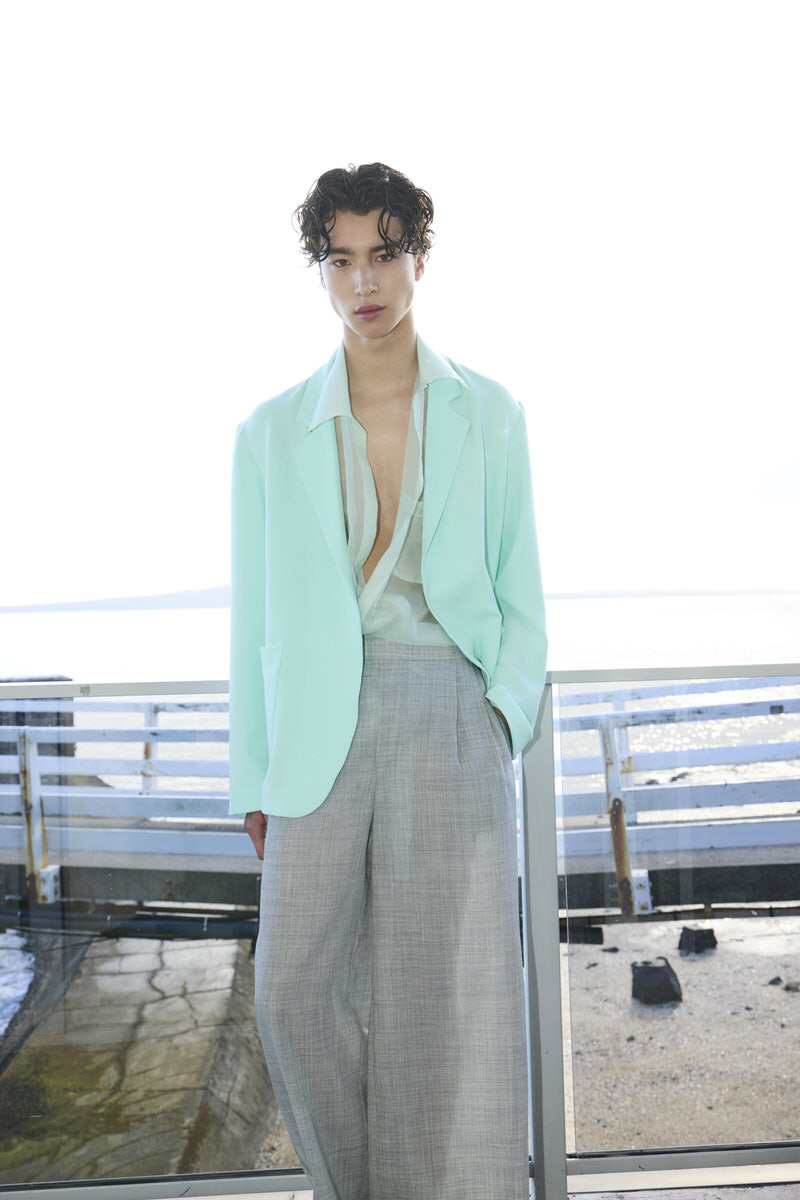
The palette travelled between land and sea. Splash, a fresh mint green, was joined by saturated Azure cobalt and Seafoam, with the acidic intensity of the opening look providing a sharper interruption. We particularly loved the greens and golden tones, and more broadly, seeing Zambesi embrace colour with such confidence across both womenswear and menswear. Raffia echoed the tangled forms of kelp and grasses, sheer layers shifted around the body, and silk moved with an almost liquid quality, all held in tension by Zambesi’s characteristic structure.

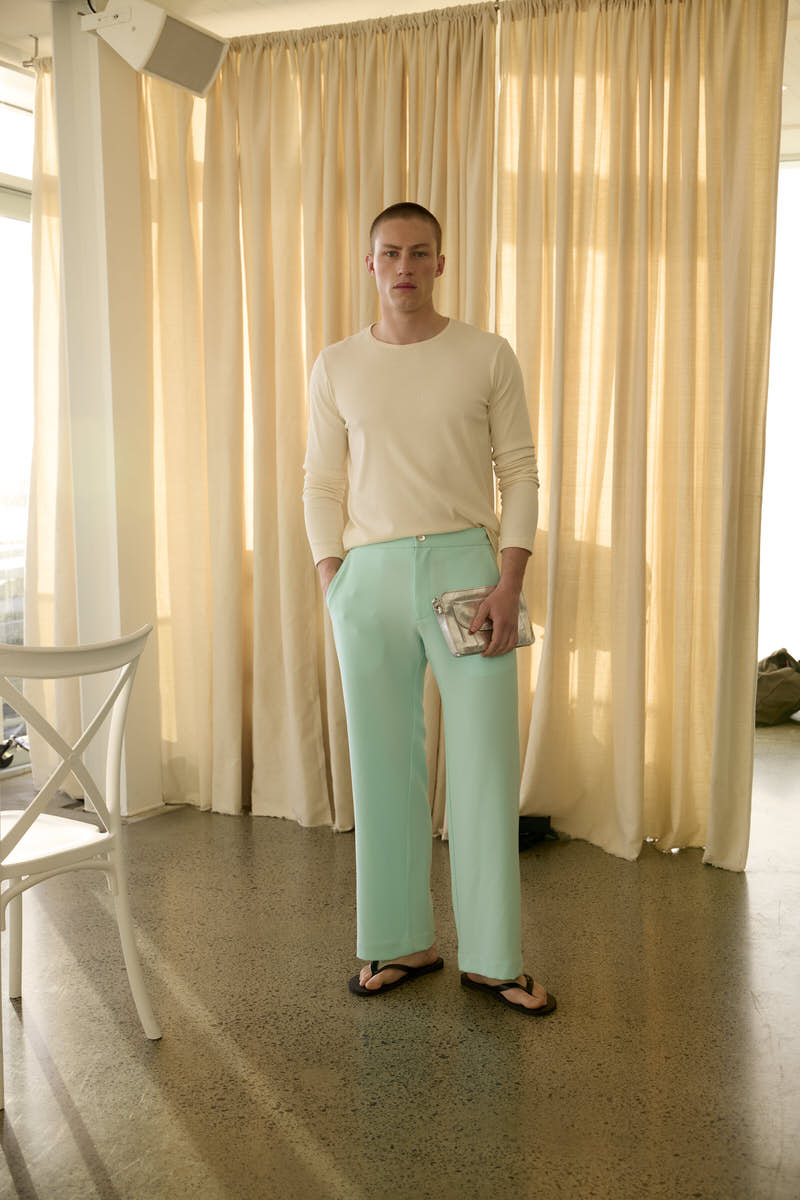
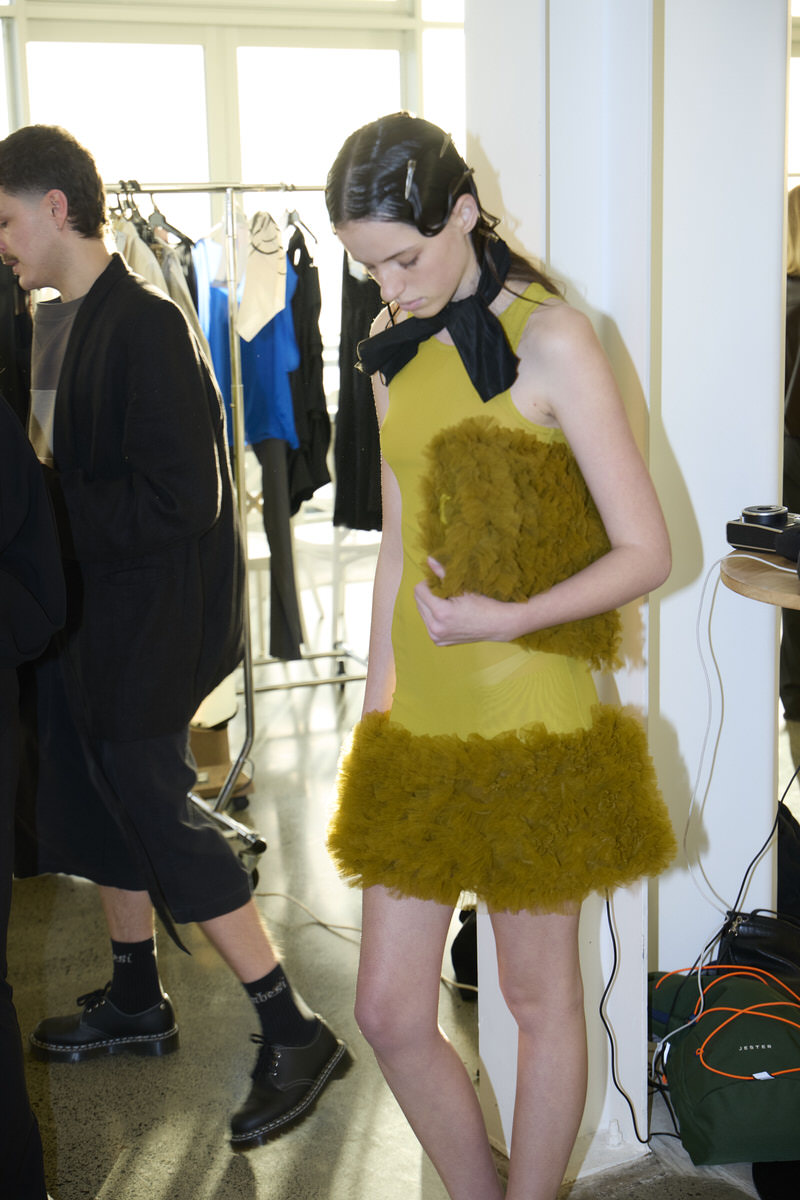
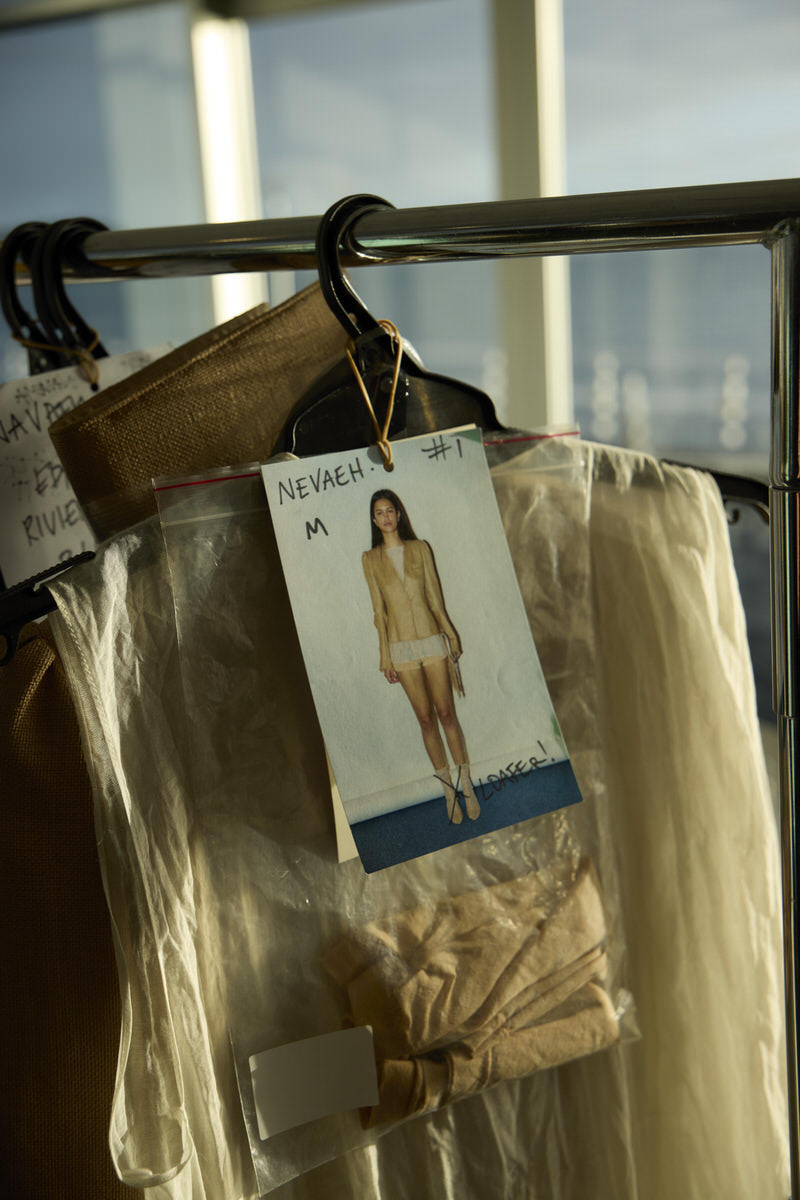
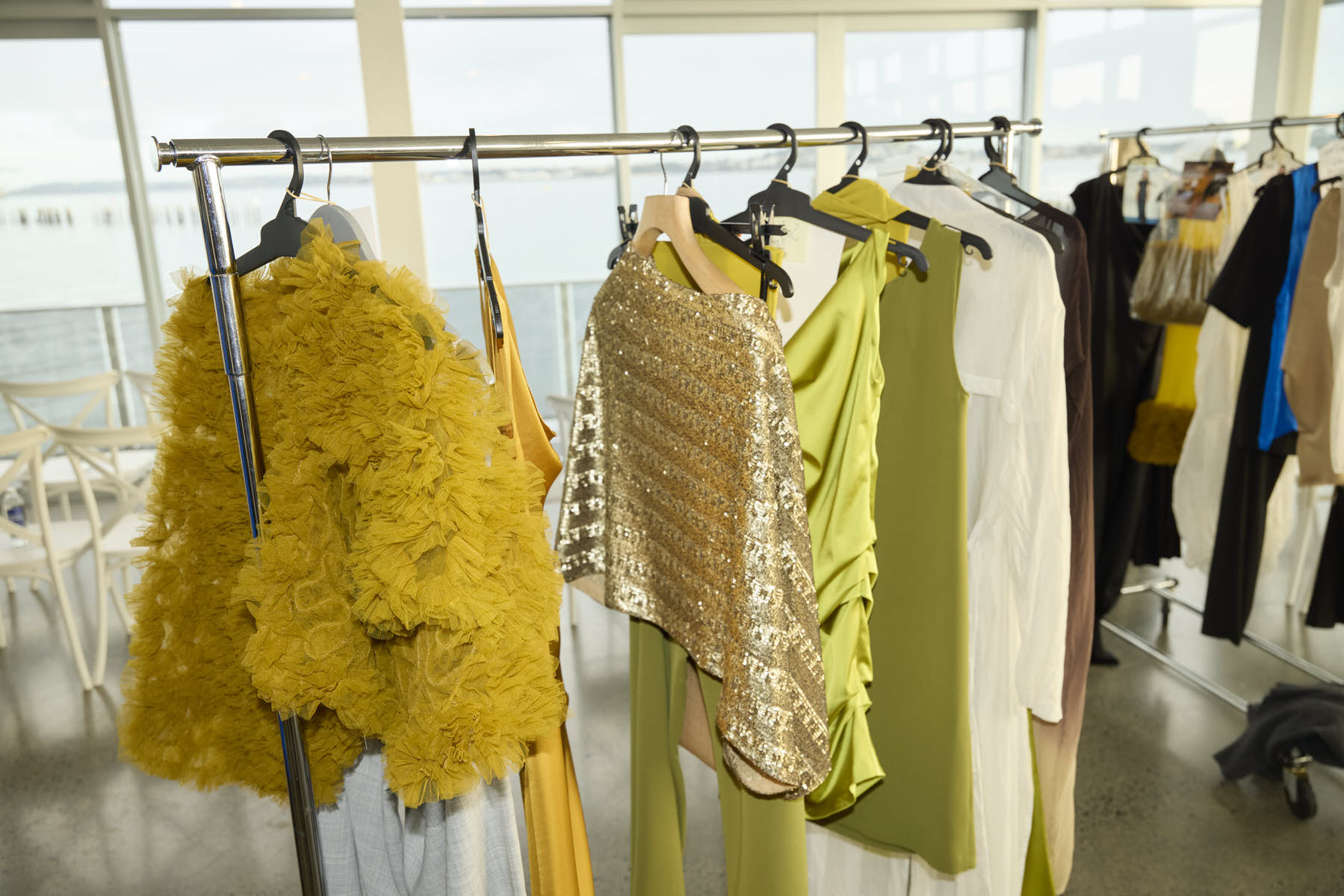

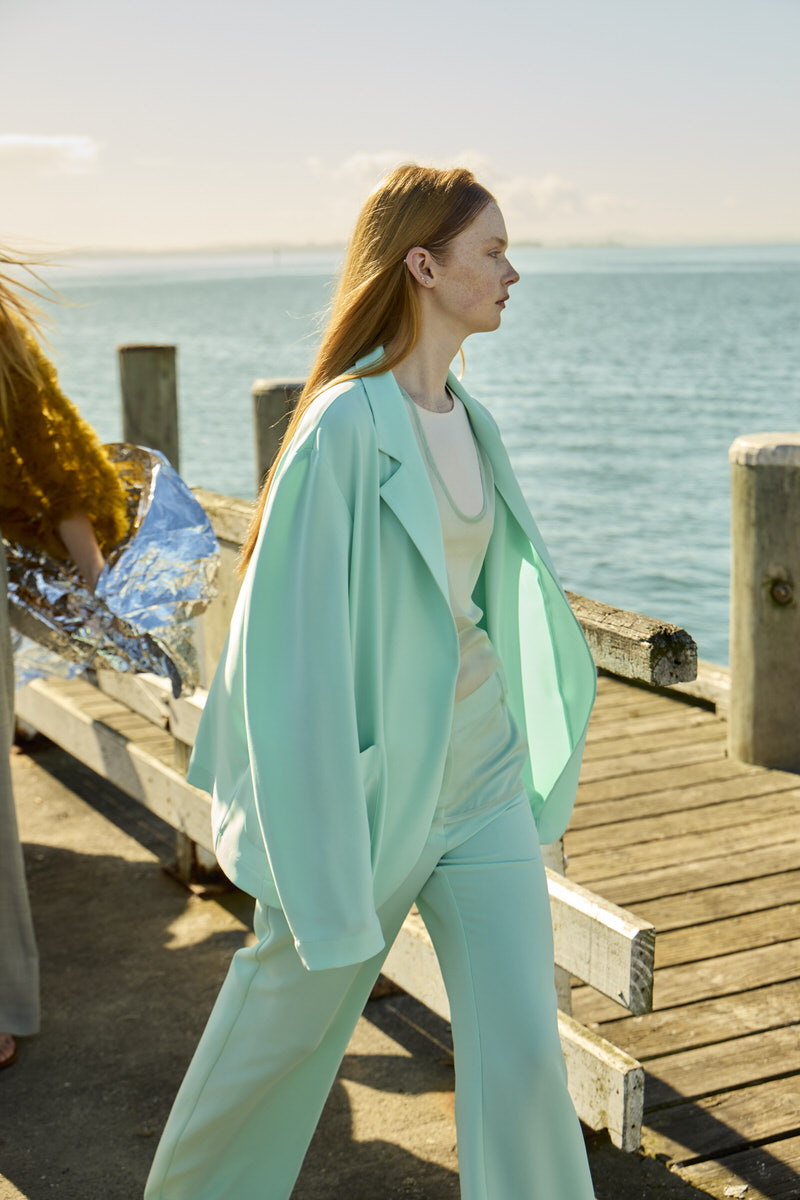
For Together Journal, there was plenty here to excite us from a modern bridal and occasion perspective. Not because Song to the Siren attempted to be bridal, but precisely because it didn’t. The silk, sheer tulle and mesh, sculptural forms, raffia pieces and flashes of Goldrush sequins offer an altogether more interesting proposition for someone who wants fashion to lead the conversation.
We could see these pieces moving easily into the wider wedding and occasion wardrobe, particularly for brides looking beyond the traditional white gown. There were equally strong possibilities for bridesmaids and guests, with colour, texture and directional silhouettes offering a refreshing alternative to conventional occasion dressing. The transparency, texture and movement would translate beautifully into a wedding environment, where clothes are experienced up close and from every angle. A sheer layer shifting in the breeze or sequins catching candlelight can create its own kind of occasion.
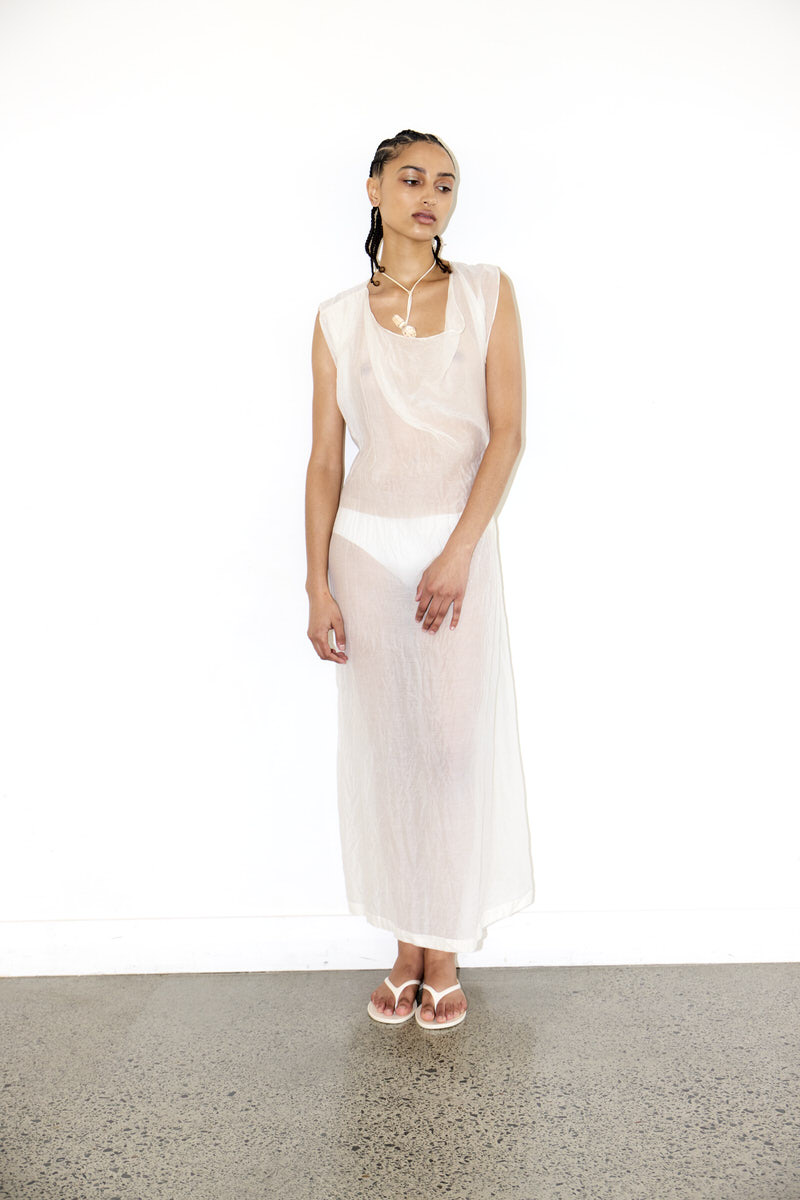
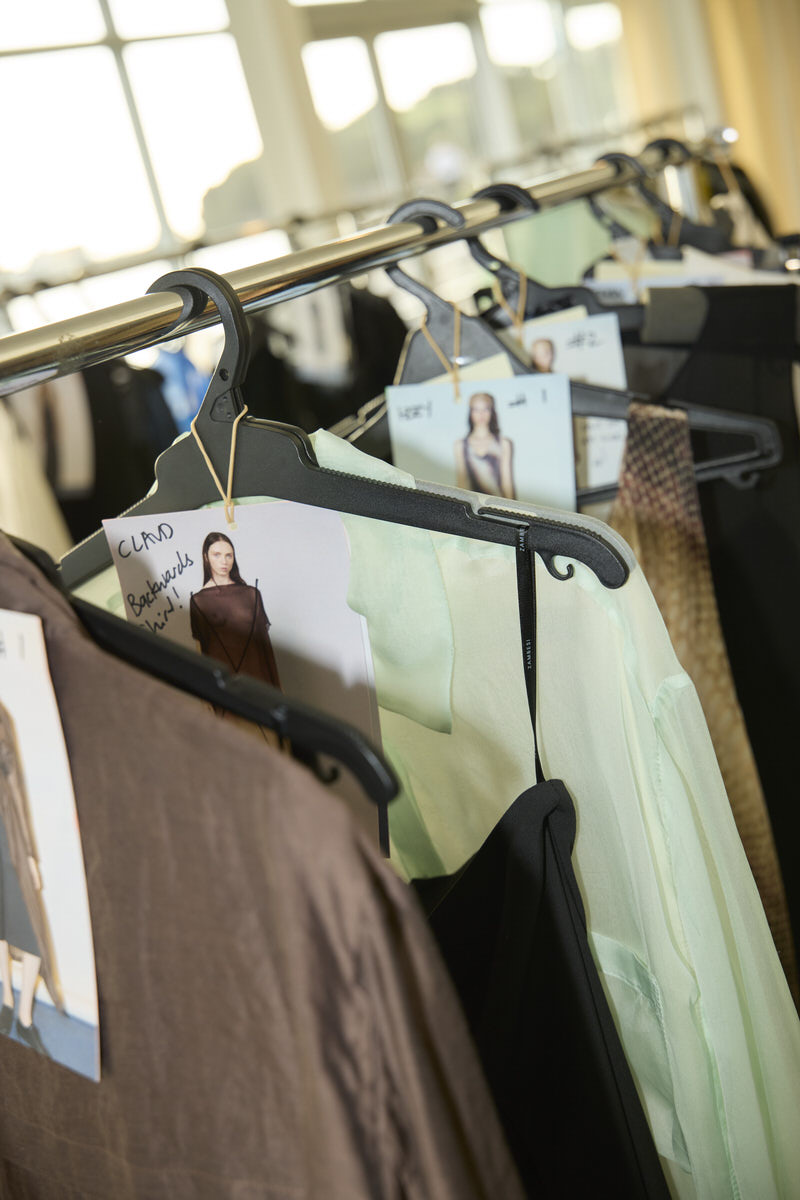
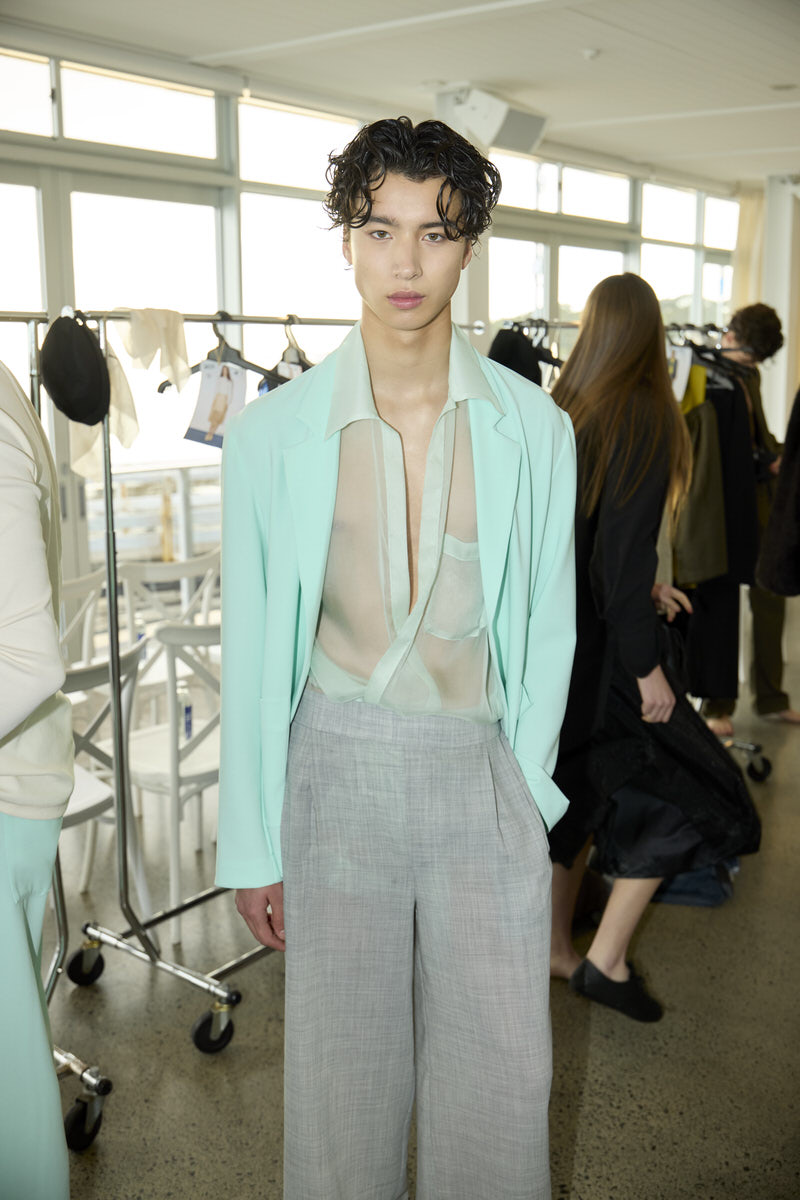
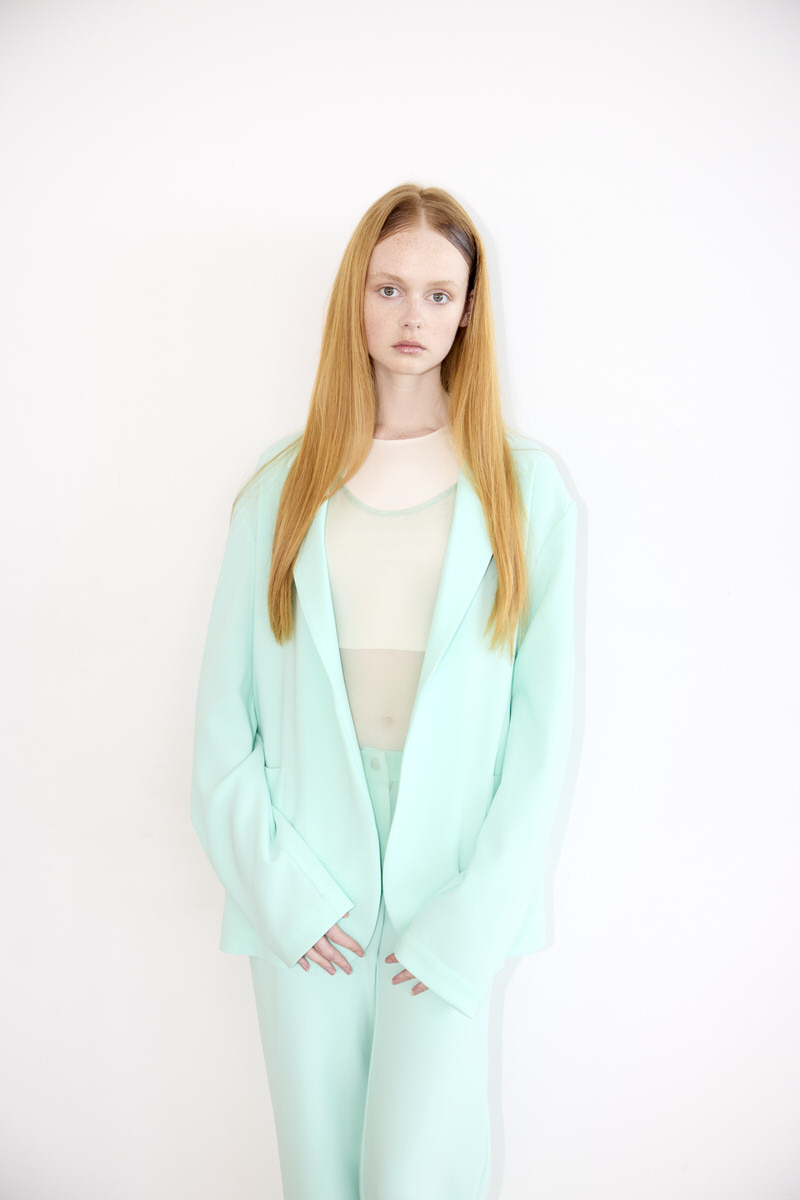
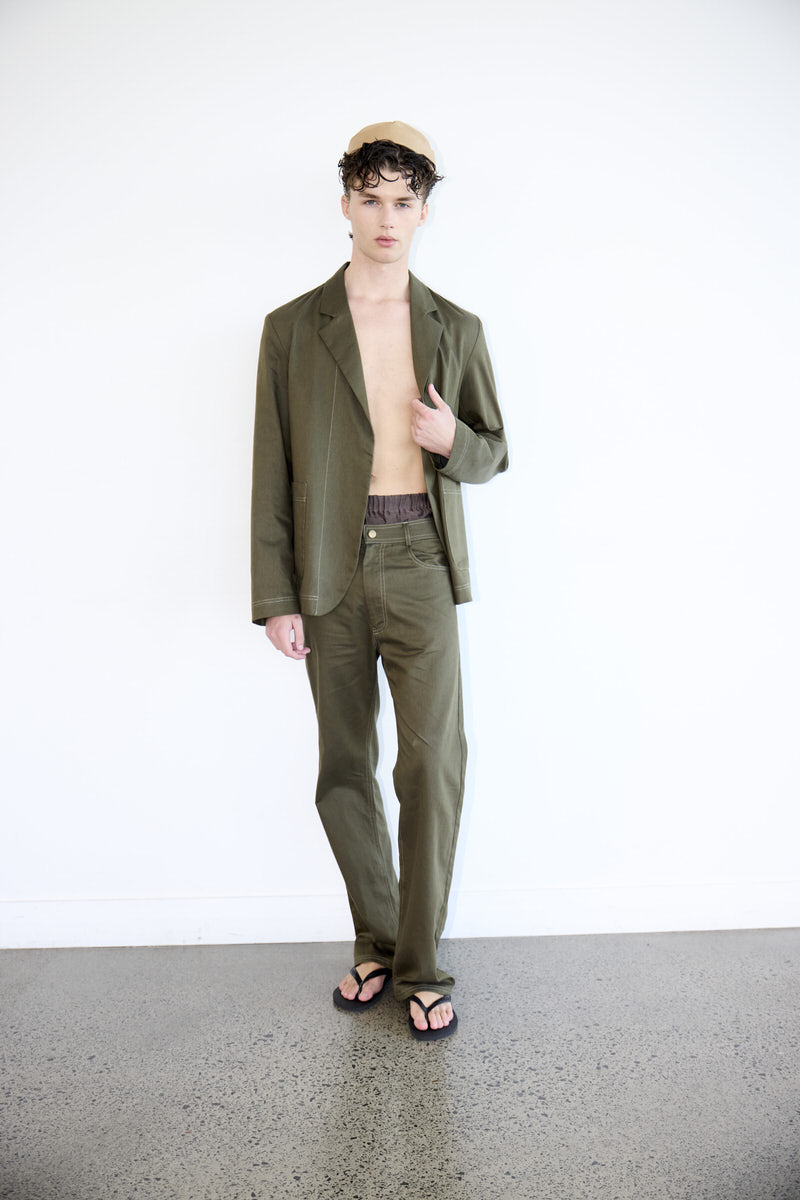


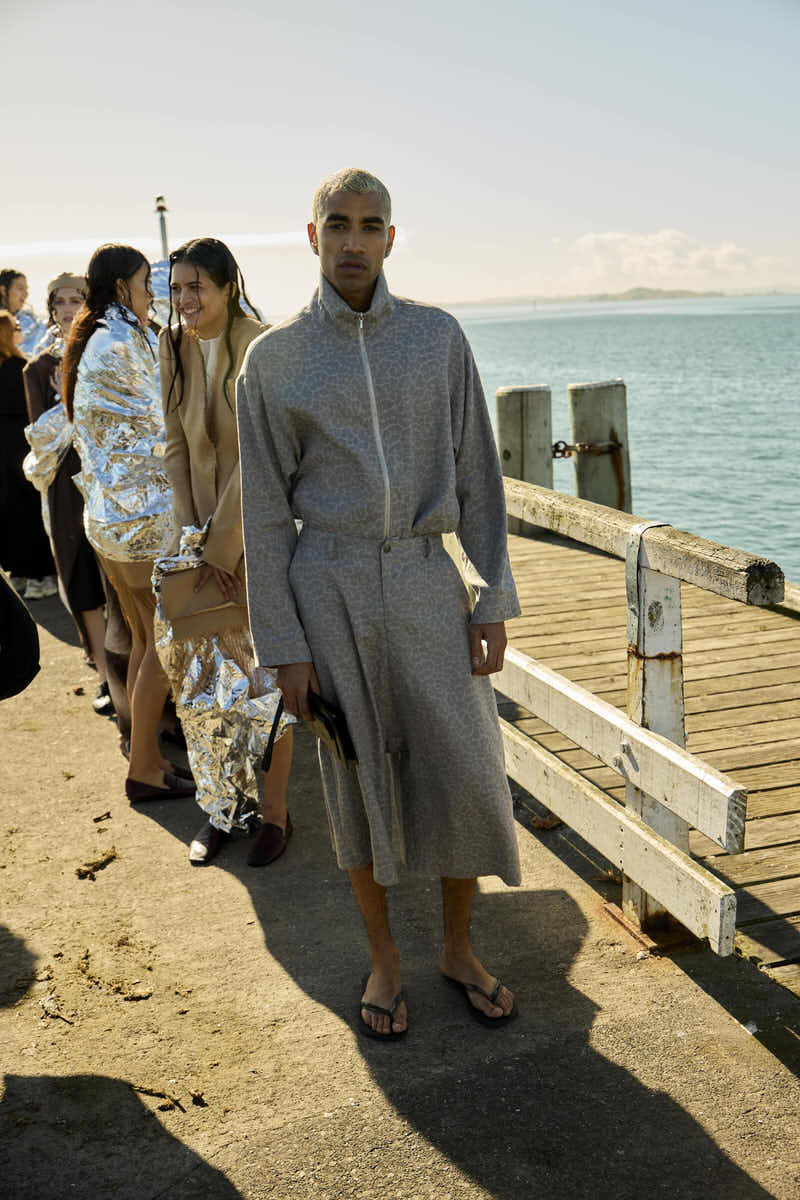
The menswear deserves attention here too. We loved seeing more fashion-oriented suiting and elevated sets, particularly with colour brought so confidently into the mix. These are looks that could feel just as at home on the wedding day as they would at a rehearsal dinner, welcome party or next-day celebration. For men wanting to move beyond traditional formalwear without losing a sense of occasion, Zambesi presented some very compelling ideas.
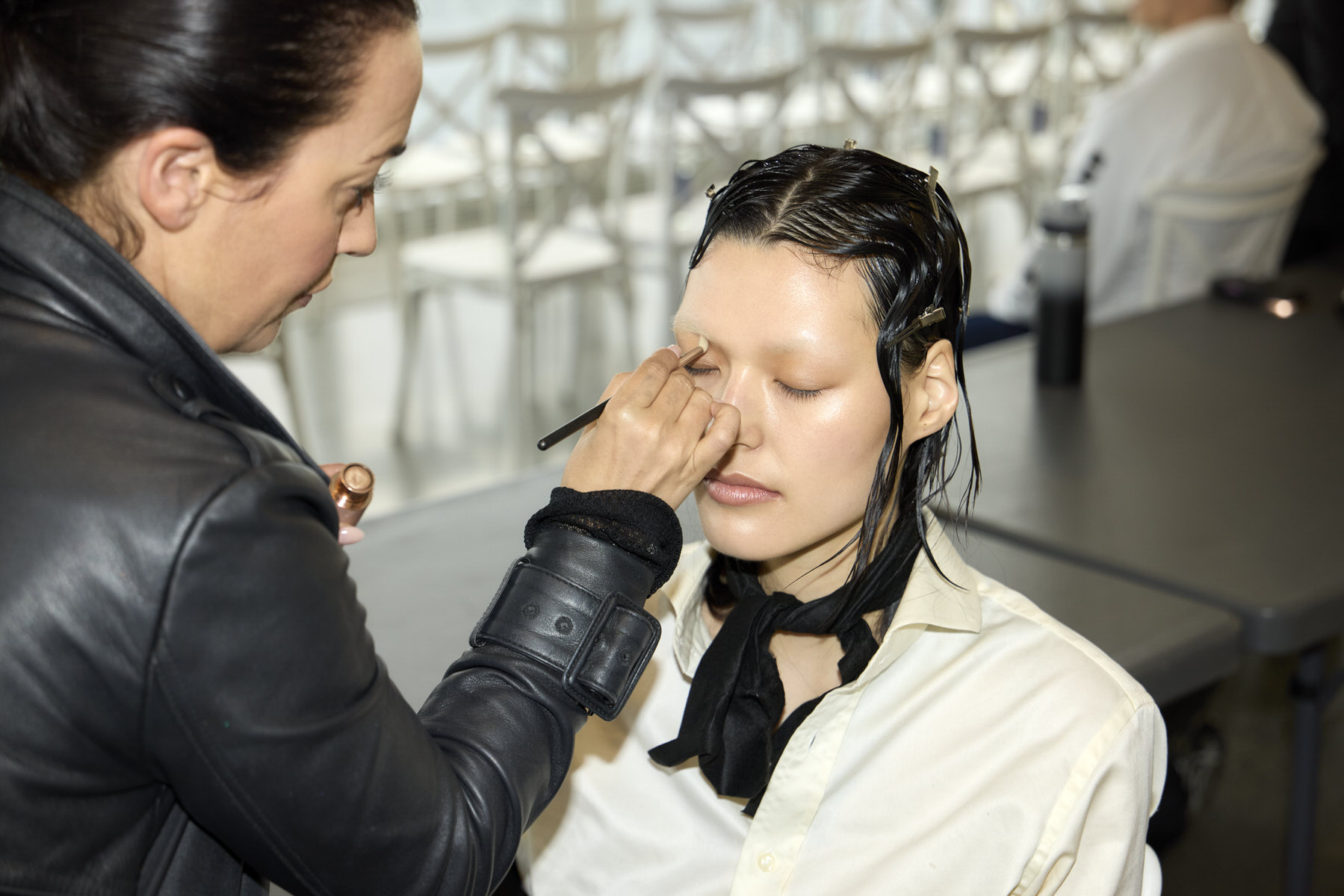
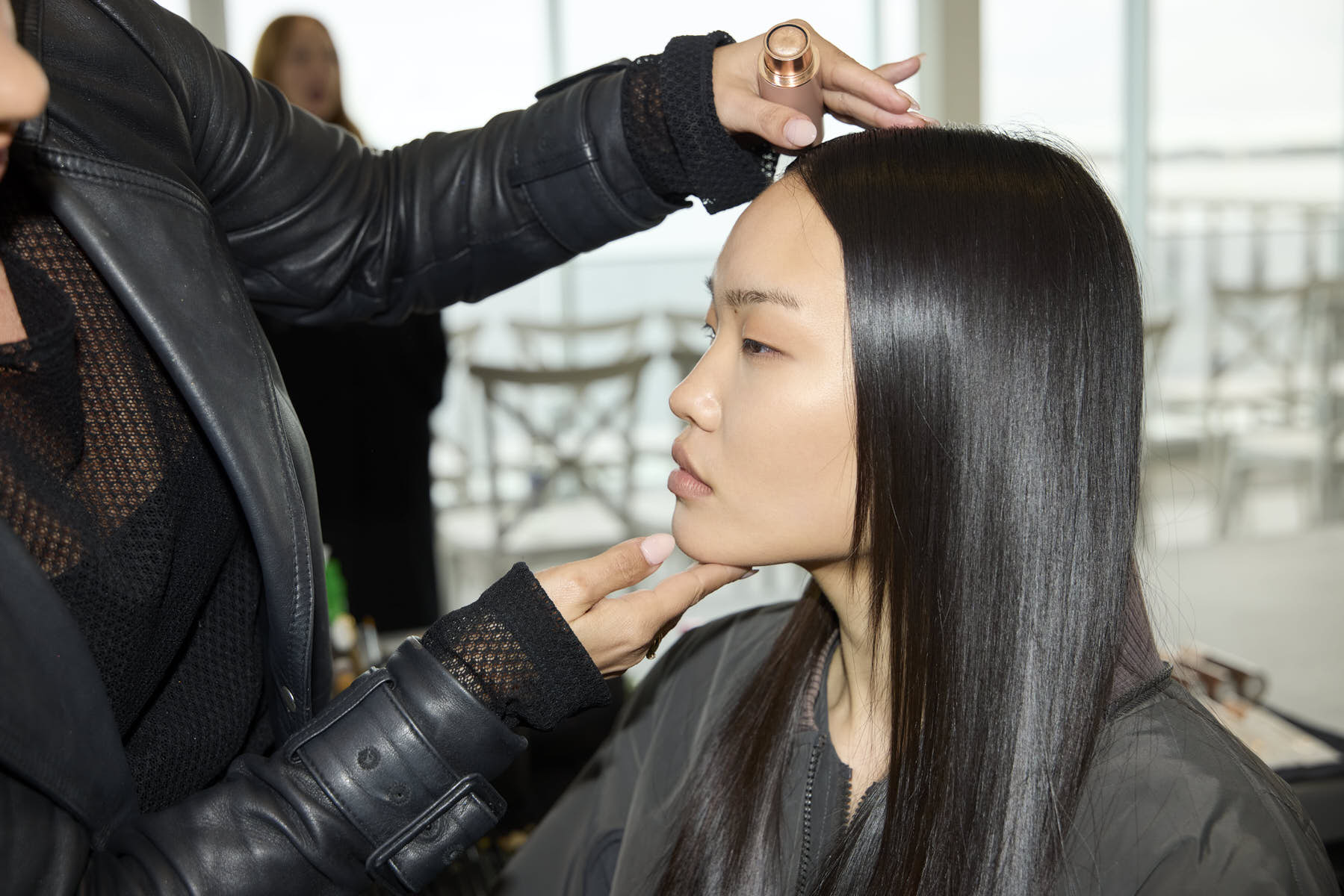
The soundtrack, directed by Sophie Findlay, extended the mood with music from New Zealand artist Hun Lynch alongside PJ Harvey and The Golden Palominos. Hair direction came from Sean Patrick Mahoney and Lauren Gunn from Colleen with Davines, with makeup directed by Kiekie Stanners using Youngblood.


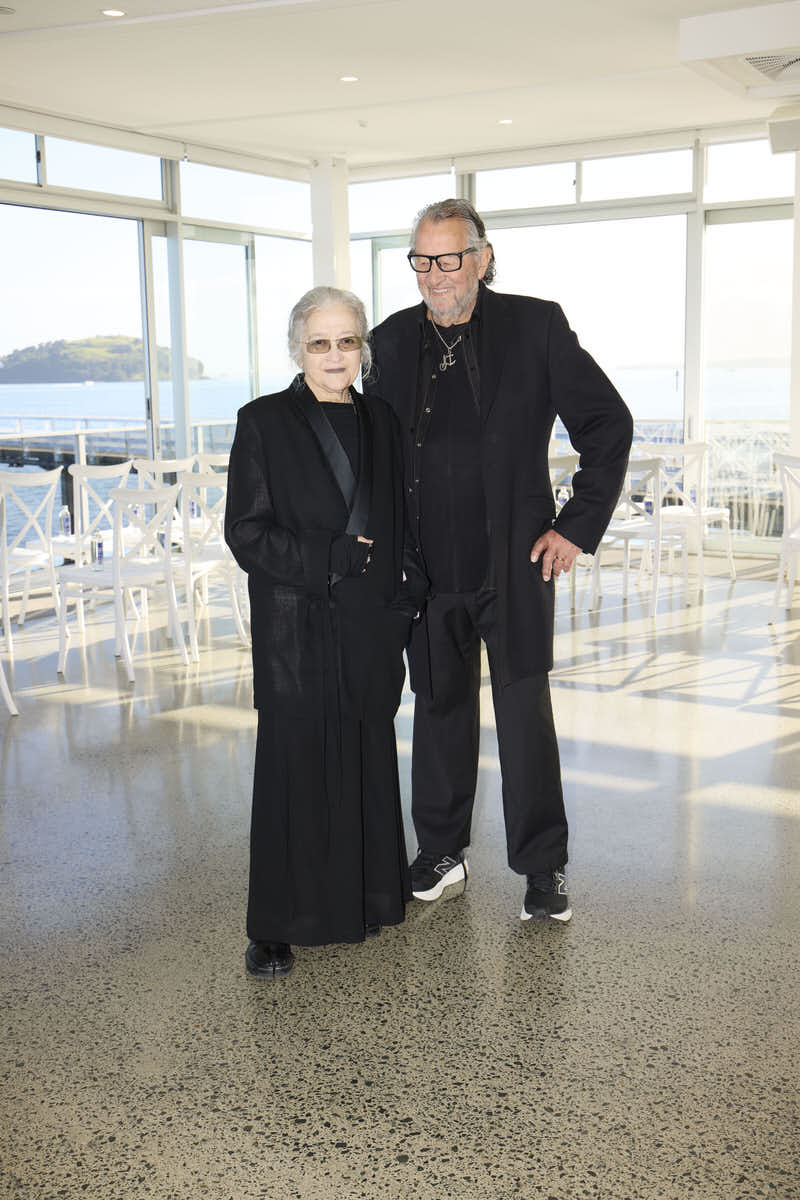
Founded by Elisabeth and Neville Findlay in 1979, Zambesi has never needed to chase the fashion conversation. More than four decades on, it remains fiercely independent, designed by Elisabeth Findlay from the Zambesi workroom in Tāmaki Makaurau and proudly made in Aotearoa New Zealand.
Song to the Siren was a reminder of why that matters. Against one of Auckland’s most recognisable landscapes, Zambesi created something that felt distinctly of this place while remaining entirely its own. Atmospheric, textural, slightly wild and beautifully resolved, this was Zambesi at its most elemental.

CREATIVE DIRECTOR Marissa Findlay, @marissafindlay MUSIC DIRECTOR Sophie Findlay, @sophie.findlay PŪTĀTARA Muru Maipi HAIR DIRECTOR Sean Patrick Mahoney & Lauren Gunn from Colleen, @colleen__colleen / Davines, @davinesofficial MAKEUP DIRECTOR Kiekie Stanners, @kiekies__ with Youngblood
Zambesi extends its heartfelt thanks to the entire team whose dedication and craft brought the collection and show to life, to the partners whose support made it possible, and to the loyal friends and supporters who continue to be part of the Zambesi story.
Beautiful Imagery by Combes Studios, @guycoombes
To see more from Zambesi, head to: zambesistore.com and @zambesisince79